


Ever since humanity first gazed upon the nocturnal skies, the moon has been a source of intrigue. It's a celestial body that has inspired myths, guided sailors, and continues to influence the natural world, including the ebb and flow of tides and the rhythms of Earth's living creatures. But amidst the folklore and scientific observations lies the foundation of our understanding of the moon: its phases. From the dark silhouette of the new moon to the radiant glory of the full moon, each phase has a story to tell, and grasping this lunar cycle enhances our appreciation of the night sky.
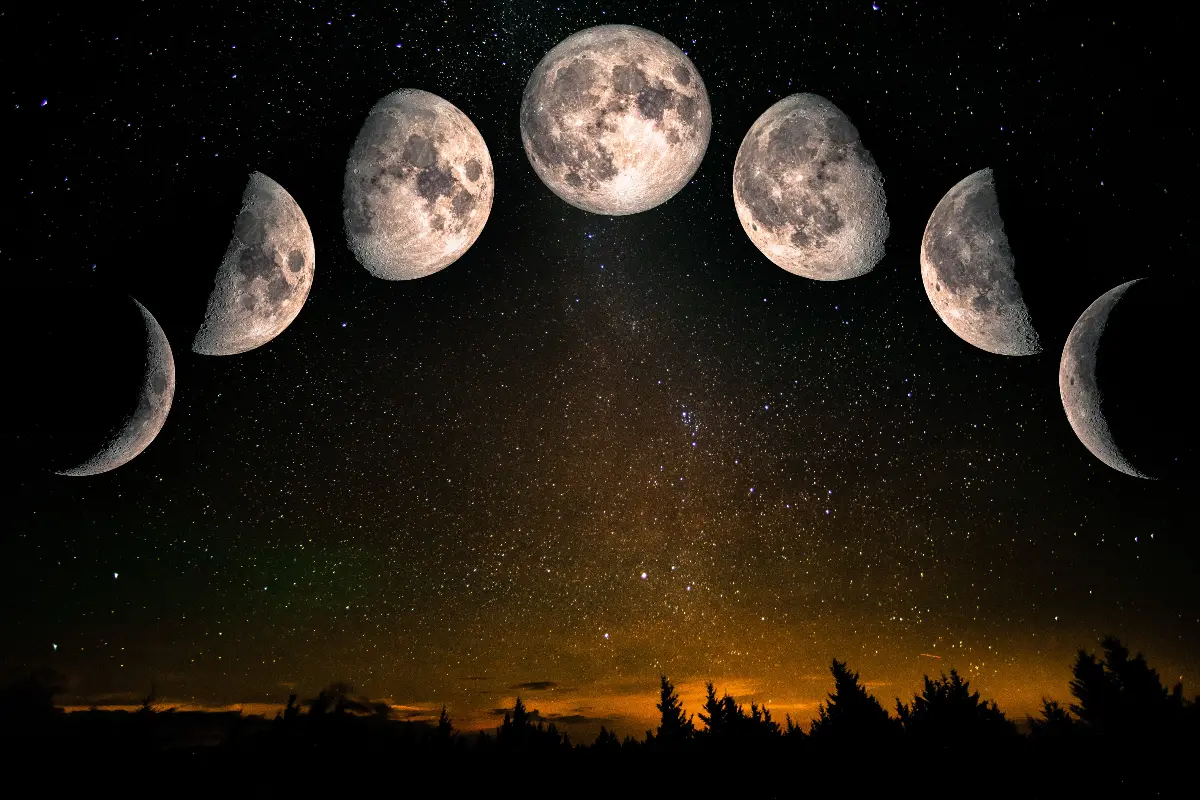
The lunar cycle, comprising about 29.5 days, is the time it takes for the moon to orbit Earth and cycle through its phases. This journey influences what we observe from our vantage point on Earth. Let's embark on the celestial journey and uncover the moon's phases one by one.
The new moon marks the beginning of the lunar cycle. Subtly integrated into the sun's glare, it rises and sets with our central star, making it invisible against the daytime sky. During the new moon, the moon's dark side faces us, its illuminated half turned away, marrying the beginning of the moon's synodic month.
Following the new moon, a thin, crescent-shaped sliver becomes visible in the western sky just after sunset. This is the waxing crescent phase, symbolizing the initial visible growth of the lunar surface as it slowly starts to reveal itself. As days pass, more of the moon's surface is lit by direct sunlight, and this crescendo of light continues until we reach the first quarter.
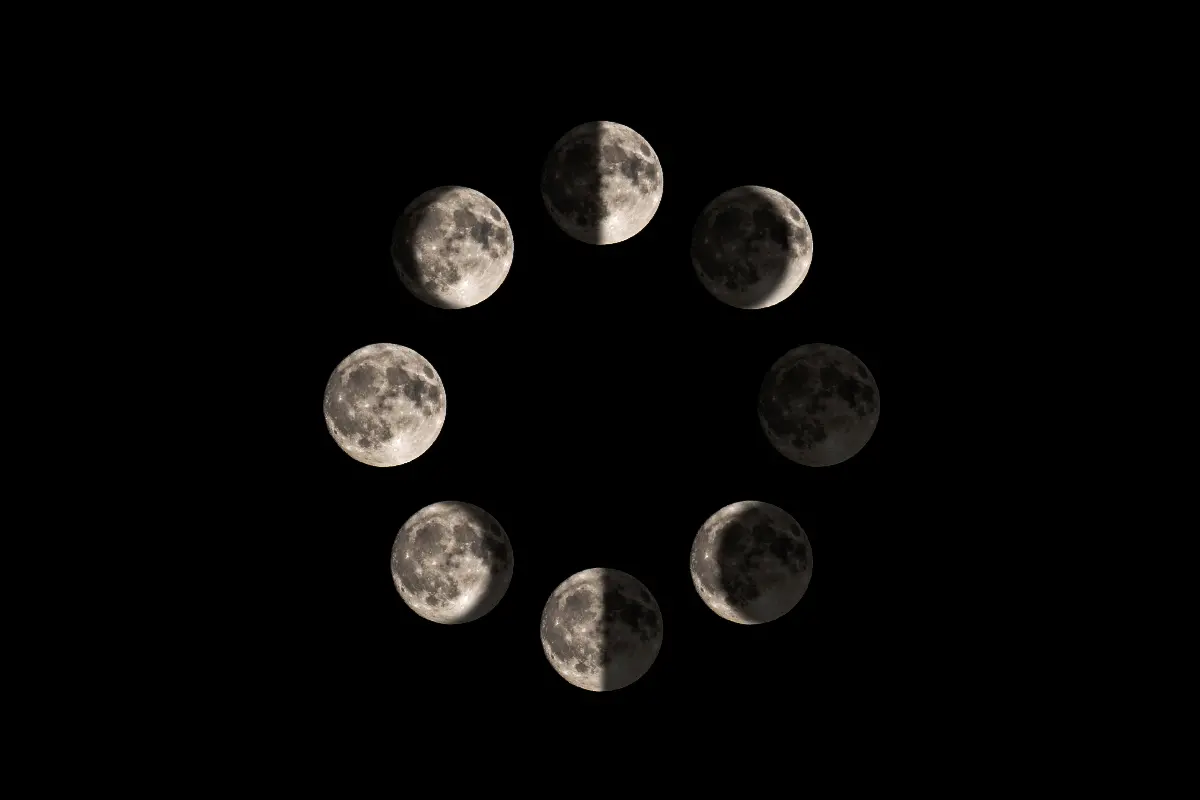
We call it the first quarter, not because it shows a quarter of its surface, but because the moon has completed a quarter of its orbit around Earth. Now, the moon rises at noon and sets around midnight, and we see exactly half of the moon's face illuminated — its right side from our perspective in the northern hemisphere, and the left from the southern hemisphere.
The journey proceeds into the waxing gibbous phase. During this period, the moon flaunts more than half but less than a full disk, reminiscent of a swelling form with a convex shape. Each night it grows fuller, staying aloft longer after sunset, waxing toward its climactic full phase.
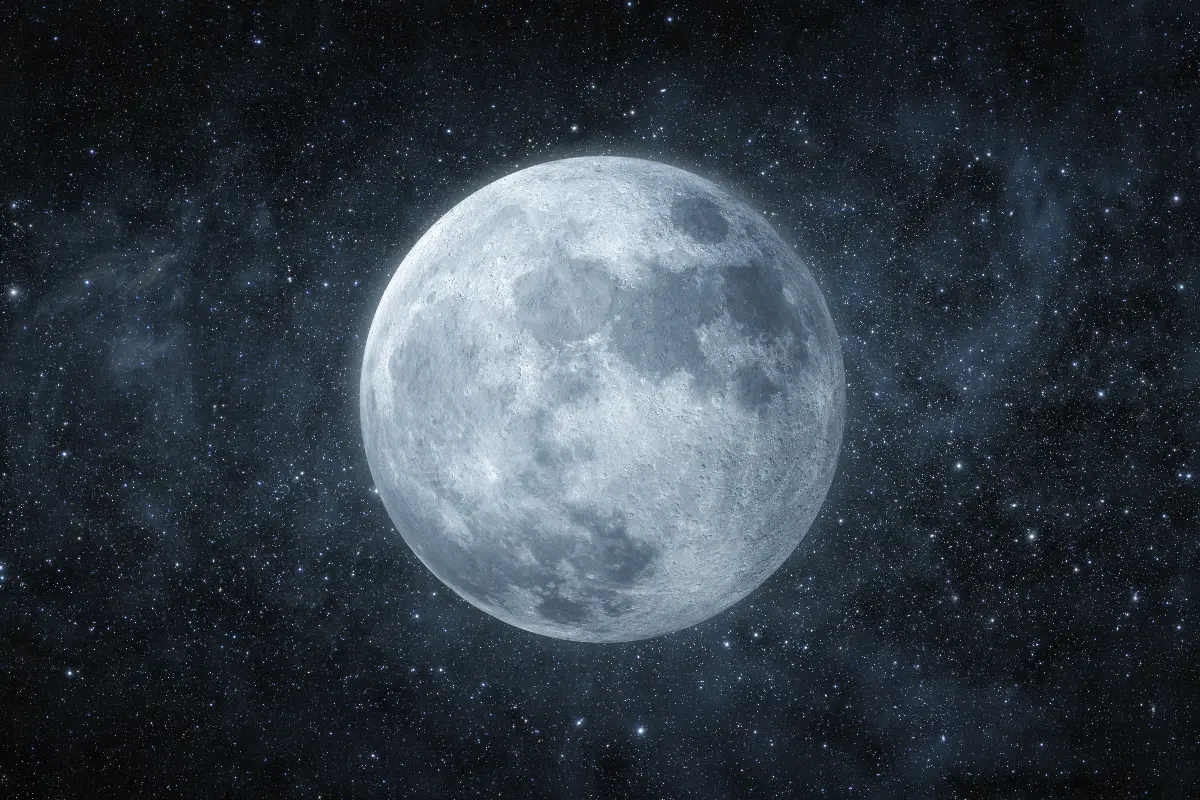
A full moon is the midpoint of the lunar cycle; it's a time when the moon rises as the sun sets, mastering the sky with its fully illuminated disc. The face we are admiring is the one constantly facing Earth, thanks to the moon's synchronous rotation. It's during this time that we might behold a lunar eclipse, should Earth's shadow cross the moon's surface.
After basking in the splendor of the full moon, the decline begins. The moon enters the waning gibbous phase, gradually shedding light from its disk. Like a soft exhale after a full breath, there is a sense of diminution in this phase.
The third quarter, also known as the last quarter, mirrors the first quarter, but this time it's the opposite hemisphere that glows — the left side from northern latitudes and the right from southern ones. As opposed to rising at noon as in the first quarter, the third-quarter moon rises at midnight and lingers in the sky to set around noon.
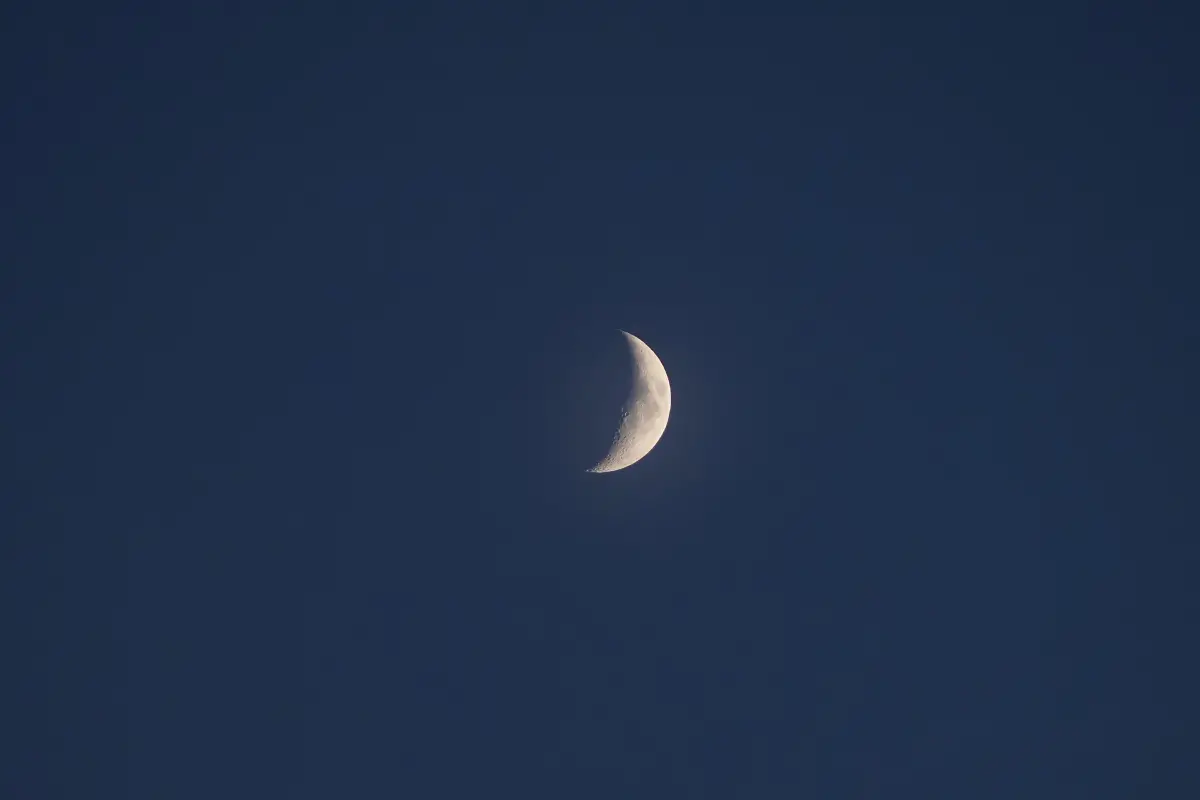
The final stage before the new moon begins again is the waning crescent. This slimming slice of lunar light appears in the dawn sky, casting a faint illumination and signaling the end of one lunar phase cycle and the imminent return to another new moon.
But the lunar story goes beyond the visual spectacle. The moon's phases influence numerous aspects of Earth’s environment. Sea-life, particularly coral, synchronize spawning events with the lunar cycle. Many animals, from big cats in Africa to bats in the tropics, have hunting habits tied to the brightness of the night provided by the moon's phases.
In the realm of human culture, the phases of the moon have figured prominently in agriculture, religious observances, and even folklore. Some farmers still follow the age-old practice of planting by the phases of the moon, sowing seeds at particular times in the lunar cycle in the belief it will lead to better harvests. Meanwhile, festivals and holy days in various religions coincide with specific lunar phases.
Scientifically, understanding these moon phases has been critical in appreciating other planetary bodies' movements, ultimately propelling us into this current age of space exploration. Each phase of the moon is a testament to the intricate ballet of celestial mechanics and the gravitational interplay between Earth and its only natural satellite.
The lunar cycle is not just an affair of the sky; it's a thread woven into the fabric of our existence. Whether it serves as a beacon for navigating the night, a companion for poets under the stars, or a natural marker for the passage of time, the moon in all its phases continues to fascinate and inspire. As we uncover the tales hidden in each lunar silhouette, we learn more about our place within the cosmos and appreciate the ever-present cycles that shape the universe we call home.