


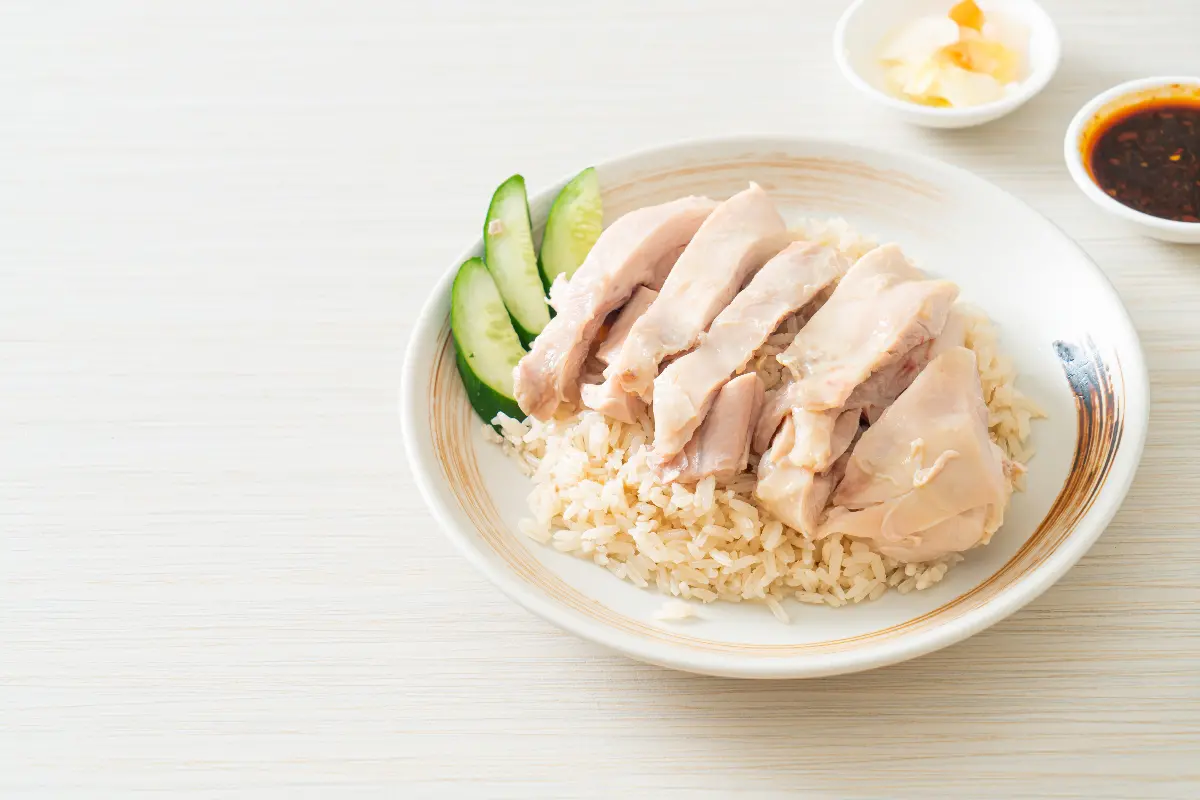
At first glance, Hainanese Chicken Rice may seem like a deceptively simple dish: poached chicken and seasoned rice, served with a trio of sauces. But this beloved staple, often described as one of Singapore's national dishes, holds within its grains and tender meat fibers, a rich tapestry of culinary tradition and a story that intertwines geography, migration, and innovation.
 POKE THEORY
 CAT & THE FIDDLE
 ICE LAB
 KOHI ROASTERY & COFFEE BAR
 TUK TUK CHA
The origin of Chicken Rice is rooted in the early 20th century, tracing back to the Hainan province in southern China, where the dish was originally served as 'Wenchang chicken'. Considered a delicacy, it featured a specific breed of fowl and was traditionally reserved for special occasions. As Hainanese immigrants made their way to Southeast Asia, including Singapore, they brought with them their cherished recipes, adapting them to the taste preferences and available ingredients of their new home.
The transformation into the dish Singaporeans know and love today began in earnest in the 1950s. The post-war landscape saw an influx of immigrants setting up food stalls, and Hainanese chefs began to tweak their traditional recipes. What emerged was an iteration that was palatable to a wider audience—a testament to the dynamic culinary environment of Singapore, where food is not just nourishment but a language of integration and identity.
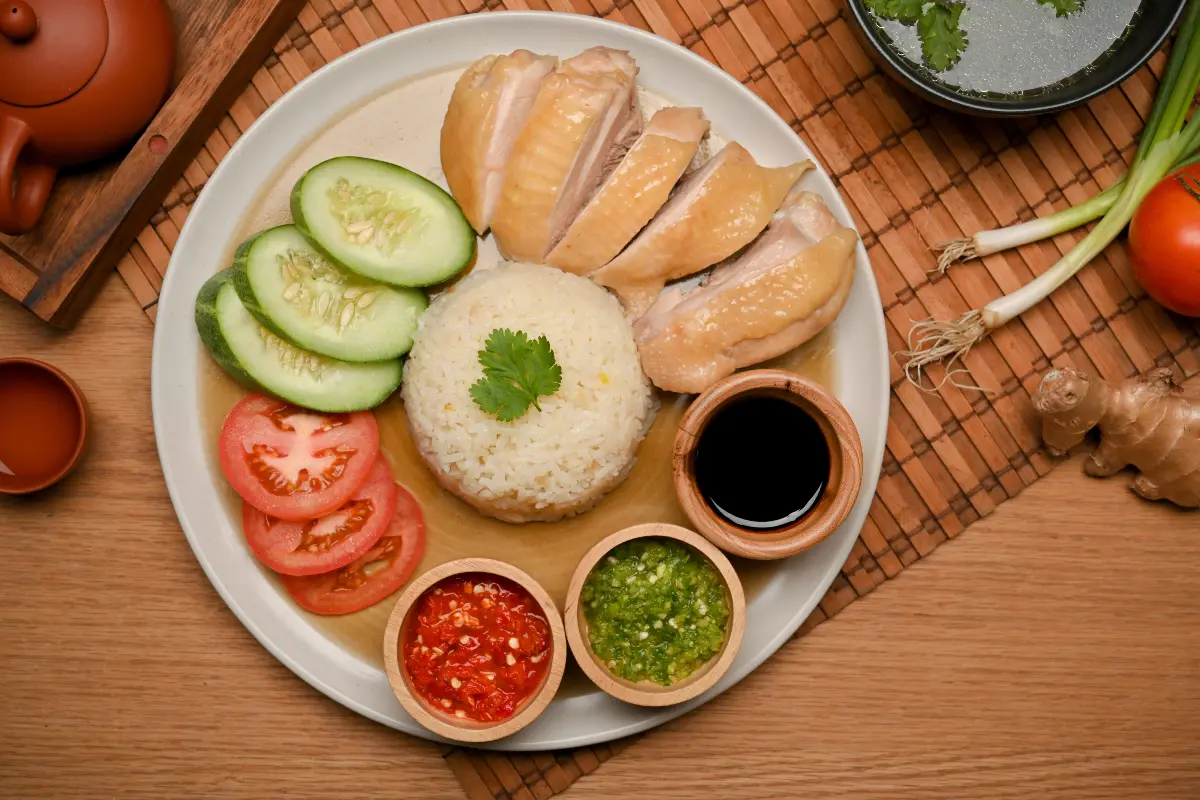
The essence of Hainanese Chicken Rice lies in its preparation. The chicken, typically a whole one, is carefully poached in a stock that is perpetually reused, richened each time with the flavours of the newly poached birds. The result is meat that is tender, juicy, and infused with a subtle yet complex array of flavors. The rice, rather than being an afterthought, is a star in its own right. Fragrant jasmine rice is typically used, toasting slightly in a blend of garlic, ginger, and pandan leaves, and the magic ingredient is the chicken stock from the poaching process. This preparation imbues the rice with a rich, savoury layer that complements the simplicity of the poached chicken.
Accompaniments are another critical element. Variations exist, but a triumvirate of sauces—dark soy sauce, chilli with garlic, and pounded ginger—not only adds flavour but also depth and heat, allowing each diner to tailor the dish to their palate. Some stalls also include a bowl of the clear chicken broth on the side, garnished with a few leaves of cilantro or slices of green onion, allowing the essence of the chicken to be appreciated in its purest form.
As with any dish so deeply embedded in a culture, regional and personal variations abound, and disputes over the 'best' Chicken Rice in Singapore are common. Some champion the version that stays truest to its Hainanese roots, while others espouse renditions that reflect the specific chef's artistic touches. High-end restaurants offer their gourmet takes, but it's often the humble hawker centres where the most authentic and beloved versions can be found. These food courts are integral to the social fabric of Singapore, a fact recognised by UNESCO when Singapore's hawker culture was added to the Intangible Cultural Heritage list in 2020.
One cannot discuss Hainanese Chicken Rice without mentioning the rags-to-riches story of the Michelin-starred stall, Hong Kong Soya Sauce Chicken Rice and Noodle. The proprietor, Chef Chan Hon Meng, serves what is arguably the cheapest Michelin-starred meal in the world, with locals and tourists alike queuing for hours to savour his version of chicken rice.
While many foods undergo a gastronomic evolution as they traverse borders and cultures, few manage to plant themselves so firmly in the hearts of a new population as Hainanese Chicken Rice has in Singapore. Its ubiquitous presence, from school canteens to high-end restaurants, from local festivities to the everyday dining table, is a testament to its popularity and cultural significance. Chefs continue to experiment, introducing organic chicken, brown rice, or infusions of other Southeast Asian flavours, ensuring that the tradition evolves while remaining true to its soul.
The enthusiasm with which Chicken Rice is consumed is indicative of the Singaporean passion for food. Each component of the dish, from the quality of the chicken to the texture of the rice and the balance of the sauces, is scrutinised and hotly debated by connoisseurs and casual diners alike. Online forums and food blogs frequently light up with recommendations and reviews, with many citizens willing to travel across the city in pursuit of their favourite version.
Chicken Rice is more than just sustenance; it is a culinary experience that encapsulates Singapore's history, its blend of cultures, and its status as a food paradise. For visitors, it offers a delicious entry point into understanding Singapore's complex, multicultural society. For locals, it remains a beloved reminder of home, a dish that unites all Singaporeans regardless of background. Whether enjoyed in a bustling hawker centre or served elegantly in a restaurant, each plate of Hainanese Chicken Rice tells a story of heritage and taste, of community and pride—a dish that is humbly consumed, yet celebrated, across the Little Red Dot.