


The Celtic knot, known for its captivating loops and intricate interwoven lines, has been a powerful symbol of interconnectedness and eternity for centuries. Its origins trace back to the ancient Celts, a diverse group of tribal societies that flourished across Europe more than 2000 years ago. Today, these compelling motifs continue to enchant us, with meanings that resonate deeply in both historical and modern contexts.
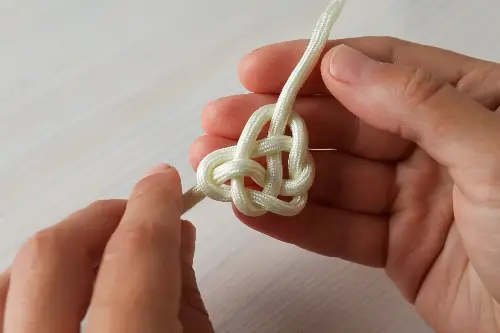
Celtic knots, or 'endless knots', bear no beginning or end. It’s this remarkable feature that encapsulates their most profound interpretation: the timeless nature of the spirit and the boundlessness of life's cycles. They are a constant reminder of our connectivity to not just one another but to the universe and the flow of existential energy.
Further delving into history, these knots were not exclusively Celtic. Similar designs have been discovered in Byzantine architecture, Roman floor mosaics, and even in the art of the Islamic world. However, the Celts brought an unexampled flourish to these designs, making them characteristically their own by the 3rd or 4th century.
Archaeological excavations have unearthed these patterns adorning a variety of artefacts, such as the intricately decorated Gospel Books—most notably, the Book of Kells, an illuminated manuscript heralded for its elaborate knotwork. This masterpiece not only embodies the artistic prowess of the early Celts but narrates a visual story of their religious and philosophical values.
The meanings ascribed to Celtic knots are manifold—love, unity, protection, and the notion of eternal life being the prominent motifs. The Dara Knot, for instance, is believed to be inspired by the oak tree's root system and symbolises inner strength. Similarly, the Sailors Knot, comprised of two interlocking knots, is said to represent harmony and friendship, cementing it as a popular choice for wedding rings.
In modern times, the fascination with these designs hasn't waned but rather found new outlets. From jewellery to tattoos, and from clothing designs to ornamental home décor, the Celtic knot transcends its historical origins, finding a place in contemporary fashion and art. Increasingly, this ancient pattern has been embraced in mindfulness practices and spiritual circles, drawn upon for its implications of connectedness and continuity.
Moreover, in an increasingly digital world, the Celtic knot's influence extends to graphical interfaces and computer-generated visuals. The principles of their design have even been used in mathematical research, offering challenging problems related to graph theory and topology.
Celtic festivals scattered across the calendar also pay homage to these designs. They are not just a nod to a cultural relic but a living tradition integral to celebrations like Samhain and Beltane. These festivals often incorporate knotwork motifs, reminding attendees of the intertwining of the human journey with the rhythms of nature.
However, admiration for Celtic knots isn't limited by heritage. Their striking geometry and symbolism speak to a universal audience, appealing to anyone who cherishes the narratives embedded within ancient cultures. Whether it's the physicality of a ring you can touch or the visual treat of an illustrated book, the elegance of these designs endures.
As a reflection and embodiment of the natural world, Celtic knots subtly echo ecological themes relevant to today's world. In a time when the interconnectedness of all life is increasingly acknowledged, the reinterpretation of these designs serves as a poignant visual metaphor for ecological balance and conservation efforts.
In conclusion, Celtic knots have not merely survived the test of time; they have flourished, embracing new meanings and interpretations that continue to captivate the imagination. Through the intricacy of their artistry and the profound depth of their symbolism, these historic patterns offer a tangible connection to the past while simultaneously intertwining their legacy with the threads of modern life. It’s this remarkable duality that ensures Celtic knots remain a relevant and cherished emblem of cultural, spiritual, and artistic identity across the ages.