


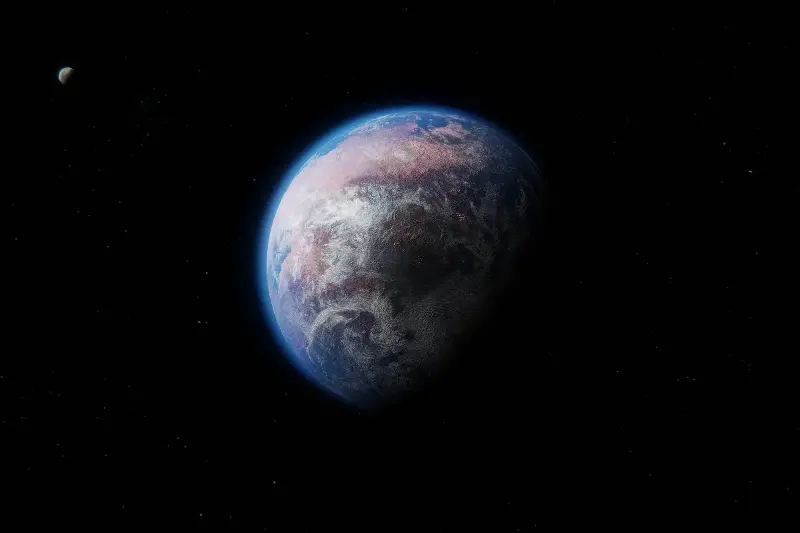
Can the Search for Exoplanets Reveal New Habitable Regions – and New Hope – in the Universe?
What if finding another Earth isn't the stuff of science fiction, but a question of when, not if? Across the velvet stretches of the cosmos, astronomers are peering deep into space, sifting starlight for secrets. With every new exoplanet discovered, voi have to ask: are we inching closer to uncovering a second home - or an entire archipelago of habitable worlds?
Imagine a Midnight Sky Alive with Hidden Worlds
Let’s take a moment before diving in. Picture voi standing beneath a sky freckled with a million stars. Out there, in the gaps our eyes cannot reach, planets whirl around distant suns - some scorched, some frozen, a few perhaps just right. By the end of this article, voi will step away not just knowing how the exoplanet search works, but with a sense of wonder about what it could mean for our place in the universe.
Why Exoplanets Matter: More Than Just Distant Rocks
Exoplanets aren’t mere statistics on an astronomer’s spreadsheet. They could be the keys to survival, inspiration, or both.
- Each exoplanet discovery is a whisper: “You are not alone.”
- Every potentially habitable world challenges our sense of uniqueness.
- Somewhere out there, conditions might mirror Earth’s beauty; oceans, blue skies, the soft hush of wind.
Understanding if any might truly host life starts with a blend of cutting-edge technology and sheer hope.
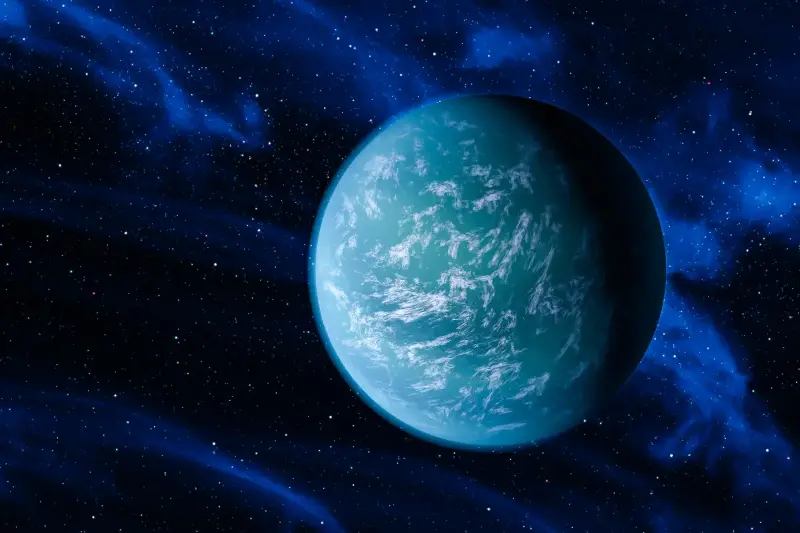
The Art (and Science) of Planet Hunting
Finding exoplanets is as much about patience as it is about power. Most can’t be seen directly – they’re hidden in the glare of their suns. So astronomers use creative tricks like:
- Transit method: Watching for the dimmest flicker when a planet passes in front of its star.
- Radial velocity: Sensing the subtle 'wobble' a planet’s gravity exerts on its star.
- Direct imaging and gravitational lensing: Outliers, but dazzling when successful.
It’s high-stakes hide and seek, blended with maths and artistry.
Defining “Habitable”: The Goldilocks Quest
But even after detection, the question blooms. Could these planets sustain life, or even just water, as we know it?
A planet falls into the “habitable zone” if it sits comfortably where its star’s heat could allow liquid water. It isn’t just about distance, though. The star’s size, the planet’s atmosphere, its age and geologic activity all compete to create - or snuff out - the right environment.
Key factors that shape habitability:
- Atmospheric composition: Can it shield life from deadly radiation?
- Temperature: Not too hot, not too cold - but just right.
- Presence of liquid water: The elixir for life as we know it.
- Magnetic field: Shields from cosmic harm and keeps atmospheres intact.
What We’ve Found – And Why We’re Just Scratching the Surface
Right now, roughly 5,000 exoplanets have been confirmed, with numbers soaring each year. Among them are intriguing worlds like Kepler-452b and TRAPPIST-1e – rocky, possibly watery, and tantalizingly Earth-like.
But here’s the kicker: Despite the awe, these are likely just a tiny sample of what’s out there. Our telescopes see a sliver; the Milky Way alone could host billions of planets.
Could There Be a “Second Earth”?
That’s the wildcard. The odds are that somewhere, conditions for life have come together again. Some scientists even speculate about the “Galactic Habitable Zone,” layered like a secret map, where planets have the right odds for developing complex life.
As technology upgrades - the James Webb Space Telescope now scouring atmospheres for chemical ‘fingerprints’ like oxygen or methane - we creep closer to knowing for sure. Soon, we may not just be guessing whether life is out there, but actually detecting biosignatures, the cosmic footprints of living things.
Our Deepest Questions Revealed
If exoplanets can reveal new habitable regions, perhaps they can also answer a deeper question for voi: Are we truly alone, or part of a vibrant, cosmic community just waiting to be discovered?
To recap, the search for exoplanets:
- Stretches the boundaries of human curiosity and ingenuity
- Offers a genuine hope that we might not be singular – that the universe could cradle countless other 'Edens'
- Reminds us how precious life on Earth is, even as we look upward
Look Up – The Next Chapter Is Unwritten
So, the next time voi gaze at the stars, remember: hidden among those distant pinpricks could be the seeds of new worlds, or even new beginnings. Every discovery brings us closer to the answer of whether life, in all its beautiful variety, has etched itself elsewhere across the cosmos.
Do the stars above contain the stories of new homes, new life, or new dreams? The only way to find out is to keep searching - and to keep imagining. Where would voi go, if the choice suddenly became real? The night sky, it seems, is far from empty.