


Childhood is a magical time, filled with wonder and boundless curiosity. It's a phase of life where learning and growth happen through the simplest but most powerful tool at a child's disposal – play. Far from just being a way to pass the time, play is a critical means for children to develop emotionally, socially, and cognitively. Let's delve into how various forms of play contribute to children's development and why they should be an integral part of every childhood.

The Emotional Canvas of Play
Within the realms of make-believe and games, children learn to cope with emotions and express themselves. This type of emotional play is instrumental in helping children understand and manage their feelings. Take, for example, role-playing games. As children adopt different characters and scenarios, they experiment with a range of emotions – from joy to sadness, anger to empathy. This not only enhances their emotional vocabulary but also teaches them about the nuances of human emotion. By navigating these complexities in a safe and controlled environment, children develop resilience and emotional intelligence that is crucial for their overall well-being.
Social Synergies Through Play
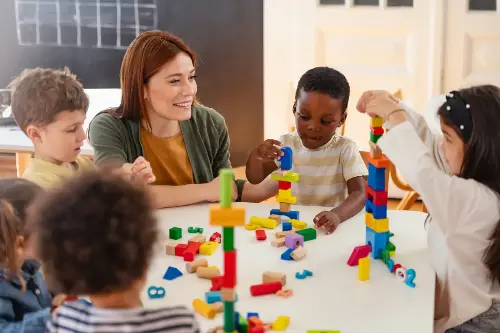
Play also serves as a social catalyst, enabling children to form connections and learn the subtleties of human interaction. Cooperative games require children to work together towards a common goal, learning the art of negotiation, sharing, and problem-solving along the way. Through this, they understand the value of teamwork and the significance of considering others' perspectives. Even competitive games have a role to play, teaching children about healthy competition, sportsmanship, and the importance of following rules. These social skills, honed in the early years, lay the foundation for their interactions in adult life.

Cognitive Constructions in the Playground
When it comes to cognitive development, play is essential. Through exploratory play, children develop a sense of curiosity and creativity. Building blocks, puzzles, and science kits encourage logical thinking, pattern recognition, and problem-solving skills. This kind of play doesn't just prepare them for academic learning but also stimulates brain development, contributing to improved memory, attention, and the ability to process complex information. Furthermore, when children engage in storytelling or play with educational technology, they boost their language skills and digital literacy, which are indispensable in today's world.
The Physicality of Play and Development
Let's not forget the physical dimension of play – running, jumping, climbing, and dancing all contribute to children's fine and gross motor skills. These activities help in developing muscle strength, coordination, and balance. They also instill a love for an active lifestyle, which is paramount for physical health. The sensory play, involving sand, water, or playdough, allows young ones to explore textures, shapes, and sizes, which enhances sensory awareness and fine motor skills, particularly in toddlers.

Unlocking Potential with Unstructured Play
In the push towards structured learning, it's crucial not to overlook the importance of unstructured play. It's in the unscripted moments of free play that children truly get to use their imagination and creativity without boundaries. This type of play sparks self-initiated learning and innovation. Without rules or guidelines, children make their own decisions, learn from trial and error, and discover their individual interests and abilities. It is these self-guided experiences that often instill confidence and a sense of independence in children.
Inclusive Play: Every Child's Right
Play is inclusive and should be accessible to every child, regardless of their abilities. Adaptive play for children with special needs is not a luxury; it's a crucial aspect of their development. Sensory-rich environments and modified games can provide these children with the same opportunities to grow and thrive. Inclusive play teaches all children about diversity and acceptance, enriching their emotional and social growth.
Fostering Future Growth with Family Playtime
Family playtime is invaluable in strengthening bonds and providing a supportive environment for children to express themselves. It's an opportunity for parents and caregivers to model behaviours, implement boundaries, and instil values. This shared experience not only nurtures family relationships but also greatly impacts a child's confidence and social skills.
In the enchanting journey of childhood, various types of play act as the vessel for holistic growth. They empower children to discover the world, themselves, and their place within society. As caregivers and educators, it's our duty to ensure that we provide the space, time, and resources for all children to engage in meaningful play. After all, in the grand tapestry of life, the threads of play are interwoven with learning, development, and joy, creating a pattern that’s as beautiful as it is beneficial. By fostering these playful experiences, we're not just entertaining our children; we're equipping them with the tools they need to thrive in every aspect of their lives.