


Far from Earth’s busy orbit, on the edge of our solar system, a realm of deep cold and shadow gives rise to some of the universe’s most spectacular travelers—comets. These ancient wanderers are born in vast reservoirs of ice and dust known as the Kuiper Belt and the Oort Cloud. Here, billions of fragments—leftovers from the solar system’s chaotic formation—wait, locked in cosmic slumber. It’s a place where temperatures can plunge to nearly -450°F (-268°C), so cold that even gases freeze solid.
Imagine: Each comet carries a piece of the earliest solar system, preserved like a cosmic time capsule. Their cores, called nuclei, are mixtures of water ice, rocky minerals, frozen gases, and organic compounds—the same ingredients that once served as the building blocks for planets, and possibly even life.
The cosmic awakening: What sends a comet roaming
Comets may rest for millions of years, but all it takes is a nudge—a gravitational push from a passing star or a clash with a distant object—to fling them into a new path. Once disturbed, they begin a long, looping journey inward toward the sun. As comets approach, sunlight awakens the frozen heart, releasing jets of gas and dust in a process called sublimation.
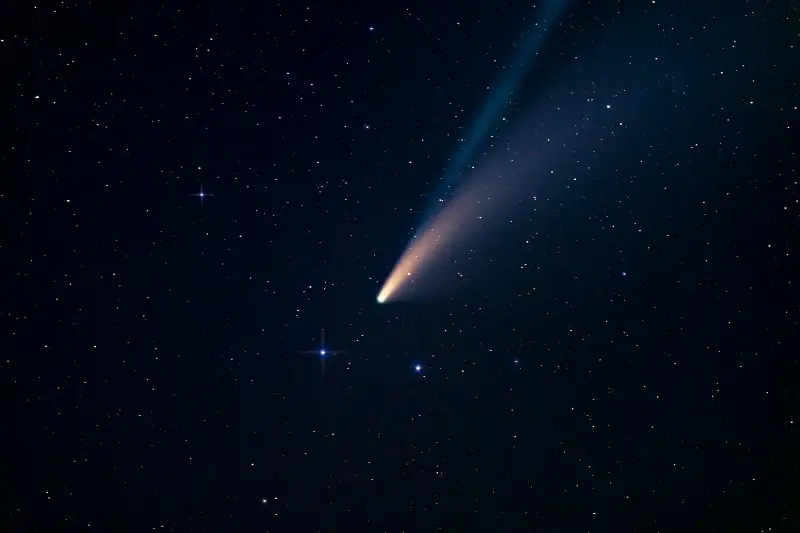
This outgassing process creates the stunning tails that captivate skywatchers on Earth. In fact:
- The glowing coma, or atmosphere, can stretch 80,000 km (50,000 miles) wide—larger than the planet Earth.
- The iconic comet tail, always streaming away from the sun due to solar wind, can reach millions of kilometers across space.
- Remarkably, comets have two tails: a straight, blue ion tail of charged particles, and a wider, yellowish dust tail, each painting the sky as the comet dashes through.
Wonders in the night: The spectacle of passing comets
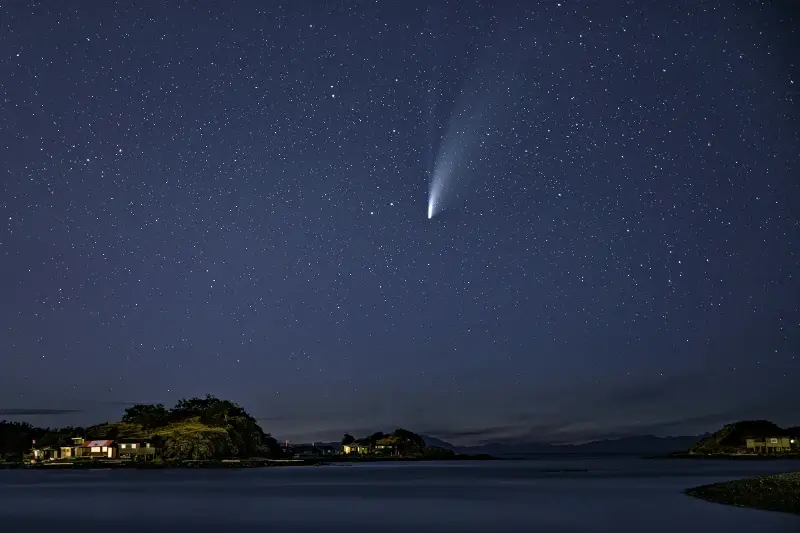
When a comet graces our night sky, it’s a rare cosmic performance—a reminder that our dynamic universe is always moving, always changing. Some comets, like Halley’s Comet, have been chronicled for thousands of years, returning on predictable orbits to dazzle new generations. Others, like 1997’s Comet Hale-Bopp, make once-in-a-lifetime visits, stirring awe as they dominate the heavens.
Seeing a comet is witnessing an icebound relic transformed by solar fire—a visual story of creation and impermanence. They can be so bright they are visible even from cities, and their sudden appearances have shaped legends, inspired awe, and even fueled anxieties throughout human history.
Returning travelers: Comets and the cycle of wonder
As a comet arcs around the sun, its bright glory fades. Radiation and solar winds gradually strip away its mass, leaving a trail of dust and gas that sometimes lingers as meteor showers on Earth. After their solar rendezvous, most comets retreat into darkness, perhaps never to return, while a special few will loop back again, centuries—or millennia—later.
Astronomers now believe that comets may have seeded our planet with water and organic molecules, possibly sparking the very beginnings of life on Earth. Each pass reminds us that the universe is as much about return as it is about discovery—a loop of creation, transformation, and wonder.
A universe of possibilities: What will the next comet teach us?
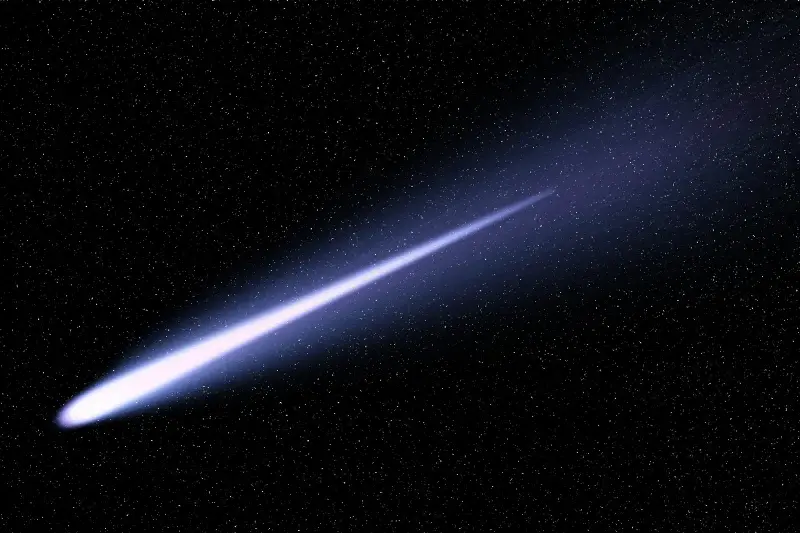
Gazing up at a comet’s shimmering tail, one can only wonder what secrets these icy nomads hold. Are they messengers from the dawn of time, or heralds of change still unknown? Each encounter leaves us with new questions and a deepened awe for the ever-changing, ever-surprising universe we call home.
The next comet may be on its way—and with it, an invitation to look deeper, question more, and remember how much mystery still drifts across the night sky.