


Perched high in the mountainous terrains, a small yet remarkable creature leads a life shrouded in fascination and wonder. The pika, an unassuming mascot of alpine resilience, thrives where the air is thin and the landscape rugged. Bearing a resemblance to the cuddly toys of a child's embrace, pikas are mammals with rounded ears, short limbs, and an almost animated expression that captures the heart of any onlooker. But don't be fooled by their adorable appearance—these creatures are fierce survivors, adapted to some of the most challenging environments on our planet.

Pikas belong to the family Ochotonidae, which diverged from their closest relatives, rabbits and hares, more than 30 million years ago. These delightful animals are primarily found in Asia and North America, choosing to make their homes among the boulder fields and cliff sides above the tree line, where few predators dare to roam. Such isolation has allowed them to evolve unique characteristics that speak to their hardiness in the face of icy winds and scant vegetation.
Let us delve into their world and uncover the secrets of pikas, those masters of adaptation and cuteness combined.
A pika's day is busy and industrious. When not resting in the crevices of their rocky habitat, they are mostly seen scampering about, collecting various grasses and plants. These collections are not for immediate consumption; instead, pikas are planning ahead. They create 'haypiles' that they meticulously curate throughout the warm months, drying their gatherings under the sun. These stores are essential for winter survival when the blanket of snow makes foraging an impossibility. This behaviour has earned pikas the endearing moniker 'little gardeners of the high country'.
A characteristic peculiar to pikas is their vocal communication. They have a complex array of calls and songs that serve to establish territories, attract mates, and sound alarms. This vocalisation is vital in their densely populated neighbourhoods, as territories often overlap within the acoustical range, ensuring that everyone in the pika community stays informed.
Pikas are monogamous and display a high level of paternal care, rare among small mammals. Pairs often share duties, with males helping to defend the territory and females nursing the young. The bonds they form are enduring and speak to a social complexity not readily apparent in creatures so small. Their litters typically consist of two to six offspring, and watching the young pikas learn the ropes of alpine life is a delightful spectacle. They rapidly gain independence, a necessity in the brief alpine summer, and by winter, are fully self-sufficient.
Another intriguing aspect of the pika's physiology is their lack of hibernation. Unlike many other residents of the high, cold regions, pikas stay active throughout the winter. Their thick fur and haypile provisions are the keys to enduring the subzero temperatures. This non-hibernation strategy means pikas are continually patrolling and maintaining their territories even under the snow, a testament to their ceaseless diligence.
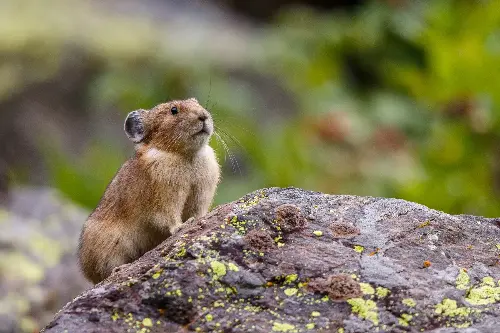
Despite their rugged lifestyle, pikas are not immune to the pressures of a changing world. Climate change poses a significant threat to their survival as warmer temperatures force them to retreat to progressively higher and more isolated refuges. The loss of suitable habitat and the subsequent population fragmentation raise conservation concerns for these alpine specialists.
Given their sensitivity to heat, pikas can serve as indicators of ecological shifts in mountain ecosystems. In studying their populations and habitats, scientists gain insights into the broader impacts of environmental changes, making the need to understand and protect these small animals all the more urgent.
Pikas may not have the imposing presence of larger wildlife like bears or eagles, but their contribution to the intricate web of mountain ecosystems is no less significant. They play a key role in soil turnover and nutrient cycling, and their hay-gathering activities provide food for other animals, proving that even the smallest beings can have a substantial impact.
It is our privilege to share the planet with such resilient and enchanting creatures. In recognising the pika, we acknowledge a world often overlooked, one that is rich with stories of survival and ingenuity. Their persistent vigour inspires us and reminds us that beauty and tenacity often come in small packages.
As stewards of the Earth, it is our collective responsibility to ensure that the song of the pika remains a vibrant note in the symphony of the wild. We must appreciate and defend these charming alpine dwellers, not merely for their unique characteristics or ecological importance, but for the joy they bring to those fortunate enough to encounter these diminutive yet mighty mountain sentinels.