


Polar bears, the majestic rulers of the Arctic, stand at the pinnacle of the ice-clad food chain. With their stark white fur and formidable presence, they are iconic symbols of the wild's raw beauty. However, beyond their striking appearance, these Snow Giants harbour unique attributes that set them apart from other wildlife.
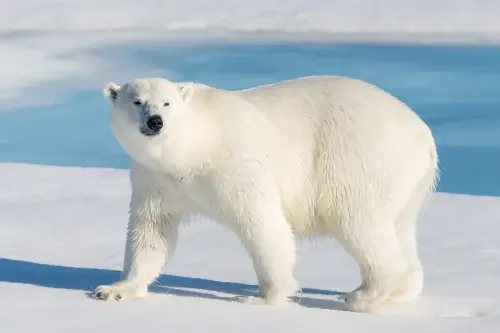
Known scientifically as Ursus maritimus—Latin for ''bear"—polar bears are marine mammals, supremely adapted to their icy habitat. Unlike other bear species, polar bears spend most of their lives on sea ice, which they use as a platform for hunting their primary prey: seals. This dependence on the sea ice means polar bears are inextricably linked to the marine ecosystem.
One of the most fascinating adaptations of Polar bears is their fur, which looks white and blends seamlessly with the ice and snow but is actually translucent. Each hair shaft is pigment-free and hollow, an evolutionary trait that provides two benefits. Firstly, it traps the sun's heat to keep the bear warm. Secondly, it helps camouflage the bear against the ice, a vital adaptation for a predator that needs to approach its prey stealthily.
Beneath that deceptive fur lies another layer of adaptation—their skin, which is black. This dark hue absorbs heat from the sun, further aiding in the polar bears' thermal regulation. Adding to this, their blubber, which can be up to 11 cm thick, insulates them against sub-zero temperatures and provides buoyancy in water.
Polar bears are impressively sized, with males typically weighing between 350 and 700 kg, and some giants tipping the scales at over 1,000 kg. Females are usually about half the size of males. Their size makes them the largest terrestrial carnivore, sharing the title with the Kodiak bear. But it is not just their size that's impressive: their paws, which can measure up to 30 cm in width, act like snowshoes, helping distribute their weight and preventing them from sinking into the snow. The undersides of their paws are covered with small bumps, known as papillae, which provide traction on the ice.
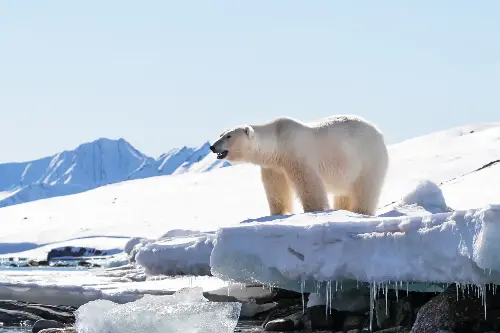
Polar bears are not only built for the snow and ice but are also adept swimmers, with slightly webbed front paws that help them navigate Arctic waters with ease. They can swim for several hours at a time and cover many kilometres in pursuit of food or new habitat. It is not uncommon for a polar bear to swim more than 60 km without a break.
Their keen sense of smell is one of their most extraordinary skills, allowing them to detect seals nearly a kilometre away and under several metres of snow and ice. This sense guides them in their solitary hunt in the vast and harsh Arctic terrain.
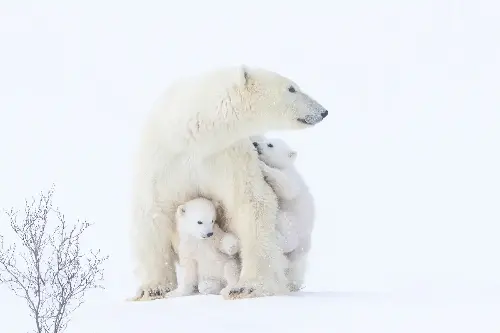
Reproduction and cub raising are perhaps the most endearing aspects of polar bear life. Females give birth in the middle of winter in a den made of snow, usually to twins. The cubs are born blind and tiny, weighing little more than a kilogram. They rely completely on their mother's milk, which is exceptionally rich in fat, and they quickly grow in the safety and warmth of the den. Come spring, the mother introduces the cubs to the outside world, teaching them to hunt and survive in one of the most challenging environments on Earth.
However, climate change poses a significant threat to these snow-adapted giants. The melting sea ice reduces their habitat range and hunting ground, which can lead to malnutrition and lower cub survival rates. As ambassadors of the Arctic, their plight is intertwined with the global conversation about climate change's impacts on ecosystems and the need for conservation efforts to protect this magnificent species.
Polar bears, with their solitary nature, astonishing adaptations, and remarkable survival skills, are not just fascinating creatures. They are a reminder of the resilience and vulnerability of our planet's wildlife. The marvels of the polar bear demonstrate nature's incredible ability to tailor its inhabitants perfectly to their environment, yet also underline the need for humanity to act as stewards for these extraordinary animals and their shrinking habitat. Uncovering the unique attributes of polar bears is more than an exercise in admiration; it is a clarion call to preserve the wild majesty of the Arctic and its Snow Giants for generations to come.