


The natural world is replete with awe-inspiring feats of speed, agility, and endurance, none more so than among the avian inhabitants who rule the skies. Certain birds stand out, not merely as fast fliers but as the ultimate aviators, pushing the boundaries of what we thought was possible in the air. In this journey, we'll dive into the remarkable abilities of Earth’s fastest birds and peek into the lives of these incredible creatures.
The Peregrine Falcon: Nature’s Speedy Predator
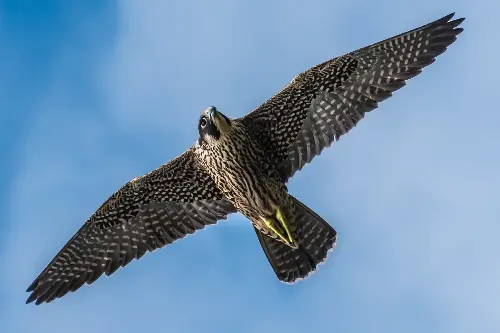
At the pinnacle of avian velocity is the peregrine falcon, the fastest bird—and indeed the fastest animal—on Earth. When in a hunting stoop—a swift, diving descent in pursuit of prey—a peregrine falcon can reach staggering speeds of over 240 miles per hour (386 kilometers per hour). Such breathtaking speed is not just for spectacle; it is an evolutionary marvel allowing them to catch agile prey mid-air with stunning precision.
In level flight, that is, without the assistance of gravity during a stoop, peregrine falcons are also impressive, capable of reaching speeds up to 56 miles per hour (90 kilometers per hour). Their streamlined bodies, powerful muscles, and specially adapted nostrils—which allow them to breathe at extreme velocities—make them superbly equipped for the life they lead.
The Golden Eagle: Fearsome Flight Dynamics
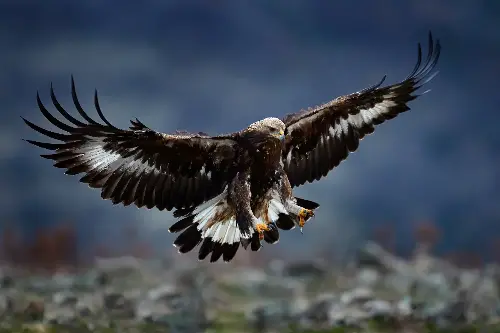
While the peregrine falcon may take the crown for speed in a dive, the golden eagle is no slouch in the aerial speed department. These majestic raptors can dive after their quarry at speeds that can exceed 150 miles per hour (241 kilometers per hour). Golden eagles use this astonishing speed combined with crushing powerful talons to hunt a variety of prey, ranging from rabbits and hares to even young deer in some instances.
Golden eagles are also renowned for their flying agility and have been observed engaging in complex aerial manoeuvres during territorial disputes and courtship displays. Their broad, long wings allow them to soar effortlessly as they scour the landscape below for potential threats or prey.
The Gyrfalcon: Arctic Speedster
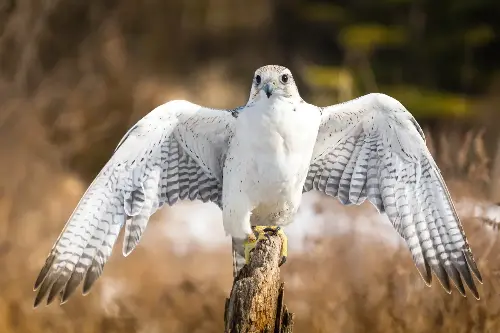
The gyrfalcon, the largest of the falcon species, stands out against the snow-white canvas of its Arctic habitat. It may not dive as fast as a peregrine, but the gyrfalcon is a potent contender in the skies, reaching hunting speeds of up to 130 miles per hour (209 kilometers per hour). Camouflaged against the tundra, the gyrfalcon is a formidable hunter, preying on birds and mammals adapted to the cold climes of the high north.
The Swifts: Masters of Sustained Speeds
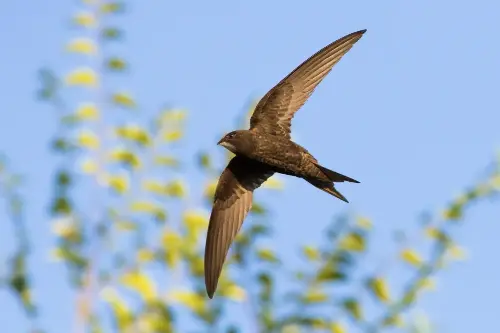
Swifts are birds whose lives are almost entirely spent on the wing, featuring among the most sustained fast fliers on Earth. The common swift, for instance, can maintain cruising speeds of around 70 miles per hour (112 kilometers per hour) and can fly at this speed for hours on end in their unending quest for insects. What's more, some swifts embark on remarkable long-distance migratory journeys, traversing thousands of miles without ever touching down.
Adaptations for Speed
What allows these remarkable creatures to achieve such feats? Bird speedsters have evolved a suite of anatomical and physiological adaptations that suit their fast-paced lifestyles. These include:
- Streamlined bodies to reduce air resistance
- Strong chest muscles to power their flight
- Stiff feathers for stability and control at high speeds
- Hollow bones to reduce body weight without sacrificing strength
Each bird's adaptations are finely tuned to its environment and lifestyle. For example, falcons’ sharp, pointed wings allow for sudden changes of direction at high speed, while swifts’ scythe-shaped wings enable fast, energy-efficient flight.
Nature's Aerial Spectacles
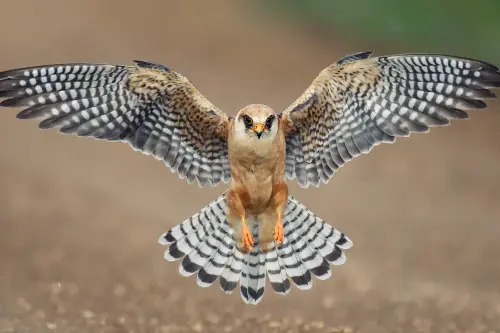
Witnessing the fastest birds in flight is an experience like no other, offering an up-close look at evolution's masterpieces at work. Whether it's the death-defying dive of the peregrine falcon or the enduring flight of the swift, these natural performances are as thrilling as they are important to our understanding of biology and physics.
Bird enthusiasts and nature lovers are encouraged to seek out these amazing animals in their natural habitats responsibly. By respecting nature and preserving ecosystems, we ensure that future generations will also be able to marvel at these winged wonders.
In the world of birds, speed is not just a number—it is survival, it is grace, and it is the very essence of life in the skies. From the peregrine falcon to swifts, the speed and agility these birds display are but a window to the incredible diversity of adaptations that life on Earth has to offer. The next time you look up to the sky, remember: it's not just empty space but a dynamic, living canvas upon which these incredible birds paint their airborne stories.