


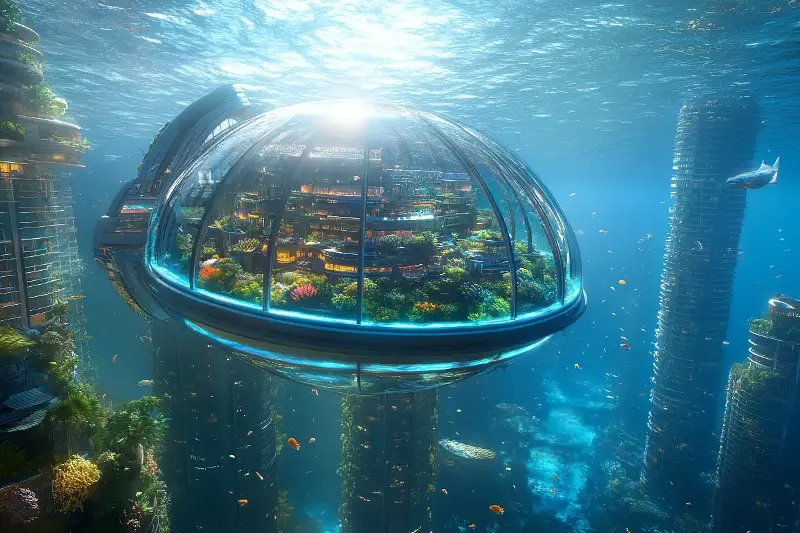
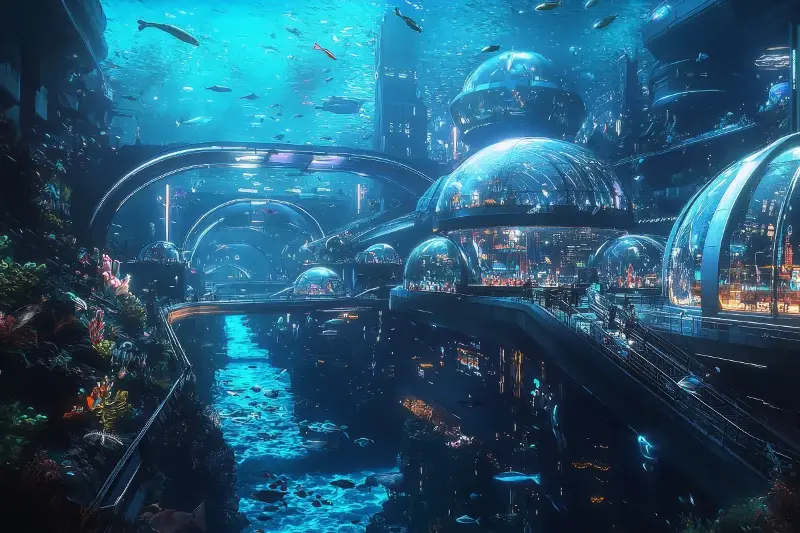
It’s a scene that has played out in countless science fiction novels and dazzling films: sprawling glass domes and gleaming spires shimmering beneath the ocean’s surface, home to bustling communities of humans coexisting with the wonders of the deep. But can underwater cities really move from the wild fantasy of our imaginations to a futuristic, liveable reality? The answer may not be as far-fetched as you might think.
Why Live Below the Waves? The Surprising Benefits
Underwater living isn’t just a technological whimsy—it might soon become a necessity. Rising sea levels, population pressure, and the scarcity of urban land are all pushing cities to consider novel environments. Oceans cover more than 70% of Earth’s surface, providing an almost endless expanse for exploration and habitation.
Imagine falling asleep to the fluid dance of jellyfish outside your window or waking to sunlight filtering through a sapphire-blue world. But it’s not all about the view. Key potential benefits of underwater cities include:
- Protection from extreme weather and atmospheric pollution
- Access to abundant, sustainable marine resources
- Novel opportunities for scientific research, aquaculture, and even tourism
- Innovations in architecture, community design, and renewable energy
For designers and visionaries, this means redefining what “home” can truly be.
Tech Titans Are Already Testing the Waters
The concept of life below the sea has intrigued inventors for decades. The famous underwater habitat, Jacques Cousteau’s Conshelf II, was an early experiment in the 1960s. However, today’s engineers have much bolder ambitions, powered by high-tech breakthroughs.
Projects like Japan’s proposed Ocean Spiral—a 500-metre-high spiral city descending into the seabed—are pushing the envelope. The idea? A self-sustaining world, complete with energy production, food cultivation, and community spaces, all protected by state-of-the-art pressure-resistant materials and marine engineering.
Meanwhile, underwater research labs such as the Aquarius Reef Base off Florida and China’s plans for subsea bases show real scientific investment. With advances in materials like flexible composites, underwater drones, and AI-powered life-support, the technical hurdles seem a little less daunting each year.
Challenges Beneath the Surface: Nature, Technology, and Human Spirit
Building homes where fish currently roam is not without incredible challenges. Nature below the waves is as hostile as it is beautiful. Pressure, darkness, and the need for oxygen present immense obstacles:
- Pressure and Structural Integrity: The deeper you go, the more intense the water pressure—requiring innovative designs and materials tougher than steel.
- Energy Supply: Supplying clean, reliable energy underwater is complex, but some planners envision harnessing tidal, thermal, or wave power.
- Food and Waste Management: Sustainable aquaponics, algae farming, and recycling systems are being explored to close the loop.
- Psychology and Community: Humans crave sunlight, space, and connection. Retaining well-being in enclosed, underwater environments is a puzzle scientists and architects must solve.
The most brilliant technology will be useless unless people actually thrive in these aquatic worlds.
Not Just Sci-Fi: Real Projects You Can Explore
If you’re waiting for an invite to Atlantis, you might be in luck. While full-scale underwater megacities aren’t yet open for business, you can visit or learn about:
- Hydropolis Resort (UAE): An ambitious undersea hotel project, with nearly 220 suites planned underwater. (Currently on hold, but representing a key vision for deep-sea living.)
- Poseidon Undersea Resort (Fiji): Billed as the world’s first seafloor resort, featuring rooms with panoramic views of marine life.
- SeaOrbiter: A French “sea station” offering mobile underwater living and research.
- Floating Cities: Some solutions, like the Seasteading Institute’s designs, blend floating and submerged architecture for adaptability.
Each of these brings us closer to a world where humans can comfortably reside beneath—or atop—the waves.
What Lies Ahead: Will You Be the Next Deep-Sea Citizen?
The dream of underwater cities is inching from the pages of fantasy into tomorrow’s blueprints. Whether driven by necessity, curiosity, or bold ambition, the promise of these cities is reshaping how we think about our place in the world.
Will future generations call these submerged sanctuaries home, or will the ocean always remain humanity’s final frontier? One thing is certain: as science and imagination continue to merge, the boundaries between today’s reality and tomorrow’s wonder may soon be blurred forever. The next chapter is being written right now—perhaps, someday, with you among those pioneers glimpsing dawn through a glass wall beneath the sea.