


In the labyrinth of the animal kingdom, where every creature plays its part, few are as compelling and astonishing as the stoat, a small yet fierce member of the weasel family. Known for its boundless energy and breathtaking agility, the stoat is an animal that captivates with its survival strategies and vibrant behaviour.
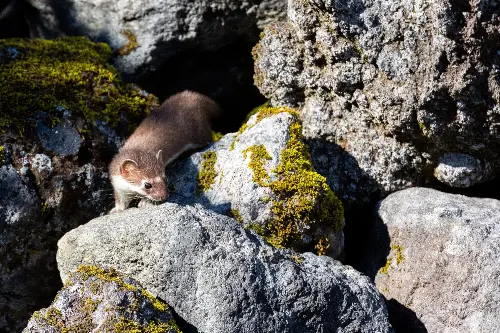
To the untrained eye, stoats may be easily mistaken for their weasel relatives, but these creatures stand out with a number of unique features. Perhaps its most distinguishing characteristic is the seasonal change in its coat. Native to Eurasia and North America, the stoat sports a light brown fur with a creamy underbelly in summer months. As winter approaches, it performs a remarkable transformation, with its coat turning to a stunningly beautiful, thick white fur known as ermine, prized by royalty and nobles in the medieval period for its luxurious feel. This seasonal camouflage provides excellent cover against snowy environments.
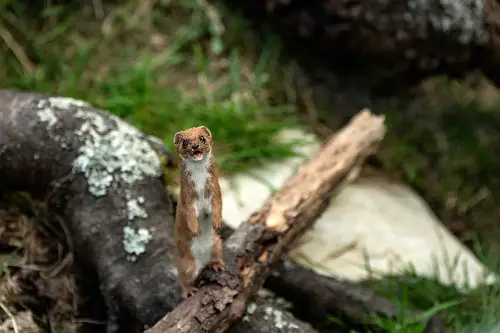
What makes the stoat particularly intriguing is its tactical prowess when hunting. Despite its diminutive size, with adults measuring around 25 to 30 centimetres in length, the stoat is a deft predator. Its dietary preference leans toward rodents, such as rats and rabbits, which are often much larger than the stoat itself. To tackle these bigger animals, the stoat employs a mesmerising 'dance'. This involves a series of twisting jumps and darting movements that both enthral and confuse their prey, allowing the stoat to deliver a lethal bite to the neck.
This energetic weasel is not only a masterful hunter but also demonstrates extraordinary stamina. Stoats can chase down prey over considerable distances, a testament to their endurance and determination. It's known that a stoat can travel up to several kilometres in pursuit of a meal, a remarkable feat for such a small creature.
Stoats are also skilled climbers and swimmers, able to traverse different terrains in pursuit of sustenance. Their slender, flexible bodies enable them to wiggle into burrows and other tight spaces when searching for or stalking their prey. These abilities make them adept at surviving in a wide range of habitats, from forests and moors to farmlands and artic regions.
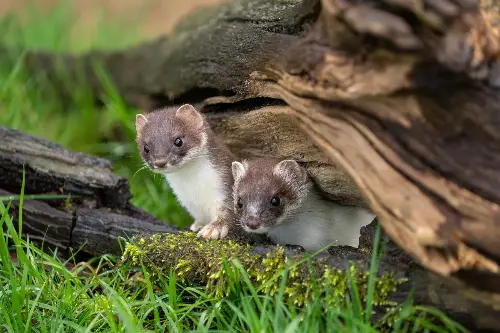
As one delves into the reproductive habits of the stoat, more surprises unfold. Stoats are induced ovulators, which means that the act of mating causes the female to release eggs for fertilisation. Uniquely, stoats also utilise a reproductive strategy known as delayed implantation. Once fertilisation occurs, the development of the embryo pauses for several months. The embryo will not implant in the uterus and begin to grow until the following spring. This results in the births aligning with the most favourable conditions for the offspring to survive, taking advantage of the time when prey is most abundant.
However, despite their fascinating biology and behaviours, stoats face various threats. Habitat loss, declining prey populations, and being hunted for their fur have all impacted stoat populations. They also suffer from the misconceptions and vilification around being perceived as poultry pests. While it's true that stoats will take weak or sickly chickens if the opportunity presents itself, their role in controlling rodent populations is beneficial to farmers.
In conservation terms, stoats do not currently fall into a critically endangered category, but they are often caught in traps meant for other, more troublesome predators. It highlights the intricate dance between human activity and wildlife conservation, reinforcing the need for more targeted and thoughtful conservation measures to ensure we don't destabilize the delicate ecosystem balance.
In the end, the stoat stands as a testament to adaptation and efficiency in the natural world. It offers us a window into the extraordinary capabilities of even the smallest predators and the complex web of life they inhabit.
Understanding and appreciating the role of creatures like the stoat can foster a greater connection to the natural world and underline the importance of ecosystems. Their ability to survive and thrive in various climates, terrains and against larger prey is not just surprising but deeply admirable. Indeed, the stoat is a small yet mighty force of nature, one well worth our admiration and protection.