


Why Are Black Holes the Universe’s Ultimate Architects?
What if the most mysterious, terrifying objects in the cosmos were also its master designers? Black holes, monstrous forces we once only feared, are now being revealed as crucial to the universe’s structure, growth, and even our own existence.
Step with voi into a universe lit with wonders and shadowed by enigmas. Today, you’ll discover how these cosmic titans shape galaxies, regulate cosmic order, and keep the cosmos humming with life and energy. Prepare to see black holes not as deadly destroyers, but as the universe’s silent architects.
Beyond the Darkness: The Real Face of Black Holes
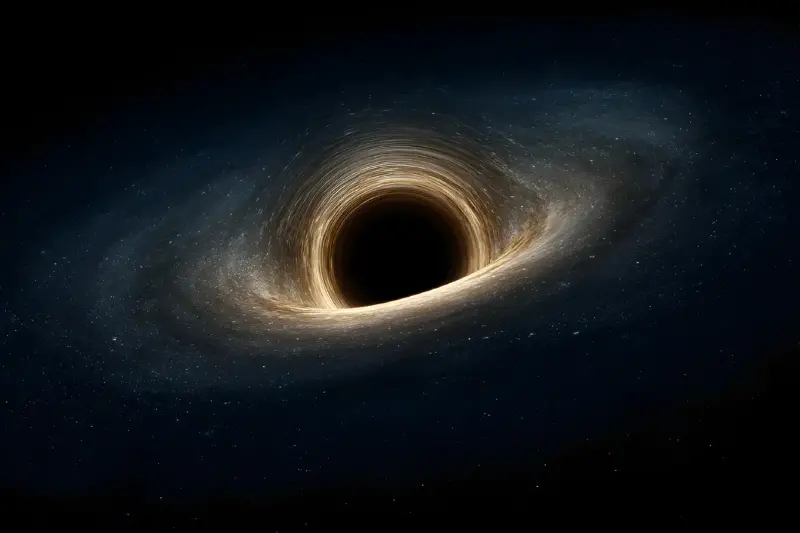
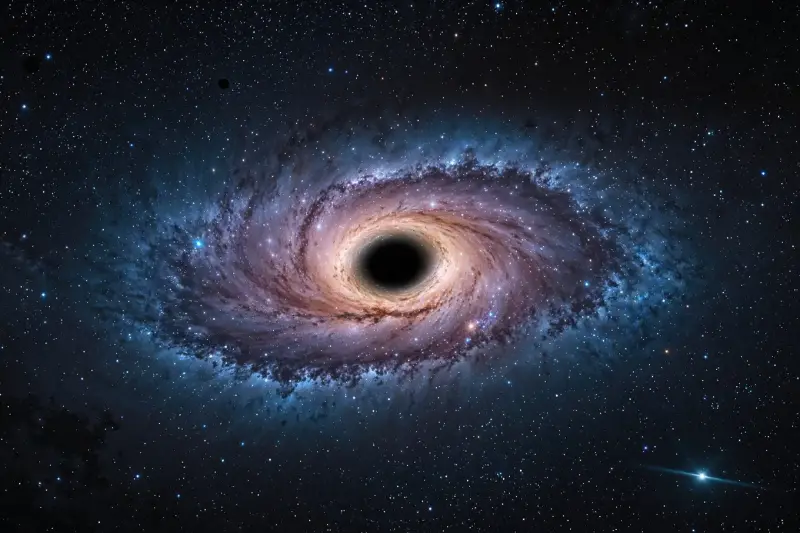
Picture the heart of a galaxy: stars swirling in luminous dance, gas clouds glowing with potential. At the very core, lurking invisibly, often sits a supermassive black hole. It’s not just a cosmic vacuum cleaner - it’s an engine, a regulator, a sculptor.
Black holes hold galaxies together. Their gravity is the glue that binds hundreds of billions of stars, organizing their orbits. Without them, galaxies like our Milky Way would drift apart, stellar islands scattered in the cosmic night.
Even more mesmerizing, the largest black holes seed the birth of new stars. They feast on gas and dust, unleashing intense winds and jets that compress matter in their paths. This pressure ignites stellar nurseries, ensuring the endless cycle of cosmic renewal.
Creation Through Destruction: How Black Holes Build Worlds
It sounds paradoxical - how can something that devours light and matter spark creation? Yet, observations from Europe’s ALMA telescope and Singapore’s Gemini Observatory confirm it: when black holes consume too much, they spit some of the energy outward.
- These outbursts send shockwaves through their home galaxies.
- Gas clouds get compressed, cooling and collapsing into dense knots.
- New stars burst to life where chaos once reigned.
The cosmic balance hinges on this violent generosity. If black holes were greedier, they’d snuff out all star-forming material. If they were less voracious, galaxies would languish, denied the dramatic fireworks that birth new worlds.
The Cosmic Web: Black Holes as Universal Anchors
Zoom out, and voi sees that galaxies aren’t strewn randomly. They line up along vast, invisible filaments, forming a cosmic web across the universe. At the nodes of this web are - you guessed it - clusters tied together by supermassive black holes.
- Black holes set the pace for galactic growth.
- They regulate the spread of elements, from carbon to gold.
- By shaping their environments, they lay the foundation for planets, chemistry, and ultimately, life as voi knows it.
Why the Universe Needs Its Monsters
It’s tempting to think of black holes as villains, but eliminate them, and the grand story of the universe unravels. Imagine:
- No supermassive anchor at the center of the Milky Way. The solar system itself might drift into deep space.
- Without regulated star formation, the universe could be barren and dark - or explode with unchecked fury and chaos.
- The cosmic web, that intricate tapestry linking everything from New Zealand to Zurich to Singapore under starry skies, would loosen and dissolve.
Awe at the Edge: What Black Holes Reveal to Us All
Perhaps the greatest beauty in black holes is their paradox: they are mystery and answer, destroyer and creator, cold logic and cosmic emotion.
When voi looks up and wonders about the universe’s grand design, remember - at the heart of every spiral, every glittering neighborhood of stars, is a black hole silently shaping reality.
Key Takeaways:
- Black holes are essential engines at the center of galaxies, holding stars together and fueling creation.
- Their violent outflows ignite new stars, ensuring galaxies remain vibrant nurseries for life.
- On the largest scales, they define the cosmic web’s architecture, binding the universe into a coherent whole.
So next time you gaze at a star-lit sky, recall the invisible hands of black holes - not merely swallowing, but conducting the endless cosmic symphony.
What other mysteries, voi wonders, are waiting at the edge of darkness? And if black holes can be the architects of beauty, what other surprises might the universe have hidden in plain sight? Perhaps it’s time to look deeper, question more bravely, and savor the elegant dance of creation and destruction unfolding all around.