


Do You Really Know What Sunscreen Is Doing for Your Skin in Wild Weather?

There's a common belief that sunscreen is just for sunny, summer days. But what if the biggest mistake standing between you and glowing, healthy skin is what you don’t do when it’s humid or freezing outside? Whether Aotearoa’s humid spell makes your face feel slick by 9 am or a frosty winter leaves cheeks tingling raw, the rules of sun protection quietly shift - and these changes could be silently sabotaging your skin.
Picture this: a still, sticky morning in Auckland, warm air clinging to your skin, or a brisk, glassy-blue winter day in Queenstown where your breath fogs the air. We slather on lotions for moisture or sweep on makeup, but how often do we stop to ask: is my sunscreen working as hard as I am – and, honestly, am I using it right?
In this guide, voi will peel back the layers and secrets that dermatologists wish everyone knew. You’ll learn how much sunscreen to apply, the real story behind reapplication, the crucial differences between mineral and chemical filters, and the subtle slip-ups that might be ruining your glow - and your health.
Why Weather Changes Everything for Your Skin
It’s tempting to think UV dangers disappear when the sun hides behind thick clouds or cool air sets in. However, dermatologists warn that UV rays are stealthier than we imagine, bouncing off wet footpaths in humid weather or glinting off snowy hills in the coldest months.
Here’s the reality:
- Up to 80% of UV rays can penetrate clouds
- Water, sand, and even cement increase UV reflection
- Snow can reflect up to 80% of UV rays, doubling exposure
This means every skin type, every season, and every forecast demands smart sunscreen habits.
Sunscreen 101: Getting the Basics Glossy and Right
From the feather-light gels that sink into skin to creamy formulas that linger, there’s more to sunscreen than SPF and price tags. To unlock its magic, voi need to address two blindingly common questions: how much, and how often?
Perfecting Your Application: The Truth About Quantity
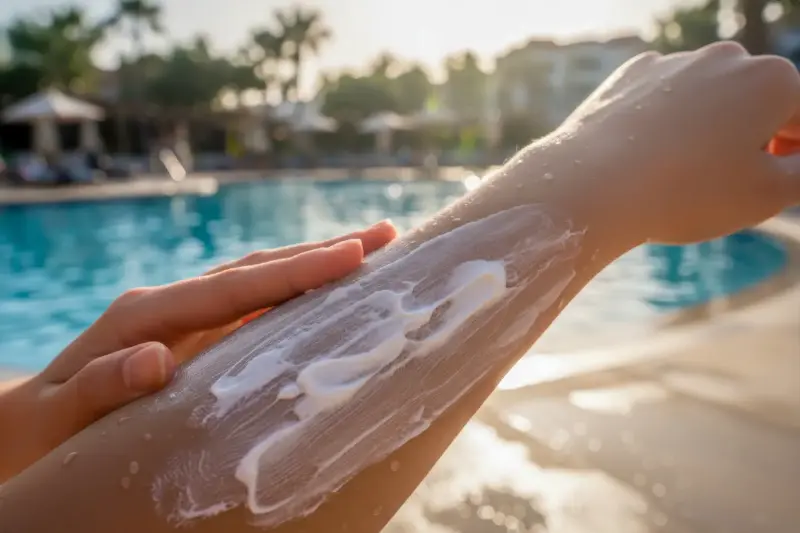
Most people apply only a fraction of the sunscreen required for proper protection. Here’s the golden rule dermatologists swear by:
- Face and neck: Use about half a teaspoon (roughly two finger-lengths of product)
- Body: One shot glass (about 35 ml) to cover the average adult in swim attire
Pro tip: Don’t forget ears, backs of hands, tips of feet, and the delicate skin around eyes.
Timing: When Should You Reapply?
Life’s busy, but your SPF doesn’t clock out at 9 am. Sunscreen naturally degrades on your skin due to sweat, touch, and sheer passing time - and this accelerates in humid or wet conditions.
Reapply every two hours, or immediately after swimming or excessive sweating. Even mineral sunscreens, prized for stability, need freshening up in real world conditions.
Cracking the Code: Mineral vs Chemical Sunscreens
Not all sunscreens are created equal, and which you choose can revolutionise your daily comfort.
-
Chemical filters work like a shield, absorbing UV rays before they cause damage. These formulas are lightweight, invisible, and won’t leave a white cast - ideal for humid, oily skin that dislikes heavy textures. But in high sweat or water, they might run and lose effectiveness quicker.
-
Mineral (physical) filters, like zinc oxide and titanium dioxide, form a physical barrier that scatters and blocks UV rays. They’re less irritating for sensitive skin, less likely to clog pores, and generally more stable in bright or biting weather. However, they sometimes feel heavier or look ghostly if not blended well.
Insider tip: For humid Kiwi climes or high-intensity snow sports, layering a mineral sunscreen under your makeup or daily moisturiser could lock in longer-lasting protection.
Subtle Mistakes That Quietly Sabotage Glow
Even the most devoted skincare guru can fall victim to sneaky sunscreen slips. Tick these common culprits off your list:
- Relying on makeup or moisturisers with SPF: These often don’t deliver enough coverage or uniformity
- Forgetting lips: Lip skin is thin, vulnerable, and easily burned. Use a balm with SPF 30+
- Skipping cloudy or winter days: UV rays penetrate clouds with surprising strength
- Spraying and leaving: Spray sunscreens must be rubbed in to ensure even coverage
- Neglecting ears, scalp, and hands: Spots most prone to UV damage - and premature aging
Key insight: Consistency outperforms perfection. Make sunscreen part of your daily, year-round ritual, no matter the weather.
What About Suncare in Especially Humid or Freezing Weather?
Humidity often tricks us. Skin might feel moist, but sweat can dilute your sunscreen faster, especially if you towel off that protective layer without even realising. Opt for water-resistant formulas when the mercury rises, and reapply diligently if you’re active outdoors.
Colder climates bring their own challenges. Snow glare nearly doubles UV exposure. In freezing winds, your skin’s natural barrier is compromised, making sunscreen not just a must for burn prevention, but a crucial ally for strengthening the skin’s defenses against dryness and oxidative stress. Choose nourishing, hydrating sunscreens with added emollients and apply generously.
The Texture Test: Find Your Perfect Formula
It’s a sensory experience. Imagine a silky SPF gel that disappears into skin for sticky, humid walks along the waterfront. Or a cushiony, rich lotion that cocoons your face before a sunrise on the ski slopes.
Switch up your sunscreen texture to match the weather - lightweight gels and sprays in sticky warmth for breathability, richer creams in winter to buffer windburn and dehydration.
Dermatologists’ Top Takeaways for New Zealand Skin
To sum up the expert wisdom:
- SPF 30 or higher is a non-negotiable
- Apply more than you think you need - half a teaspoon for face and neck, a shot glass for body
- Reapply every two hours, or after sweating, swimming, or towel drying
- Choose mineral filters for sensitive skin or intense sun conditions; chemical for quick-dry, invisible finish
- Never skip sunscreen, even when it’s cloudy, rainy, or cold
A Final Thought: The Glow That Weather Can’t Dim
Sunscreen is more than a product - it’s both shield and ritual, nourishing barrier and invisible friend. Investing a minute to apply it, even when clouds gather or frost settles, means gifting your future self a legacy of resilience, health, and glow.
So next time voi step out - into misty rain, blazing sun, or silent snow - pause for that soft, sensory moment of smoothing on sunscreen. Your mirror, your doctor, and your lifelong glow will thank you.
What’s the next little change for your beauty ritual? Maybe it begins with a squeeze of SPF on a grey morning. The journey to radiant skin is woven through every day, in every weather, and it starts with protecting the skin you’re in.