


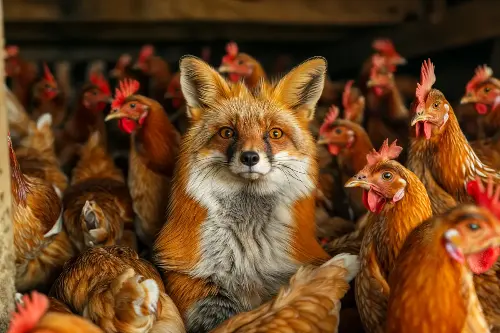
Amid the hustle of city life, a flash of russet fur often goes unnoticed. Yet, the red fox (Vulpes vulpes) is a common resident in many of England’s urban landscapes. These remarkable creatures have captivated human attention for centuries, and their successful adaptation to urban living is as extraordinary as it is enlightening, proving the ingenuity of wildlife amidst human expansion.
Red foxes, which are native to Britain, have become quintessential urban animals. Once primarily found in rural areas, they started moving into cities in the 1930s, reaching London by the 1940s. Today, they are a familiar sight across urban environments. The adaptation has been so successful that urban fox populations can be denser than their rural counterparts, with estimates of up to 16 individuals per square kilometre in cities like London.
Unlike their country cousins, urban foxes have adjusted to the nocturnal niche to avoid the direct hustle and bustle of human activity. Their diet is one of the most striking representations of their versatility. While rural foxes hunt rabbits and birds, and scavenge carcasses, their urban relatives have a diet consisting largely of leftover human food, invertebrates, and small mammals such as rats and pigeons. This diet demonstrates not only the resourcefulness of the fox but also plays a role in controlling the populations of pests in the city.
The red fox’s role in urban ecosystems goes deeper. It’s a biological control agent, maintaining certain species' populations, which might otherwise experience unchecked growth, potentially leading to imbalances in the urban ecosystem. For instance, by preying on rats, foxes can indirectly aid in reducing the spread of diseases that these rodents may carry. Furthermore, their scavenging helps in the decomposition of organic material, contributing to nutrient cycling in the environment.
Urban fox behaviour is a testament to their intelligence and adaptability. To avoid human encounters, they have developed the ability to navigate complex traffic systems and to exploit food sources that occur at specific times and locations – for example, raiding bins on collection day. They have learned to listen for the telltale sounds of lids being closed and sometimes can even be spotted following bin lorries. Such behaviour showcases not only cognitive prowess but also an incredible level of behavioural flexibility.
Sociable yet elusive, urban foxes nevertheless maintain a distance from humans. They tend to live in small family groups, but unlike domestic animals, they remain wild and are not dependent on humans for survival. Although occasionally they may appear bold or even approach people, this is often due to habituation rather than genuine tameness or friendliness.
However, the relationship between humans and urban foxes isn’t always harmonious. Foxes can become pests themselves when they rummage through bins, leave droppings in gardens, or, less commonly, prey on pet animals. These conflicts highlight the need for coexistence strategies, such as secure compost bins and resilient fencing, to mitigate negative interactions while still appreciating the benefits foxes bring to urban ecosystems.
In fostering coexistence, education plays a crucial role. Misconceptions about the dangers foxes pose can lead to unwarranted fears or harmful actions against them. In truth, attacks on humans are incredibly rare, and diseases they carry, such as mange or even rabies, are preventable through simple measures like not feeding wild foxes and keeping pets vaccinated.
Conservationists and urban wildlife experts often stress the importance of respecting the red fox as a wild animal and not an urban nuisance. Viewing the presence of foxes in cities as a chance for wildlife education and engagement can shift public perception from one of antagonism to coexistence.
The majesty of the red fox in our urban ecosystems serves as a daily reminder of nature’s resilience and the intricate connections between human and non-human inhabitants of our shared spaces. Through understanding and respect, we can ensure that the red fox continues to thrive among us, serving its role as a caretaker of urban nature, and offering those willing to notice, a glimpse of the wild in the heart of the city.