


Tucked away in the majestic folds of the Eastern Himalayas lies Bhutan, a kingdom that defies conventional definitions of a nation-state. Known as the Land of the Thunder Dragon, Druk Yul in the local vernacular, Bhutan is a place where the past and the present meld seamlessly and where simplicity and complexity weave together in a rich tapestry of culture, spirituality, and environmental conservation. The allure of this mysterious land is rooted in its tranquil landscapes and vibrant heritage, a powerful magnet for travellers seeking the extraordinary.
Embracing Gross National Happiness
In Bhutan, progress is measured not only in economic terms but also through the happiness and well-being of its people. The philosophy of Gross National Happiness (GNH), coined by the Fourth King of Bhutan, Jigme Singye Wangchuck, has been guiding the country's developmental policies since the 1970s. GNH prioritises sustainable development, cultural preservation, environmental protection, and good governance, creating a society that values collective happiness above individual wealth.
A Realm of Enchanting Festivals
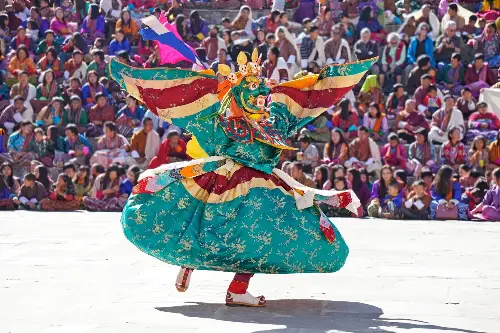
The Bhutanese calendar is replete with vibrant tsechus (festivals) that are a window into the kingdom's soul. Paro, Thimphu, and Punakha host the most popular ones, featuring mesmerising mask dances, intricate costumes, and joyous celebrations. These festivals, deeply rooted in Buddhism, commemorate the deeds of Guru Rinpoche, who is said to have introduced Tantric Buddhism to Bhutan. The tsechus offer not just entertainment but also a unifying experience for the community, a bond reinforced by tradition and spirituality.
Dzongs: Fortresses of Culture and Administration
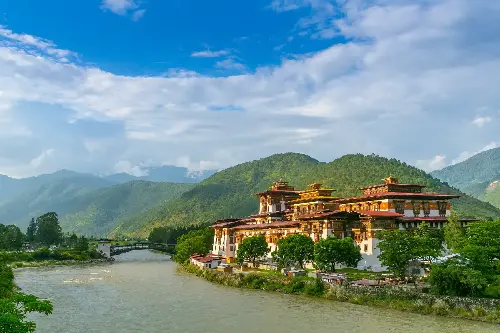
Scattered across the Bhutanese terrain, the dzongs—fortress monasteries—are commanding architectural feats that house both monastic and administrative bodies. The mastery in craftsmanship and strategic location of dzongs such as Punakha Dzong and Trongsa Dzong, showcase the blend of the spiritual and the temporal in Bhutan's governance. The imposing walls and intricate designs speak elegantly of a history that is preserved and alive within these structures.
Trekking to the Tiger's Nest
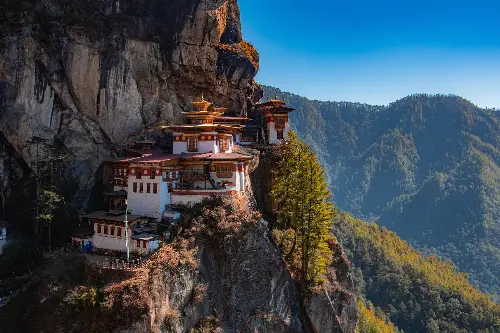
The iconic image of Bhutan for many is that of Taktshang Lhakhang, the Tiger's Nest Monastery, perched precariously on the cliffside 900 metres above the Paro valley floor. The journey to the Tiger's Nest is both literal and metaphorical—a trek that serves not just as a physical challenge but also a pilgrimage that invites introspection and spiritual discovery. The trek, which ranges from two to four hours, is rewarded with an up-close view of one of Bhutan's most sacred sites and panoramic vistas that inspire awe and reflection.
Conservation Ethics: A Legacy of Respect for Nature
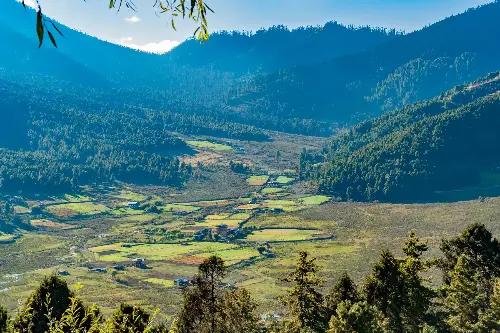
Bhutanese culture is steeped in a deep respect for nature, a value that is institutionalised through its conservation policies. Remarkably, over 70% of Bhutan is under forest cover, and more than half of the country is designated as protected national parks, nature reserves, and wildlife sanctuaries. This commitment to the environment has made Bhutan the world's only carbon-negative country, creating a sanctuary for a rich biodiversity that ranges from snow leopards to red pandas and countless endemic bird species.
Cuisine: A Taste of Bhutan's Bounty
The Bhutanese palate is one flavoured with the zing of chillies, the warmth of aromatic spices, and the heartiness of red rice. Bhutan's national dish, ema datshi, is a spicy blend of chillies and cheese that exemplifies the bold flavours of this mountainous nation. The culinary offerings in Bhutan are reflective of the agrarian lifestyle and use of fresh, locally sourced ingredients, with dishes that are both simple and deeply nourishing.
The Art of Bhutanese Textiles
Bhutanese textiles are a riot of colour and pattern, each piece meticulously handcrafted and often signifying one's region, status, or occasion. Weaving is considered an art form, and Bhutanese fabrics, especially the intricate kiras (traditional dress for women) and ghos (traditional dress for men), are renowned for their beauty. The use of natural dyes and intricate patterns make these textiles sought after by collectors and fashion enthusiasts around the world.
Entering the Land of the Thunder Dragon
Travelling to Bhutan is an exercise in patience and planning. The kingdom regulates its tourist inflow through a policy of 'High Value, Low Impact tourism to preserve its environment and culture. Visitors are required to book their trips through registered tour operators, with a minimum daily package that covers accommodations, transportation, a guide, and a sustainable development fee that directly funds GNH-inspired projects.
The journey to Bhutan is not just a trip; it is an immersive experience into a way of life that prioritises harmony, community, and the mindful preservation of heritage. In a world bustling with noise and haste, Bhutan offers a sanctuary of tranquillity where time slows and the spiritual murmurs of the Himalayas are the loudest sounds you'll hear. It is a land where the dragon’s roar is not one of ferocity but of peace, an invitation to partake in the reverence for life that resonates from valley to mountaintop.