


In the frigid expanse of the Arctic tundra, where the ground is perennially locked in permafrost and the biting cold shaves away at life with an unforgiving hand, one species stands as a testament to resilience and survival—the muskox. This shaggy-haired ungulate, with its impressive horned visage, seems to have been lifted directly out of a prehistoric canvas, and it deftly illustrates the concept of a living relic from the Pleistocene epoch.
The muskox, or Ovibos moschatus, with its Latin name translating rather accurately to 'musky sheep', is neither musky in the unpleasant sense nor is it a sheep. In reality, the muskox is more closely related to goats and antelopes than sheep. Nevertheless, this unique creature exudes a musky odour during the mating season, which acts as a social cue within herds.
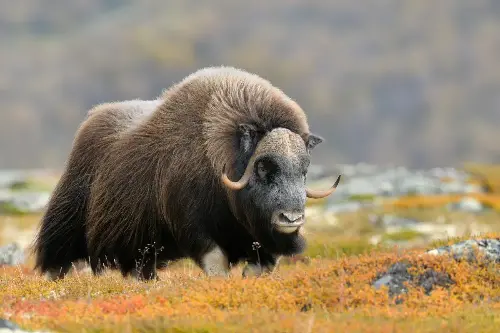
Tracing back its lineage, it is awe-inspiring to discover that the muskox is one of the few megafauna survivors from the last Ice Age, an era that saw the culmination of mammoths and sabre-toothed tigers. The muskox managed what many could not—it adapted. Over the millennia, these animals have perfected the art of surviving in some of the harshest conditions on Earth, where winter temperatures plummet to below -40°C and winds slice through the environment like icy knives.
One secret to the muskox's survival is its extraordinary two-layered coat. The long, coarse outer layer called guard hairs, which can grow to reach the ground, shields the animal from snow and wind. Beneath this exterior lies a second layer, a soft, woolly undercoat known as qiviut that is eight times warmer than sheep’s wool and finer than cashmere. This undercoat is incredibly valuable and is traditionally used by Native Arctic people in their knitting. Astonishingly, the muskox sheds this undercoat each summer; a single animal can provide up to 2 kilogrammes of qiviut annually.
Despite their bulk, muskoxen are surprisingly well adapted to traversing their rough, icy terrain. They have broad, rounded hooves that distribute their weight effectively, preventing them from sinking into snow or slipping on ice. This adaptation is one among many that has seen the muskox endure through epochs.
Social structure is paramount for muskoxen. Their lives are spent in small herds consisting of both sexes and all ages. These herds are remarkably stable units. When threatened, muskoxen form a protective circle around the young, with adults' horns facing outward in a formidable display that has deterred predators for thousands of years. This defensive strategy underscores the muskox's cooperative spirit and its evolutionary adaptability.

The breeding season, or rut, in late summer is when males engage in dramatic clashes to establish dominance and breeding rights. These battles involve charging and butting heads with such force that the sound echoes across the tundra. While violent injuries are rare, such is the precision with which these creatures engage.
Reproduction leads to gestation periods that last around 8 months, culminating in the birth of a single calf. Calving season becomes a time of renewal, typically occurring from April to June, when the land begins to thaw. Newborn muskoxen are able to stand and follow their mothers within just a few hours—a necessity in their unforgiving homeland.
Surprisingly, muskoxen have a relatively herbivorous diet that remains quite consistent year-round. Consisting primarily of arctic willow, grasses, mosses, and lichen, this diet is low in nutrients. However, muskoxen are equipped with a four-chambered stomach that allows them to ferment their food and extract the maximum amount of energy possible.
The status of the muskox has fluctuated throughout the centuries, primarily due to human activities such as overhunting and climate change. Currently, they are not considered endangered, but they face new threats from the warming climate impacting their cold habitat. Conservation efforts and changing hunting regulations have helped stabilise populations in many areas where they were once extirpated. Today, the muskox thrives primarily in Greenland and the Canadian Arctic, with reintroduced populations in Alaska and Russia.
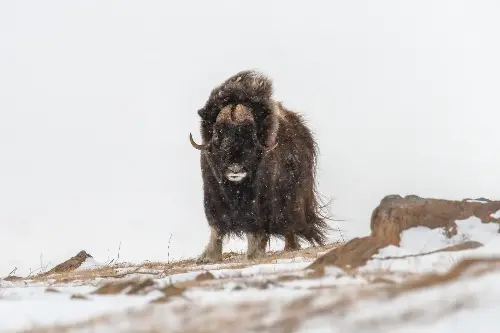
Astonishingly, muskoxen also have cultural significance, featuring prominently in indigenous folklore and traditions. They symbolise strength and endurance, intrinsic values to the inhabitants of the Arctic region—a fitting metaphor for a creature that has traversed timelines unchanged.
As climate patterns shift and the human footprint expands, the muskox serves as a stoic reminder of the planet’s deep past and as a barometer for its future. These remarkable creatures, the majestic survivors from the Ice Age, continue to traverse the tundra, much as they did when woolly mammoths roamed, encapsulating Earth's history in their very being. For those with a passion for wildlife and the storied history of our planet, the muskox represents not just a triumph over adversity but a living legend worthy of both admiration and protection.