


Few plants evoke such a powerful mix of nostalgia and wonder as the dandelion. For centuries, this golden wildflower has been more than a mere weed—its soft, spherical seed heads have inspired wishes, folklore, and even medicinal remedies across continents. But how did the humble dandelion find its way into the hearts and cultures of societies worldwide?

A Symbol Born in Ancient Fields
Long before the dandelion was ever associated with garden woes, humans admired its tenacity. Pliny the Elder, a Roman naturalist, mentioned dandelions in his encyclopaedic works as a plant of great importance. Ancient Greeks wove tales of the flower’s power to drive away melancholy, believing its bright hue chased shadows from the soul. In China, dandelions have been used for over a thousand years as both food and medicine—a testament to their endurance.
It’s this unyielding nature, thriving wherever wind and weather allow, that first hinted at the dandelion’s emblematic identity. Across cultures, people saw themselves in the plant’s ability to flourish under hardship, making it a living metaphor for hope and perseverance.
Healing Hands: The Dandelion as Natural Medicine
What many see as a weed, traditional healers have prized for generations. The dandelion’s entire anatomy—the flower, leaves, and even its milky sap—teems with benefits:
- Vitamins & Minerals: Rich in vitamins A, C, and K, plus iron, calcium, and potassium, dandelion greens have nourished countless communities.
- Medicinal Uses: European herbalists brewed dandelion roots to purify the blood and aid digestion, while Native American tribes used infusions for kidney health and relief from skin irritation.
- Modern Science: Recent studies have validated some ancient beliefs, revealing the dandelion’s anti-inflammatory and antioxidant effects.
Across time and border, the dandelion has lived up to its botanical name—Taraxacum officinale—meaning “the official remedy for disorders.”
Wishes in the Wind: Childhood Traditions and Folklore
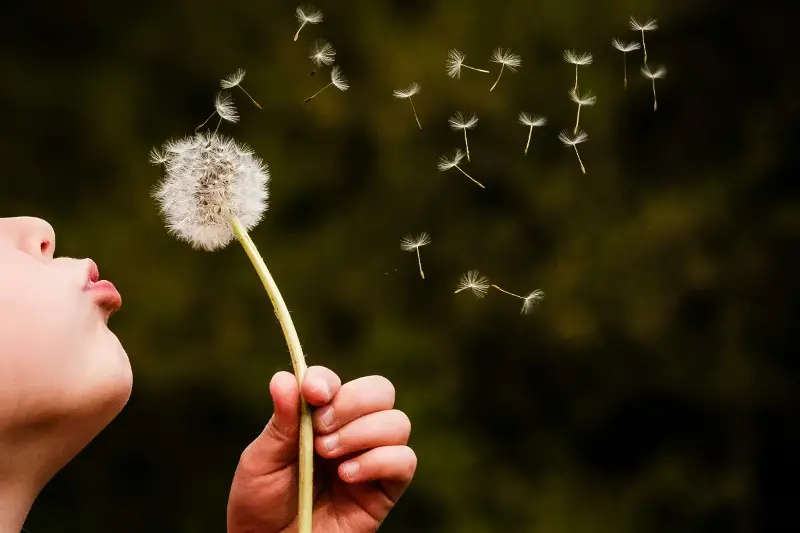
Perhaps nowhere is the dandelion’s magic felt more universally than in the simple act of blowing its seeds. From rural pastures to city parks, children make wishes, believing that each airborne seed carries their hopes to faraway places. This whimsical ritual can be traced back centuries:
- In Victorian England, children believed that if you could blow all the seeds away in one breath, your wish would come true.
- In Slavic cultures, dandelions featured in love divination—counting the remaining seeds foretold the number of years until marriage.
- French folklore named the dandelion “pissenlit” for its diuretic properties, but also cherished its role in weather prediction: a closed seed head before a storm meant rain was coming.
The dandelion thus became an intergenerational thread, binding people to place and to one another through small acts of wonder and belief.
Resilience in the Modern World
In an era obsessed with order and manicured gardens, the dandelion reminds us that beauty often thrives in the unexpected. Urban botanists praise its ability to break through concrete—a silent protest against uniformity. Artists and poets use its image to convey fleeting joy and unquenchable hope, while environmentalists highlight its importance to pollinators, particularly early-spring bees.
To be a dandelion is to stand tall despite adversity, to carry memories and aspirations on the breeze, and to remind us that resilience and gentleness need not be at odds.
The next time you see a dandelion, will you pull it from the ground, or pause and ponder the lives, dreams, and legends it has fostered across the world? Perhaps we are all a little like dandelions—rooted in experience, but always ready to ride the wind in pursuit of new beginnings.