menu
menu
Automotive

Around The World In 80 Cars: Eye-Opening Ways Driving And Road Rules Change Across Every Country

KaiK.ai
03/06/2025 04:11:00

Every car journey, no matter how routine or remarkable, carries hints of its cultural backdrop. It’s not just the cars themselves that change as you cross borders, but the road rules, driving habits, and even the spirit of automotive adventure. Buckle up as we cruise the globe to discover the eye-opening ways people drive and navigate the world’s roads—sometimes wildly different, always fascinating.

Steering Wheels And Side Of The Road: Why Left Isn’t Always Right

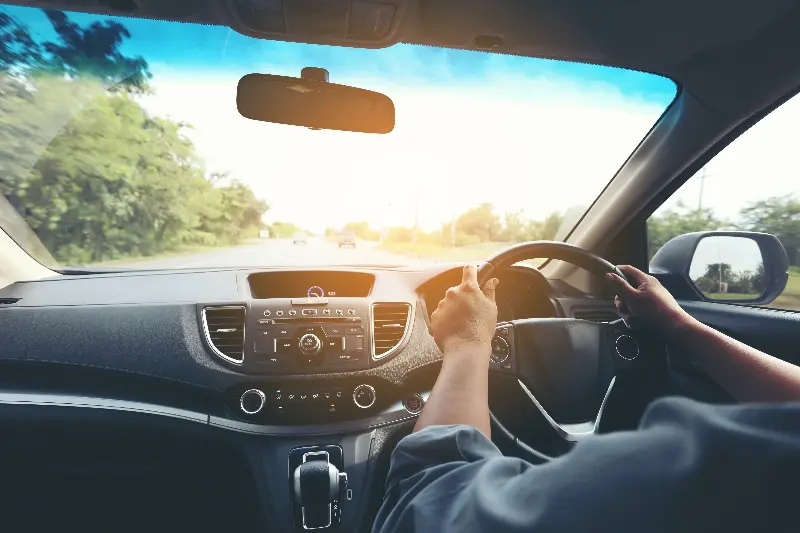
One of the first things keen-eyed travelers notice is where the steering wheel sits. Most of the world’s countries drive on the right side of the road. But switch to the United Kingdom, Japan, Australia or South Africa, and suddenly everything’s mirrored: here, drivers keep left, and the steering wheel is on the car’s right.

This division has roots in ancient travel—horse riders passed each other so their sword hand faced the oncoming rider—morphing over centuries into the modern motoring split. Interestingly, about a third of the world still drives on the left. What’s more, countries like Sweden and Samoa once switched their entire traffic flow in just a single day, causing scenes you’d barely believe.
Unexpected Rules Of The Road

While most nations agree on basics like stopping at red lights and obeying speed limits, there are some astonishing quirks that only make sense locally. In Germany, for example, speed isn’t always capped on the legendary autobahn. Car enthusiasts flock here for the heart-racing opportunity to drive at almost any speed, though strict etiquette and lane discipline are even more important than law.

Then there’s India, where road rules often appear more suggestive than strict. Lanes may exist, but they’re rarely respected, and horns act as both warning and greeting. A road trip in Mumbai or Delhi can resemble a real-life video game, with cars, cows, motorbikes, and rickshaws weaving a mesmerizing chaos.

Conversely, in Switzerland, rules are obeyed with near-reverence. Engine idling is discouraged, headlights must be on at all times—even during the day—and forgetting your snow tyres in winter can cost a hefty fine. On the other extreme, you’ll find Bolivia’s North Yungas Road, known as “Death Road”, where rules are more like hopeful suggestions and a prayer may help more than seatbelts.

Pedestrian Priorities And Unique Crossings

Pedestrian crossings reveal a lot about local attitudes. In many American cities, “jaywalking” (crossing outside designated walks) is a minor offence and strictly enforced in places like Los Angeles or New York. In the UK, “zebra crossings” with their bold stripes—immortalised by The Beatles—are a sign for cars to stop instantly; failure to do so invites both a penalty and disapproving stares.

Head to Japan, however, and the respect for order reaches another level. Here, pedestrians never cross against the red light, even when the road is empty for hundreds of metres. The merger of politeness and civic responsibility is as smooth as the country’s bullet trains.

Unique Local Requirements And Traditions

Some nations boast road rituals or legalities that are truly mind-boggling. In Cyprus, for example, it’s illegal to eat or drink anything—even water—while driving. In Russia, driving a dirty vehicle can earn you a fine, while in Spain, drivers are required to carry a spare pair of spectacles if they need glasses for driving.

Norway’s tunnels are famous worldwide—one of them features a surreal blue-lit cavern to keep drowsy drivers alert. Over in France, famed for its motorways and roundabouts, it’s the law to carry a breathalyser kit in your car (although you’re unlikely to be penalised if you don’t). Meanwhile, in New Zealand, giving way to the right at uncontrolled intersections once mystified foreigners until it was finally dropped in 2012 for global harmony.

Cars As Cultural Icons

From Cuba’s enduring parade of 1950s American classics to the futuristic microcars of Tokyo, what people drive tells a story about local society, resources, and even history. Compact cars squeeze through historic European city centres where streets predate vehicles by centuries. In contrast, American highways are built for large pick-up trucks and spacious sedans, with petrol prices—at least until recently—much friendlier than in, say, Norway or the Netherlands.

In the Middle East, rugged SUVs and four-wheel-drives dominate vast desert highways, while in India and Southeast Asia, nimble scooters and tuk-tuks rule city streets. And through it all, the car becomes more than transport: it’s identity, freedom, ingenuity, and aspiration on wheels.

Spectacular Scenic Drives That Tell Their Own Story

Each country brings its own drama to the road trip experience. South Africa’s Garden Route, Australia’s Great Ocean Road, and California’s Pacific Coast Highway make the journey as thrilling as the destination. In Norway and Switzerland, switchbacks and cliffside roads are feats of engineering, framed by fjords or snow-capped peaks—a far cry from Qatar’s arrow-straight desert motorways or Milan’s traffic-clogged Renaissance avenues.

And don’t forget the festive traditions: every winter, Italian enthusiasts celebrate the Mille Miglia classic car rally, while Japan’s “hashiriya” (street racers) bring flair and controversy in equal measure. From mountain passes in Morocco to deep winter drives in Canada, local driving styles, habits, and beloved vehicles transform a mundane activity into a revealing window on the world.

Whether you find yourself marvelling at Swiss efficiency, thriving amid Indian pandemonium, or revving freely on the autobahn, one thing becomes clear: how we drive says a lot about who we are. The next time you hop behind the wheel—at home or abroad—remember you’re not just travelling, you’re embracing a culture, one kilometre at a time.

by KaiK.ai