


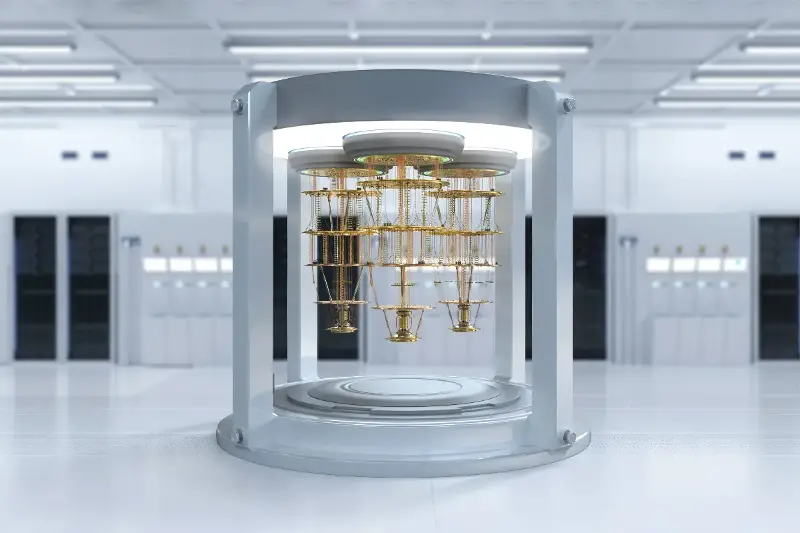
Pop open the lid of your typical PC tower, and what greets you? A neat arrangement of fans, chips and blinking LEDs—nothing too alien, and certainly nothing which would look out of place in a home office or bedroom. Now, imagine stepping into a room where the “computer” resembles a chandelier of golden tubes, surrounded by cables, cryogenic fridges and scientists in lab coats. This is the world of quantum computing, where setups are more at home in a lab than the family den.
What makes these two worlds so dramatically different? Let’s venture inside the gleaming, humming heart of quantum computers—and decode why their futuristic setups verge on the cinematic.
The Science of Superposition—and Supercooling
Whereas traditional PCs use binary bits—those simple ones and zeroes analysing Excel sheets or streaming your favourite shows—quantum computers operate using the mystical-sounding quantum bits, or qubits. But harnessing qubits requires more than a tightly packed motherboard.
- Qubits are delicate. Unlike your PC’s robust silicon chips, qubits are exquisitely sensitive to temperature, magnetic fields and even cosmic rays! A minuscule disturbance can cause them to lose their quantum state, derailing calculations in a flash.
- To function, most quantum computers must be cold. Not just freezer-cold, but colder than deep space—around 10 millikelvin, or -273.14°C. That’s about 100 times colder than outer space itself!
This requirement for such extreme conditions transforms the humble desk into a high-tech laboratory, complete with:
- Cryostats: These fridge-like devices cool the quantum processor to near-absolute zero.
- Vacuum Chambers: Ensuring no stray particles interfere with operations, much like a starship’s airlock.
- Tangled Cabling: Each wire and fibre is meticulously arranged, often with gold or superconducting materials, to minimise heat and electromagnetic noise.
It’s an environment that feels more science fiction than spreadsheet management.
Why Your PC Fits Comfortably in a Living Room
The trusty personal computer is a triumph of decades of incremental engineering:
- Air-cooled or water-cooled CPUs handle reasonable heat.
- Components are relatively robust; a gasp of warm air, or a sneeze, poses no existential threat.
- It’s the product of miniaturisation, cost-effectiveness and ease of use—a journey from mainframes occupying entire rooms, to finger-length thumb drives.
Design considerations in PCs are focused on:
- Cost
- Accessibility for upgrades or repairs
- Compatibility with consumer hardware, like screens, mice and speakers
The most complex “science” involved? Choosing the RGB lighting pattern.
The Surreal Sights and Sounds of Quantum Labs
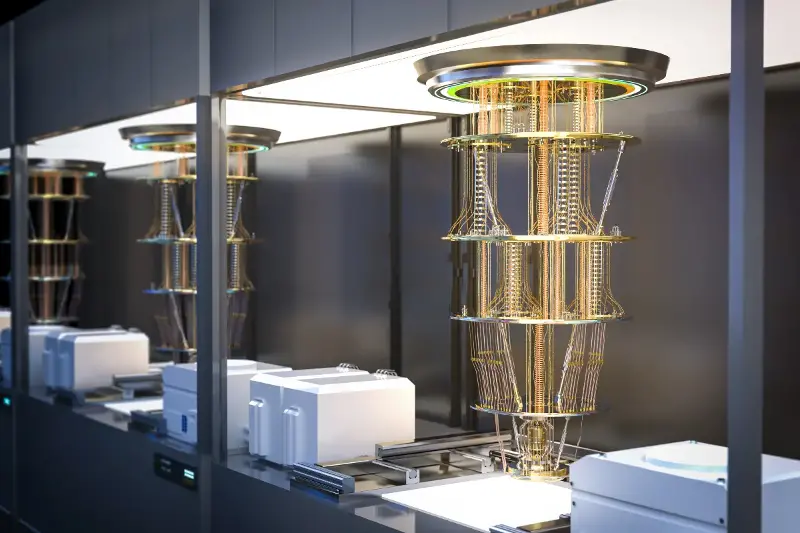
If you wandered inside Google’s or IBM’s quantum research facilities, you'd witness sights fit for an avant-garde movie:
- Tiers of gleaming metal, woolly wiring and the persistent hush of cryogenics
- Engineers donning gloves and face shields, scrutinising minuscule components through microscopes
- Entire rooms dedicated not to one large screen, but to monitoring stability, temperature and—sometimes—cosmic ray detection
Some surprising facts:
- Quantum computers can sometimes require rooms free of mobile phones due to electromagnetic disturbances.
- Their “on” button is an hours-long process of cooling down to operational temperatures—no quick restarts!
- The measurement and error correction for qubits can involve more computing power than the actual quantum operation.
It’s a far cry from pressing ‘Update’ on your laptop and waiting for it to reboot in five minutes.
Why Not Shrink Quantum Computers for Home Use?
Could we one day have mini-quantum computers on our desks? Perhaps. But for now, the physics that grants quantum computers their magical power demands extraordinary isolation from the noisy, unpredictable world outside. That means layers of shielding, refrigeration, and scientific precision. The consumer-friendly shrinkage we’ve seen with PCs hasn’t arrived for quantum hardware—yet.

Could the Living Room Become a Quantum Oasis?
Quantum computers and everyday PCs both sit at the edge of technological wonder, but their physical worlds remain galaxies apart. Your PC is a portal to information and creativity, built for comfort and convenience. The quantum computer is a temple of science, designed to unlock the secrets of molecules, cryptography—and perhaps, the very universe itself.
So next time you gaze at your desktop, imagine the silent, frigid ballet of qubits unfolding in a distant laboratory. Will today’s labs give way to tomorrow’s desktop quantum machines? It’s an open question that invites all of us to look forward—and maybe, to dream a bit bigger.