


Nestled away on a few idyllic islands off the coast of Western Australia resides a small marsupial that has captured the hearts of people around the world. The quokka, with its endearing smile and amiable disposition, has been dubbed ‘the happiest animal alive.’ But what is it about these furry creatures that has earned them this delightful epithet?
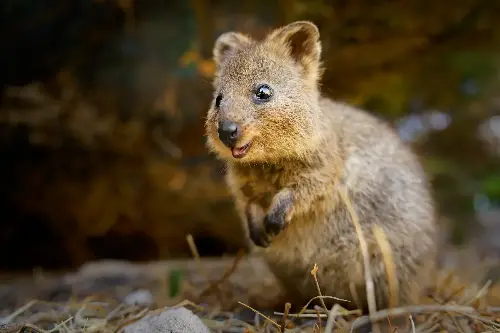
Quokkas are a type of wallaby and are among the smaller members of the macropod family, with adults reaching only about the size of a domestic cat. They are mainly nocturnal and herbivorous, feasting on a variety of grasses, leaves, and stems. While quokkas have adapted to a diet of poor nutritional quality, they have also developed the ability to store fat in their tails, helping them to weather lean times.
Their notoriety as the happiest animal stems primarily from the quokka's seemingly cheerful countenance; their upturned mouth corners have evolved because of their bone structure, giving them the appearance of a perpetual smile. This charismatic feature has resonated widely on social media platforms, where selfies with the grinning quokkas have gone viral, enchantingly showcasing the mammals' laid-back and approachable nature.
Scientifically, it's not possible to affirm the quokka's 'happiness,' as such emotions are quite complex and subjective even among humans. However, their friendly interactions with humans may indicate a lack of natural predators, allowing them to be less fearful and display a more relaxed demeanor. Interestingly, on Rottnest Island, one of their main habitats, quokkas have almost no predators, affording them a level of safety that contributes to their approachable behaviour.

The quokka population notably suffered massive declines in numbers upon the arrival of European settlers in Australia due to habitat destruction and the introduction of predators such as foxes and cats. Today, they are considered vulnerable, and various conservation efforts are in place to protect and preserve their population, such as preserving their natural habitat and controlling predator numbers.
A lesser-known yet remarkable fact about quokkas is their resilience. They inhabit an environment where fresh water is scarce, and they have adapted to extract most of their water needs from their diet. Most remarkably, during the driest periods, quokkas can recycle a large percentage of their body fat to produce metabolic water—water released during the metabolization of food.
These creatures also play an essential role in their ecosystem. Quokkas help to maintain the health of their habitats through seed dispersal, which ensures the spread and growth of the plants they feed on, contributing to a diverse and healthy ecosystem.
Research on quokkas reveals fascinating insights into their social structure. They live in family groups but are not overly territorial and can interact well with other families. At times, they can be found in larger groups feeding together, particularly when food is abundant; however, they also have a solitary side and will often forage alone.
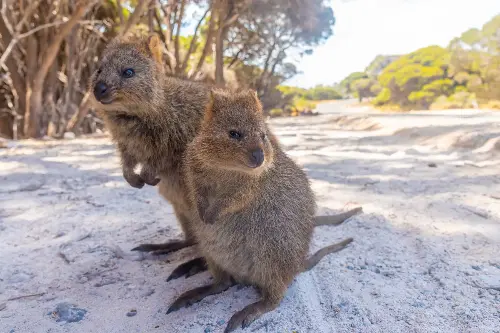
Another sure sign of their adaptability is their breeding habits. Quokkas breed all year round, with females capable of giving birth twice a year and having an embryonic diapause—the ability to delay the development of an embryo until conditions are favourable.
A quokka mother carries her baby, called a joey, in her pouch for six months before it emerges. Akin to kangaroos, the joey returns to its mother's pouch to feed until about eight months old, after which it fully weans off by ten months, showcasing a nurturing aspect to these spirited animals.
Conservation exposure has helped the plight of the quokkas, and the Western Australian government, along with conservation groups, is dedicated to protecting their populations. Tourists are invited to observe and photograph quokkas but are reminded not to feed or touch them to avoid disrupting their natural behaviour and diet.
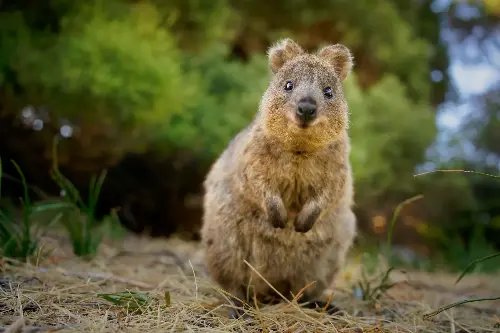
In conclusion, if the moniker of 'the happiest animal alive' indeed fits, it is not merely due to the quokka’s enchanting grin but more so due to their remarkable ability to adapt and thrive in their environment. Through understanding the ecological, biological, and social intricacies of these creatures, it becomes clear why they encapsulate such joy and fascination. They are a reminder of the delicate balance between nature and wildlife and the importance of preserving such unique species for future generations to wonder at and adore.