


The value of music education can often be underestimated, viewed by some as a supplementary activity rather than a core subject. However, a growing body of evidence suggests that teaching children music can have a profound and lasting impact on their creative development and emotional growth. It’s about much more than learning to play an instrument or read sheet music; it’s about fostering a set of skills and attributes that can benefit all areas of a child’s life.
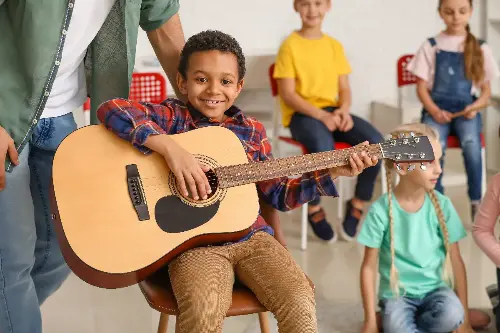
Music education nurtures creative development in a multitude of ways. When learning an instrument or engaging in vocal training, children are encouraged to express themselves in ways that transcend spoken language. The creative thinking involved in composing a melody or improvising in a jazz band can activate the brain’s innovation centres, leading to improved problem-solving skills. Moreover, interpreting the nuances of music can foster a heightened appreciation for artistry and craftsmanship, tools that are invaluable to any creative endeavour.
In addition to bolstering creativity, music also offers an avenue for emotional exploration and growth. The act of playing music can serve as an emotional release, allowing a child to convey feelings that they may not yet have words for. The connection between musical expression and emotional regulation is significant; it can give children a healthy outlet for stress and anxiety. Furthermore, the communal aspects of music-making, such as participating in an orchestra or choir, offer children the opportunity to experience empathy and develop social awareness by working in harmony with others.
Educationally, music can have far-reaching effects on a child’s learning capacity as well. Studies show that engaging with music can improve children's ability to concentrate and enhance memory skills. Learning to play an instrument requires discipline and patience, virtues that extend into academic learning. It can also aid in the understanding of mathematical concepts; rhythm and beat, for example, can teach fractions and patterns in a more dynamic and tangible way than traditional methods.

A perhaps less discussed but equally important aspect of music education is the impact on fine motor skills and coordination. Playing an instrument involves precise movements of the hands and fingers, which can enhance physical dexterity. Coordination and timing developed through playing music are skills that can benefit children in other activities, like sports and dance.
Culturally, music education has the potential to broaden a child’s horizons. Exposure to different genres of music from various parts of the world can foster a global understanding and appreciation for cultural diversity. Music history classes often accompany practical music lessons, giving students insight into different eras and the historical context of the music they are playing or singing. Such knowledge can be profoundly enriching, particularly in our increasingly interconnected world.
Another important benefit comes in the form of resilience and self-confidence. It’s no secret that learning an instrument can be challenging and can involve a fair amount of frustration and setbacks. But it’s precisely these challenges that teach children about perseverance and the value of hard work. The satisfaction and pride that come from mastering a piece of music or performing in front of an audience can be significant confidence boosters.

Lastly, in our digital age, where children are inundated with passive forms of entertainment, music demands active engagement. Whether creating or simply appreciating, music helps to develop active listening skills, focussing attention, and fostering an appreciation for the subtleties of sound.
In conclusion, the importance of music education in the development of children cannot be overstated. While the mastery of a musical instrument or an understanding of music theory can certainly be its own reward, the true value of music education lies in its ability to facilitate overall development. By nurturing a child’s creativity, enhancing their emotional well-being, and broadening their intellectual and cultural perspective, music education equips them with the tools to navigate the complexities of life with confidence and poise. It's not just about creating musicians; it’s about honing future leaders, thinkers, and innovators who understand the power of nuance and emotion. Thus, incorporating comprehensive musical education into the curriculum isn’t merely a good idea; it’s a critical investment in our children's futures.