


When most of us hear a cat purr, it’s usually the gentle vibration of a household tabby curled on our lap. But step into the wild, and this simple sound transforms into a biological marvel—a story full of surprising vocal tricks and evolutionary wonders, displayed by the world’s largest felines. From the unmistakable roar of a lion to the haunting chuffs of a snow leopard, big cats have developed an array of sounds as rich and varied as their habitats. Every whisper, growl, and chirp holds a world of meaning, not just for the cats themselves but for anyone who observes with a curious mind.
The Rumble Beneath the Mane: Understanding the Roar and the Purr

The roar may be the most iconic sound associated with big cats, echoing across the savannas and jungles. But not every big cat can roar. The secret? It lies in a unique structure within the larynx, with elastic ligaments that allow the lion, tiger, leopard, and jaguar to stretch their vocal cords and produce that earth-shaking sound. Lions, for instance, can be heard up to 8 kilometres away on a still night—a true feat of nature’s engineering.
Yet, while roaring means dominance and territory, the humble purr is a different story—one wrapped in mystery and warmth. Contrary to what many think, not all big cats can purr the way your pet cat does. Leopards and cheetahs manage continuous purring both when inhaling and exhaling, much like their domestic cousins. Tigers and lions can only produce a purring-like sound during exhalation. This means most “purring” sounds from big cats are actually brief, breathy rumbles, rather than the soothing, ongoing vibration familiar to cat lovers.
It’s fascinating to realise that a soft purr in the wild can mean contentment, reassurance, or a silent bond between mother and cub—where even the fiercest predator becomes gentle for a moment.
Chirps, Chuffs, and Other Wild Surprises
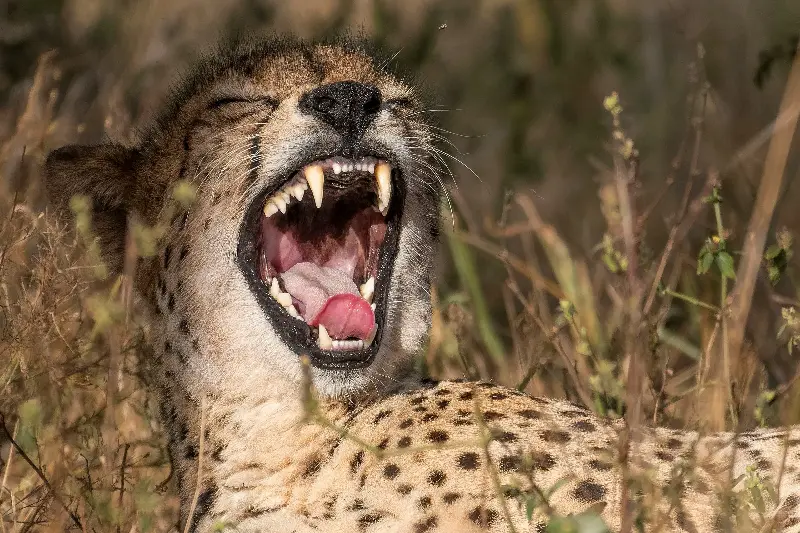
Not all communication is about the battle for territory. Big cats have an impressive vocal toolkit that helps them navigate the subtleties of family life, hunting, and even friendship.
Consider these unexpected sounds:
- Chirps and Chuffs: Cheetahs and snow leopards don’t roar; instead, they chirp and chuff. A cheetah’s chirp is a high-pitched, birdlike call, often used by mothers to locate their cubs in tall grass. Snow leopards chuff—a friendly, breathy snort used as a greeting, saying, in their own way, “hello, friend.”
- Meows and Hisses: Yes, even the mighty tiger will meow, hiss, and growl. These sounds help express annoyance, curiosity, or hesitation—reminding us that, beneath the stripes or spots, echoes of the house cat persist.
- Moans, Groans, and Saws: Jaguars have a “sawing” call, so named for its resemblance to the sound of wood being cut. Tigers moan deeply at dusk, both to establish presence and perhaps as personal lullabies.
Each sound has its place in the social web of big cats, from warning away rivals to nurturing tender family moments.
Lessons from the Wild: What Big Cats Teach Us About Communication
If nature is the world’s oldest classroom, then big cats are among its most gifted teachers—demonstrating that real power is found not just in the loudest roar but in the gentlest purr and the softest chirp.
Here’s what we can learn from their vocal mastery:
- Variety Matters: Just as big cats use a spectrum of sounds, effective communication in human life benefits from both strength and subtlety.
- Context is King: The same sound can signal a wide array of messages—knowing when to use which “voice” is as crucial for us as for them.
- Connection Over Volume: Bonds are forged not by the loudest calls, but by knowing when to lean in and simply purr.
The next time your cat stretches out and purrs, think of the mighty leopard in the wild, or the tiger rumbling deep in a moonlit forest. Nature’s vocal lessons, carried across continents and centuries, still resonate in our everyday lives.
Who knows what other secrets nature’s biggest felines hold, waiting to be uncovered in the spaces between every chirp, chuff, and meow? The symphony of the wild continues—inviting us all to listen a little more closely.