


In the enchanting world of exotic pets, few can match the charismatic charm and daredevil antics of the sugar glider. These nocturnal creatures, native to the forests of Australia and New Guinea, have soared in popularity and captured the hearts of animal lovers around the globe.
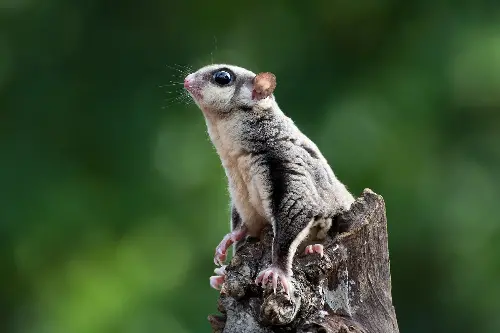
At first glance, sugar gliders resemble something straight out of a children's storybook, with their big, expressive eyes and soft, squirrel-like fur. But it's their striking membrane, known as the patagium, stretching from wrist to ankle, that sets them apart. This skin flap enables sugar gliders to perform their signature move: gliding through the air amidst the canopy with aerobatic finesse akin to a miniature flying squirrel.
Despite their name and sweet appearance, sugar gliders are actually marsupials, related more closely to kangaroos and koalas than to flying squirrels. These tiny marsupials measure around 16 to 21 cm in body length, with a tail almost as long as their body, aiding in balance and steering during their daring glides. An adult sugar glider typically weighs between 90 and 150 grammes—light enough to ensure that when they leap and glide, they can cover distances of over 45 metres with ease.
Sugar gliders are arboreal, spending most of their lives high in the trees, and they have adapted remarkably to this lofty lifestyle. Their hands and feet possess opposable digits, allowing them to grasp branches tightly and traverse the forest canopy with skill. This digit configuration also grants them a peculiar talent for holding onto human fingers, often endearing them further to their owners.
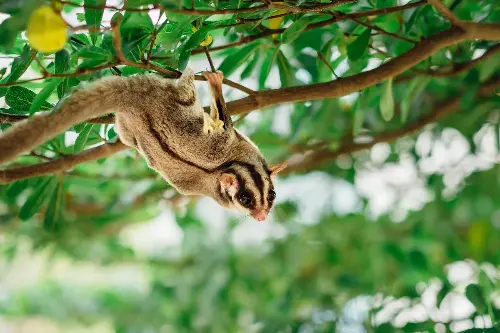
This affinity for bonding is not solely for human interaction, however. Sugar gliders are profoundly social animals that live in colonies of up to 30 individuals in the wild. The strength of their social bonds is such that they often suffer from loneliness and depression if kept solo in captivity. For this reason, those who decide to bring these adventurous spirits into their homes are encouraged to adopt them in pairs or groups, providing them with the necessary companionship they instinctively crave.
As nocturnal animals, sugar gliders are active and lively during the night. When the sun sets, these little daredevils come alive, eagerly exploring and foraging for food. Their diet in the wild comprises sap and gum from trees, nectar, and occasionally insects or small vertebrates. Captive sugar gliders require a carefully balanced diet rich in calcium and protein to prevent nutritional deficiencies common in domesticated scenarios.
The unique vocalisations of sugar gliders are another fascinating aspect of their behavior. They communicate through a variety of sounds, ranging from chirping and clicking to barking and hissing, each with distinct meanings. These sounds serve as an integral part of their social interaction and are often heard during their nocturnal adventures.
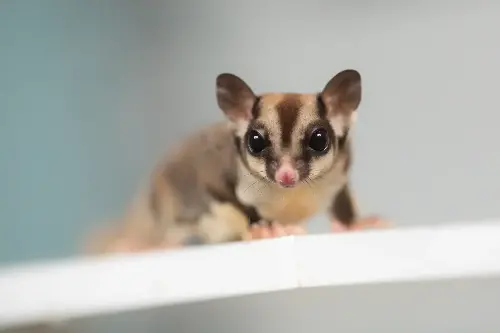
Equally captivating is the sugar glider's ability to breed in captivity. They're marsupials, and like their kangaroo cousins, baby sugar gliders, known as joeys, are born extremely underdeveloped. The newborn joeys make an arduous journey from the birth canal to the mother's pouch, where they remain for approximately two and a half months. Observing joeys grow and emerge from the pouch fully formed can be a magical and educational experience for any enthusiast.
But life with a sugar glider is not all about charming antics and aerial displays. Potential owners should be aware that these creatures demand a significant commitment. They have a lifespan of up to 15 years and require a sizable, secure enclosure that mimics their natural environment with plenty of vertical space for climbing and gliding. Moreover, their care routine includes nightly interaction and specialised dietary needs, not to mention attention to their health, to ward off common ailments like obesity and dental disease.
The adventurous life of sugar gliders serves as a reminder of the incredible diversity and complexity of the animal kingdom. Their ability to create strong, affectionate bonds with their human caregivers only adds to their allure. Yet, these furry daredevils are not ideal pets for everyone. Before one considers bringing them into their home, understanding and respecting the unique needs of sugar gliders is essential. For those willing to accept the challenge, sharing your life with these fascinating pocket-sized gliders can be a wondrous journey filled with leaps and bounds and an unbreakable bond of companionship.