


Whether you’re jetting off for a seaside holiday or rushing through an airport for a business trip, the magic of modern air travel often feels seamless. Yet, behind every smooth takeoff and gentle landing lies the world of air traffic control (ATC) – a profession where split-second decisions and calm under pressure are everyday essentials. These unseen heroes are the backbone of aviation safety, weaving together technological prowess and human judgement to ensure millions of passengers reach their destinations safely.
WHAT REALLY GOES ON BEHIND THE SCENES
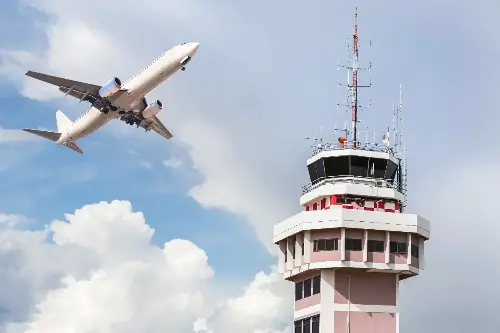
To the average traveller, the cockpit crew are the visible custodians of their journey. But the orchestration of flights, especially in busy airspaces like that over Heathrow or Manchester, depends heavily on the men and women perched in tall control towers or locked away in radar rooms. Air traffic controllers are responsible for keeping aircraft at safe distances from each other, guiding pilots through takeoff, en route navigation, descent, and landing.
Each controller is a master in their sector. Ground controllers, for example, marshal aircraft as they taxi to and from runways, avoiding collisions among scores of planes moving on complex airport taxiways. Tower controllers supervise takeoffs and landings, making the crucial final call for a “go” or “hold.” Then there are approach and area controllers tucked away in windowless rooms, monitoring aircraft on radar screens as they crisscross national skies at dizzying altitudes.
THE HIGH-TECH TOOLS OF THE TRADE
Air traffic control isn’t simply a matter of sharp eyesight and steady nerves. It’s a world that blends the best of old-school communication and cutting-edge technology. Controllers communicate with pilots via VHF radio, speaking in a precise, globally understood phraseology to avoid any ambiguity – an essential step when mere seconds can be the difference in a high-pressure situation.
Radar tracking allows controllers to ‘see’ aircraft that are out of visual range, plotting their movement amidst countless data points. Modern ATC centres are adopting innovative technologies like Automatic Dependent Surveillance–Broadcast (ADS-B), where aircraft transmit their own GPS positions to ground stations and other planes in real time, further reducing the risk of miscommunication.
Other digital wonders in the controller’s toolkit include sophisticated weather monitoring systems, enabling the anticipation and mitigation of thunderstorms or severe winds before they become a problem. In the UK, NATS (National Air Traffic Services) operates the backbone of this infrastructure, handling over 2 million flights a year and guiding more than 250,000 passengers daily.

THE HUMAN FACTOR: TRAINING, SKILLS, AND PRESSURE
It takes rigorous training to become an air traffic controller in Britain or anywhere in the world. Candidates typically undergo a demanding selection process, with only a handful progressing to training, which includes classroom instruction, simulators, and on-the-job experience under the eye of a mentor. The job requires razor-sharp concentration, decisiveness under pressure, spatial awareness, and the ability to communicate succinctly and calmly.
During major global events, sudden weather changes, or emergencies, controllers’ skills are pushed to their limits. Imagine orchestrating dozens of arrivals and departures in a severe storm, or rerouting transatlantic traffic after a volcanic eruption. Controllers must be quick-thinking, as an average large airport like Heathrow sees over 1,300 arrivals and departures on its runways every day. Any lapse could have wide-reaching consequences, yet air traffic control remains one of the world’s safest professions, thanks to a culture of constant vigilance and teamwork.
FASCINATING FACTS AND LITTLE-KNOWN SECRETS
Few jobs are as misunderstood. For starters, contrary to popular belief, controllers rarely use binoculars. Instead, they rely overwhelmingly on sophisticated radar, data screens, and real-time communication. Their shifts are carefully planned, often not exceeding two hours at a stretch, to avoid the fatigue that can come with endless concentration.
In Britain, English is always used for radio communication, regardless of the airline’s origin – a critical move that unifies global aviation language. Furthermore, controllers play a key role in reducing the environmental impact of aviation; they help design flight paths that not only avoid mid-air conflicts but also reduce fuel consumption and emissions.
Perhaps most impressive of all is the sheer scale: At any one time, there may be over 5,000 aircraft in European skies, each with its own destination, altitude, and speed – yet delays and incidents remain rare.
With the advent of drones and increasing numbers of private aircraft, air traffic control is a constantly evolving landscape, always adapting to new challenges whilst ensuring the safety of millions.
Modern travel owes its reliability not only to pilots but also to these unsung sentinels, the men and women behind the microphone, whose vigilance lights the pathways from runway to sky and back again. So, next time your flight glides gently to a stop, spare a thought for the quiet professionals watching over every mile of your journey from behind the scenes.