


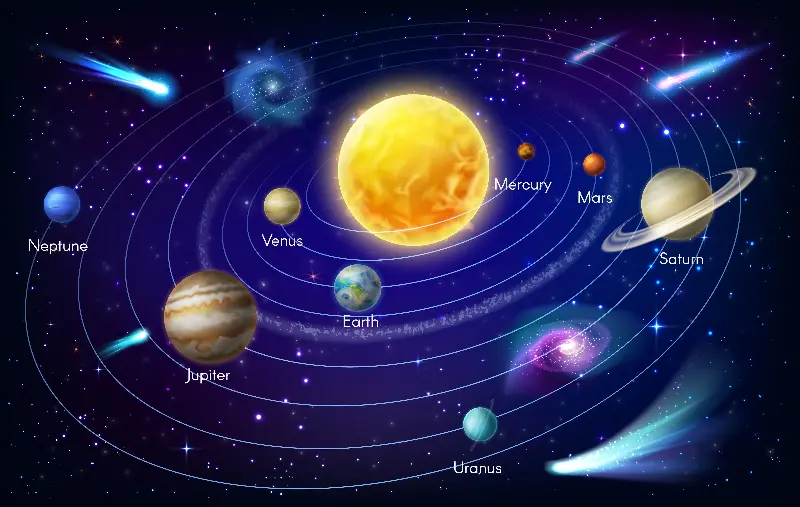
If you think you’ve got the solar system all figured out, get ready to have your mind blown. Most of us have grown up with textbook knowledge—eight planets, the sun, some moons, and maybe a stray comet or two. But the reality is far weirder, wilder, and more fascinating than what school ever let on. Dive in for a tour of the solar system’s best-kept secrets—oddball worlds, haunting mysteries, and epic phenomena that prove our little corner of the universe is anything but ordinary.
The Solar System Isn’t Quiet at All
Our idea of space as a silent vacuum is only partially true. The solar system is actually buzzing with electromagnetic waves, “space weather” storms, and cosmic noises. NASA’s spacecraft have even recorded haunting, whistling, and whooshing sounds produced by interactions between solar particles and planetary magnetic fields. Jupiter, for example, “sings” with aurora-produced radio waves, and even Earth’s own northern lights create their own odd crackling sounds.
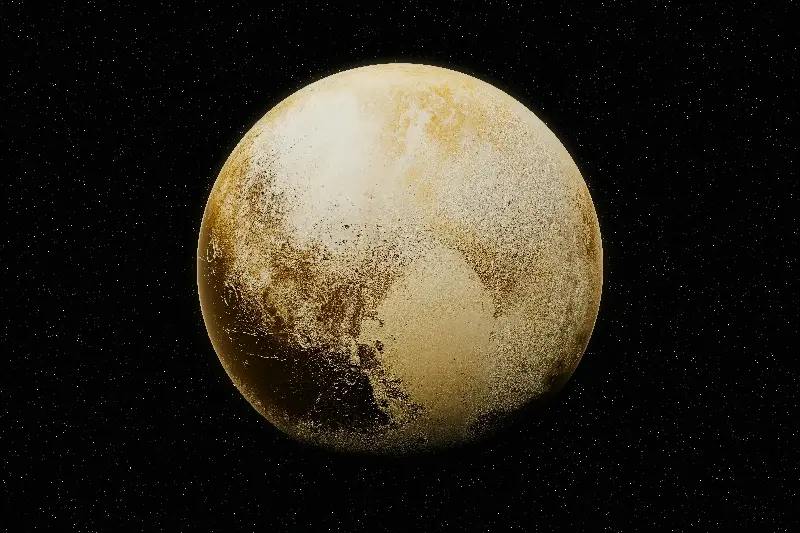
Pluto Has a Slushy, Subsurface Ocean
Pluto might have been demoted to “dwarf planet” status, but it’s more complex than anyone imagined. Beneath its icy crust, Pluto hides an ocean made of slushy water and ammonia that has the potential to harbor life. Evidence for this hidden ocean comes from images of gigantic, cracked ice plains taken by NASA’s New Horizons probe in 2015. Scientists now think Pluto could have “cryovolcanoes,” spewing not lava, but cold slurries of water-ice.
Saturn Would Float in Water
It sounds impossible, but it’s true: Saturn is mostly hydrogen and helium, making it so light for its size that, in theory, if you could find an ocean big enough, Saturn would float like a colossal beach ball. In reality, of course, no pool is that big—but this fact illustrates how gas giants are radically different from the dense, rocky planets closer to the sun.
Venus Rotates Backwards—and Very Slowly
Almost every planet in our system spins in the same direction it orbits the sun. Not Venus! This hellish world rotates in the opposite direction, and it does so at a snail’s pace: one day on Venus is longer than its year, taking 243 Earth days to complete a single spin. Scientists believe ancient cataclysmic impacts may have flipped its rotation.
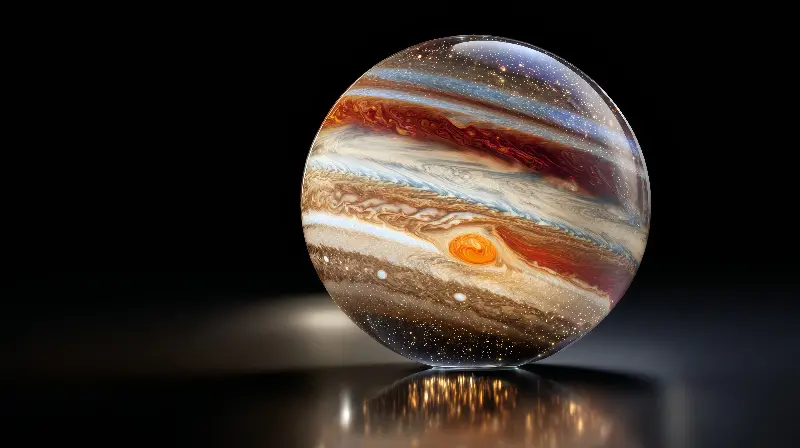
Jupiter’s Great Red Spot Is Shrinking
The Great Red Spot—a gigantic, centuries-old storm in Jupiter’s atmosphere—is one of astronomy’s most iconic sights. But it’s been shrinking fast over the past century. While it once was large enough to swallow three Earths whole, today it’s just over 1.3 times our planet’s width. No one knows why it’s shrinking, or whether it will disappear in our lifetime. The dynamics behind its color and persistence are also still a mystery to scientists.
There’s a Planet Made of Diamond
Far beyond our solar system, astronomers have found exoplanets made largely of carbon, likely forming thick layers of diamond deep below the surface. But in our own system, something similar is possible—Neptune and Uranus may rain diamonds deep in their atmospheres, where high pressure turns methane into shimmering gemstones. Scientists are now using laboratory experiments and computer models to try to confirm this sparkling phenomenon.
There Are “Rings” Beyond Saturn
While Saturn gets all the love for its striking rings, it’s not alone in this fashion statement. Jupiter, Uranus, and Neptune all have ring systems—though they’re faint and much harder to spot. Even tiny Chariklo, an asteroid barely larger than a big city, has its own miniature ring system. These delicate bands are made mostly from dust and ice, and they reveal clues about how planets—and asteroids—interact with their surroundings.
We Don’t Know Where the Solar System Ends
If you thought the solar system ended with Pluto, think again. The sun’s influence stretches far beyond Neptune to a mysterious zone called the Oort Cloud. This hypothetical, comet-filled shell could reach up to 100,000 times farther from the sun than Earth’s orbit. No probe has ever reached it—meaning the true “edge” of our solar system is still uncharted territory.
Asteroids Have Their Own Moons
Not all moons belong to planets. Many asteroids are orbited by tiny satellites, known as “moonlets”—a fact that surprised astronomers when it was first discovered. For instance, the asteroid 243 Ida has a little moon named Dactyl. Scientists believe these asteroid-moon pairs result from high-speed collisions or gravitational captures, showing that even small objects in space like to have company.

A Day On Mercury Isn’t What You Think
The closest planet to the sun has a truly bizarre day-night cycle. A day on Mercury (one sunrise to the next) lasts 176 Earth days because it takes Mercury 59 Earth days to rotate once and 88 days to orbit the sun. That means if you stood on Mercury’s surface, the sun would rise and set once every two Mercury years—talk about a long workday!
The solar system is much more extraordinary than meets the eye. Above our heads, ancient storms rage, diamonds may fall from the sky, and worlds spin out of step with expectations. And with every probe we launch and telescope we train skyward, new surprises await. So next time someone tells you the solar system is old news, remember: its greatest secrets are only now coming to light.