


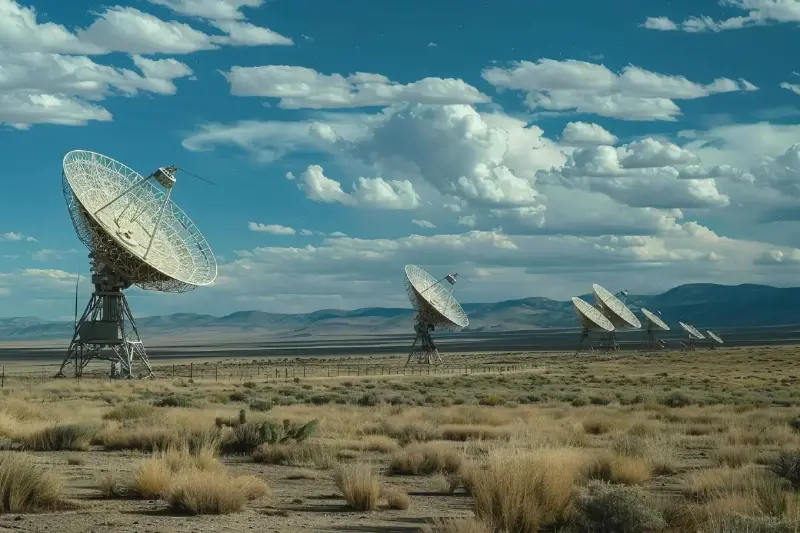
Are we close to detecting an alien civilization? 👽📡 It’s a question humans have debated for decades—maybe even centuries. The universe is almost incomprehensibly vast, scattered with billions of galaxies, each filled with billions of stars and planets. If life arose here on Earth, why not elsewhere? In recent years, exciting breakthroughs, new technologies, and a wave of scientific optimism have reignited our collective curiosity. Just how close are we to that monumental “we’re not alone” moment?
The Search for Signals: Old Methods, New Tools
The quest to detect alien life, and more specifically alien civilizations, often centers around the search for signals. For over 60 years, radio telescopes have scanned the skies looking for patterns or transmissions not produced by natural astrophysical phenomena. The classic SETI (Search for Extraterrestrial Intelligence) approach involves decoding radio waves, on the logic that intelligent civilizations might use radio to communicate across the cosmos.
Today’s scientific efforts have outpaced early endeavors by leaps and bounds. Instruments like the Allen Telescope Array in California and the upgraded Arecibo Observatory (before its collapse) have pushed the boundaries of sensitivity. Now, projects like Breakthrough Listen—funded by billionaire Yuri Milner—are cranking the dial to new heights. This initiative alone is scanning a million nearby stars over a ten-year period, listening for anything out of the ordinary. These aren’t random stabs in the dark—modern machine learning and AI are sorting through petabytes of data, distinguishing true signals from human-made interference and cosmic noise.
Exoplanets, The Goldilocks Zone, and Technosignatures
Our path to detection isn’t just about listening; it’s also about looking. The discovery of exoplanets—planets orbiting other stars—has exploded since the launch of NASA’s Kepler and TESS missions. As of 2024, astronomers have confirmed over 5,500 exoplanets, with many more candidates awaiting confirmation. Some of these worlds orbit in the so-called Goldilocks zone, the potentially habitable area where temperatures might allow liquid water.
But scientists aren’t just searching for life-friendly chemistry. A new frontier in the hunt for alien civilizations focuses on “technosignatures”: evidence of technology or industry, rather than biology alone. This includes searching for large-scale energy use, artificial light, atmospheric pollution, or bizarre orbital structures that could suggest advanced engineering. The James Webb Space Telescope and new ground-based observatories are helping to sniff out atmospheric spectra, revealing gases like methane, oxygen, or even industrial pollutants (think: chlorofluorocarbons) that would be hard to explain by natural processes alone.
Odd Signals and Famous Mysteries
Every so often, the universe teases us with an intriguing anomaly. The most legendary example is the “Wow! Signal,” a brief, strong burst of radio energy detected in 1977 by the Big Ear radio telescope at Ohio State University. The 72-second signal matched what researchers might expect from an artificial source, but it was never repeated or explained.
More recently, astronomers have come across Fast Radio Bursts (FRBs)—ultra-brief, powerful bursts of energy from distant galaxies. Their origins remain largely mysterious, though most researchers think natural astrophysical processes, like neutron star collisions, are responsible. Yet, these discoveries keep imaginations fired up: what if one of these puzzling blips turns out to be a deliberate broadcast?
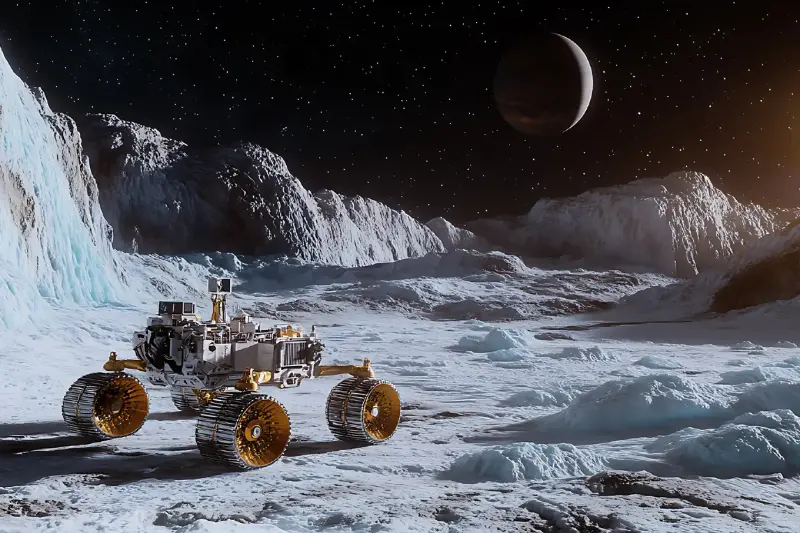
New Eyes on the Sky: AI and Next-Gen Telescopes
The real game-changer in the hunt for alien civilizations may be the fusion of cutting-edge technology and old-fashioned curiosity. Artificial intelligence is now being trained to sift through the mountains of cosmic data—radio signals, optical pulses, and more—to spot patterns humans would likely miss. In March 2024, for instance, a team using machine learning uncovered eight previously unnoticed signals-of-interest from the Breakthrough Listen survey. While they’ve yet to confirm an extraterrestrial origin, this shows how rapidly the field is evolving.
Meanwhile, new telescopes like the Giant Magellan Telescope in Chile and the Vera C. Rubin Observatory are set to open their digital eyes wider and deeper than ever before. These tools can investigate thousands of exoplanet atmospheres each year, search for laser pulses from intelligent beacons, and monitor the cosmos for anything that looks even remotely artificial. The James Webb Space Telescope, already delivering unprecedented detail, is teaching us what a “living” planet looks like—making it easier to spot the truly extraordinary.
Are We Really Close? A Cautious Optimism
So, with all this progress, are we actually close to detecting an alien civilization? The answer depends on perspective. On the one hand, our tools, data, and scope are better than ever before. We’re scanning millions of stars for signals, identifying hundreds of potentially habitable worlds, and inventing new techniques to spot even subtle traces of technology.
On the other hand, the cosmos is hopelessly vast. Light takes years—centuries, millennia—to traverse the gulfs between stars. Advanced civilizations might communicate in ways we cannot yet imagine, or they may be deliberately silent. So far, the only messages we’ve received are from ourselves and nature.
Yet, for the first time in human history, we can credibly say that we have the means to find other civilizations—if they’re out there and detectable. Every new technique, every exoplanet discovered, and every cryptic signal brings us closer to answering the age-old question: are we alone? And if the universe is as lively as some scientists hope, that answer could come any day now. Until then, we keep searching the cosmic haystack—confident that the next needle could change how we see ourselves, and our place in the cosmos, forever.