


Nestled in many gardens and often seen embroidered on keepsakes, the forget-me-not flower is far more than just a charming splash of blue. Despite its delicate size, this blossom holds a rich history, entwined with evocative symbols of undying love, remembrance, and heartfelt emotion. It whispers stories that stretch across continents and centuries, making it a cherished emblem in countless cultures around the world. If you’ve ever pondered why the forget-me-not feels so meaningful—or why it pops up in everything from poetry to memorials—exploring its fascinating past and touching symbolism offers an array of delightful surprises.
Botanical Beauty with a Story
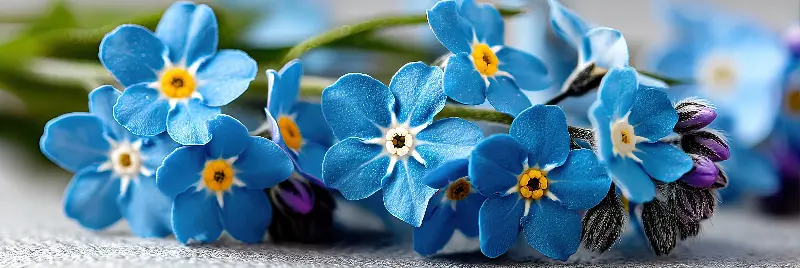
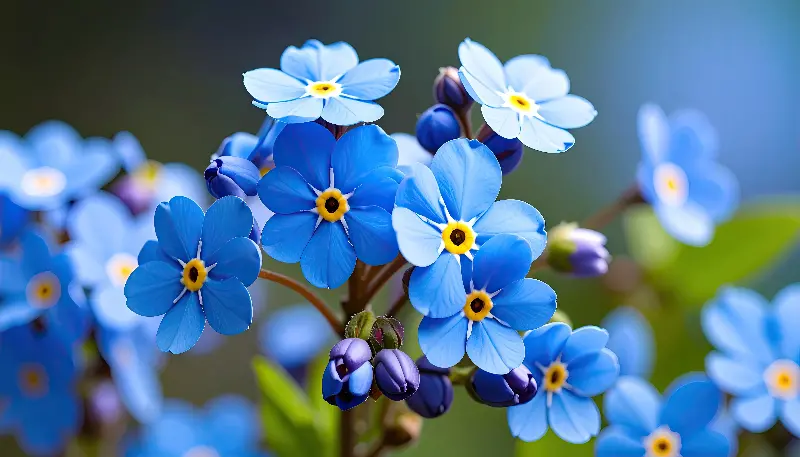
The forget-me-not belongs to the genus Myosotis, which literally means “mouse’s ear” in Greek, a playful nod to the plant’s tiny, soft leaves. While there are over 70 species spread across the globe, the most celebrated is Myosotis sylvatica, commonly found in Europe and North America. Each plant features petite, sky-blue petals with a bright yellow eye, standing gracefully on slender stems. Though it often grows wild and unassuming, its striking blooms have drawn fascination since ancient times.
The flower’s common name—forget-me-not—is believed to have first appeared in 15th-century Germany, popping up in folktales and ballads. The name itself instantly invokes a sense of devotion and longing, a reputation the flower has carried faithfully for centuries.
Legends of Love and Loyalty
Much of the forget-me-not's charm stems from the touching legends that surround its origins. One of the most popular stories dates back to medieval Europe. It tells of a knight and his beloved strolling along a riverbank. As he picked a handful of blue flowers for her, he tragically slipped into the river, weighed down by his armor. Throwing the bouquet to his love, he called out, “Forget me not!” before disappearing beneath the water. Since then, the flower has represented enduring love and acts as a living token to never forget those we care about.
This story resonated so deeply that forget-me-nots became common symbols in tokens exchanged by lovers and even friends. Across Victorian England, where ‘floriography’ (the language of flowers) was all the rage, a bouquet with forget-me-nots whispered promises of love, true friendship, and remembrance. Whether embroidered into handkerchiefs or pressed into lockets, these tiny blooms became keepsakes with lasting emotional value.
Remembrance and National Pride
Beyond romantic love, forget-me-nots have become key emblems of remembrance. In Germany, following the First World War, the flower was adopted as a symbol to honor those who had been lost. Its presence at memorials and on lapels signified memories cherished and lives honored. The tradition continues today in many countries where the forget-me-not is worn on specific days of remembrance.
Perhaps most poignantly, the forget-me-not has deep significance within the Armenian community. In 2015, on the centennial of the Armenian Genocide, the flower was chosen as the official emblem of commemoration. Its five petals stood for the five continents to which the Armenian diaspora spread, and its unyielding blue hue symbolized hope and persistence in the face of hardship.
Across the Atlantic, the forget-me-not is also cherished in Newfoundland and Labrador, Canada. Long before the adoption of the poppy in Commonwealth countries, Newfoundlanders wore forget-me-nots on July 1st, Memorial Day, to honor soldiers who died in World War I.
Folklore, Mystique, and Modern Resonance
Cultures worldwide have woven the forget-me-not into tales of magic and healing. Medieval herbalists once believed that carrying the flowers could ward off evil or heal wounds to the heart. In folklore, some claimed the blossoms could unlock the mysteries of lost memories, giving rise to their enduring reputation as symbols of memories that should never fade.
Modern uses of the forget-me-not flower remain steeped in its iconic symbolism. It is widely used by dementia charities, such as the Alzheimer’s Society, to signal the importance of memories and to show support for those experiencing memory loss and their families. Social campaigns have adopted the dainty bloom to express unity and compassion, carrying its heartfelt meaning into contemporary life.

Heartwarming Inspiration in Art and Culture
Perhaps because of its vivid blue brilliance or its simplicity, the forget-me-not continues to inspire artists, writers, and designers. Poets from William Wordsworth to Henry Wadsworth Longfellow have immortalized the flower as a symbol of faithfulness and remembrance. Jewelry and textiles embellished with forget-me-nots are popular gifts, expressing deep sentiments without a single word spoken.
Even in wedding bouquets, the flower holds court—an emblem of a promise never to forget the one you love, serving as a sweet good-luck charm for couples starting their journey together.
The ongoing allure of the forget-me-not lies not only in its fragile appearance or captivating legends but in the way it manages to embody relationships, memories, and hope. Whether planted in a garden, worn on a lapel, or pressed into a letter, the forget-me-not tells us that what truly matters is never really lost. In every petal, history and heart combine—a gentle, enduring reminder to hold precious moments close and never forget the bonds we share.