


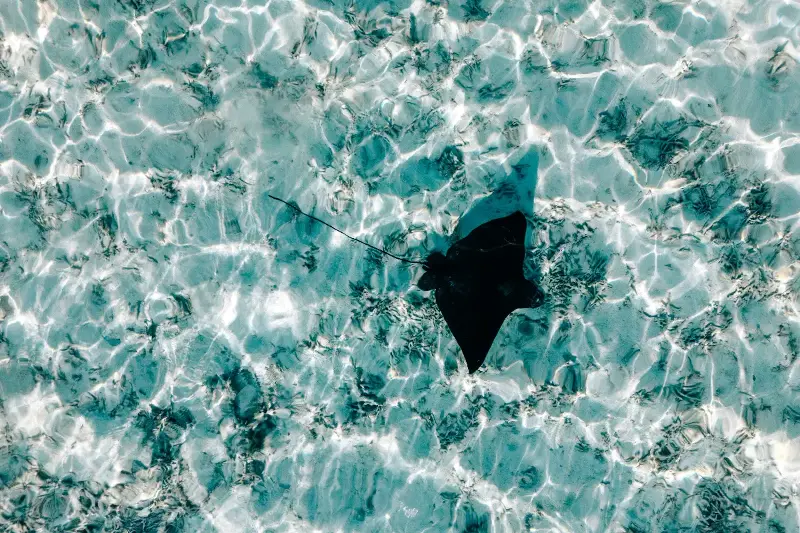
Stingrays seem almost unreal as they glide across sand or sweep through clear blue water. Their flattened bodies, wing-like fins, and long tails give them a calm, floating grace, yet these animals are highly adapted ocean inhabitants with senses humans can barely imagine. Found in tropical, subtropical, and temperate seas around the world, stingrays belong to the same broad group as sharks: cartilaginous fishes, whose skeletons are made of light, flexible cartilage rather than rigid bone.
There are more than 220 recognized species of stingray, ranging from small coastal animals to enormous freshwater giants. Despite their formidable reputation, most stingrays are quiet, cautious creatures. They generally prefer escaping danger to confronting it, using their famous tail spine mainly as a last line of defense.
Built for Life on the Seafloor
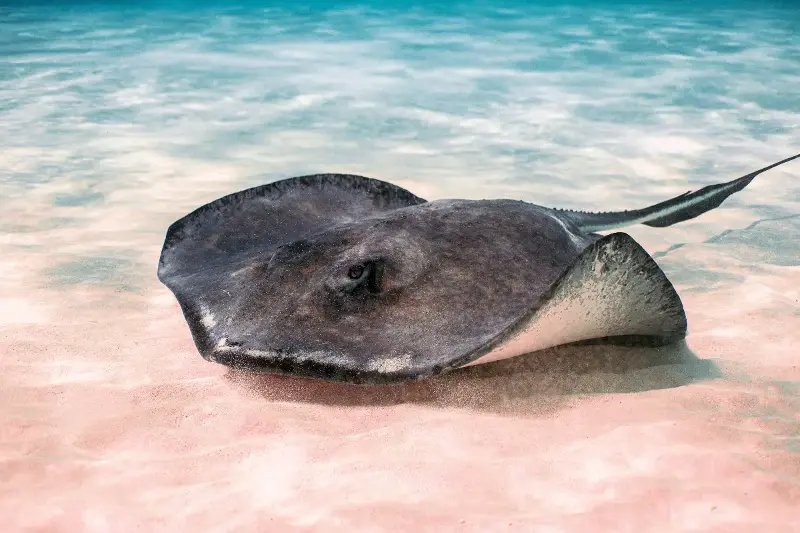
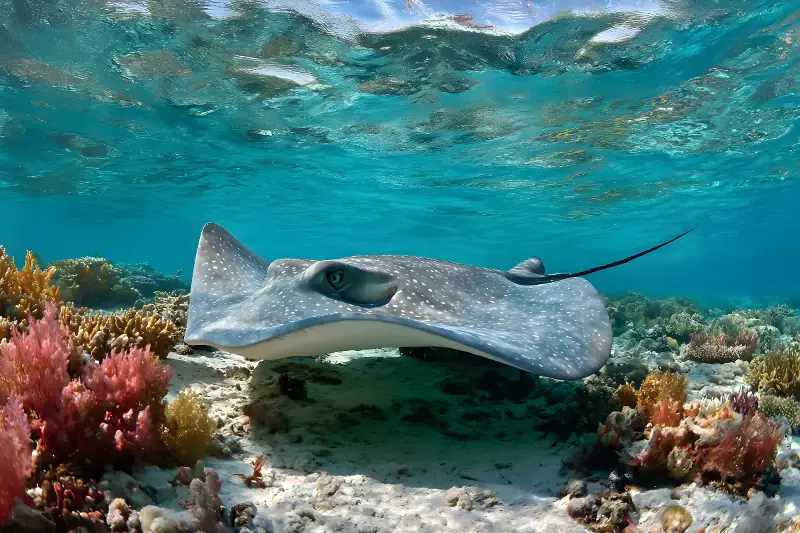
A stingray’s broad body is shaped like a living, underwater carpet. Its enlarged pectoral fins extend from the head to the sides of the body, allowing it to move with smooth, rhythmic waves of motion.
Key physical adaptations include:
- Flattened Silhouette: Allows stingrays to glide effortlessly close to the seabed or bury themselves safely under sand.
- Top-Mounted Eyes: Positioned on upper body surfaces to spot movement above while resting.
- Specialized Spiracles: Openings behind the eyes that draw water into the gills while the ray lies completely buried.
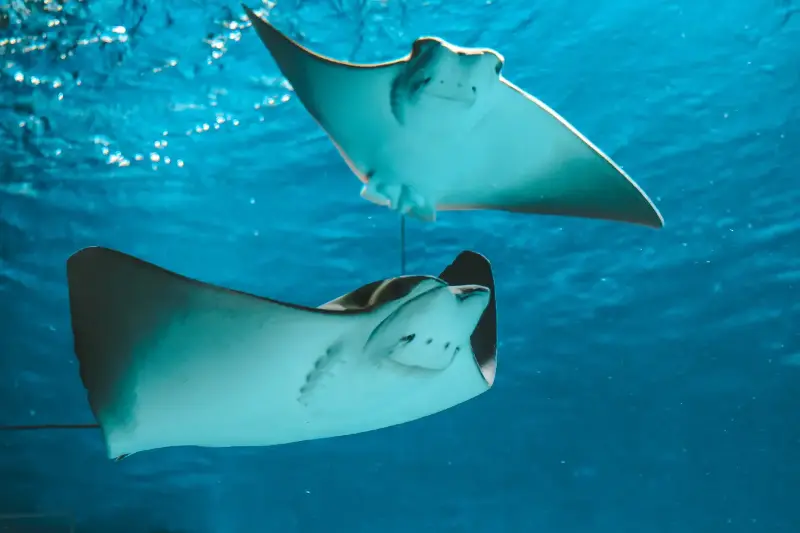
- Unique Undersides: Mouths, nostrils, and gill openings sit beneath, featuring distinct patterns that help scientists identify individual animals during reef studies.
A Sixth Sense Beneath the Sand
Stingrays are remarkable hunters capable of detecting invisible signals. Like sharks, they possess tiny sensory pores on their snouts called the ampullae of Lorenzini. These organs detect faint electrical fields produced by the subtle muscle movements and heartbeats of other animals.
A crab hidden beneath the sediment cannot easily hide its electrical pulses. A stingray detects these micro-signals, then uncovers prey with jets of water or by flapping its flexible fins. Their diet includes clams, snails, worms, shrimp, and small fish, which are easily crushed by strong jaws and flattened teeth. By stirring up sediment, stingrays also move vital nutrients through shallow-water habitats, nourishing the wider coastal ecosystem.
Understanding the Defensive Tail
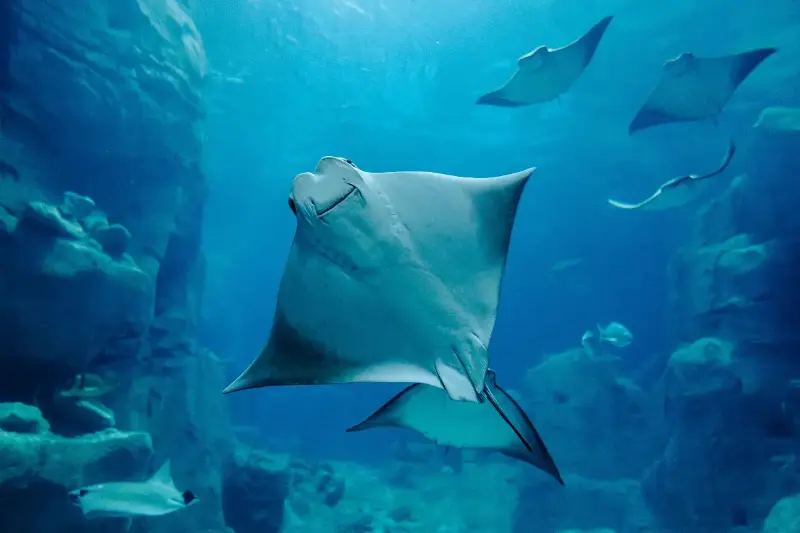
The tail is the feature most associated with stingrays, yet it is often misunderstood:
- Purely Defensive: Stingrays do not hunt with their tail spine, nor do they aggressively pursue people.
- Venom Sheath: The serrated spine contains venom-producing tissue, used strictly when a ray feels threatened or cornered.
- Accidental Contacts: Most injuries occur when someone accidentally steps on a hidden ray in shallow water, triggering a natural reflex.
To stay safe, beachgoers in stingray-rich waters practice the "stingray shuffle"—sliding their feet along the sandy bottom instead of taking heavy steps. This gently warns buried rays, giving them plenty of time to swim away harmlessly.
Giants of Rivers and Reefs
Stingrays display incredible diversity in scale and habitat. The giant freshwater stingray (Urogymnus polylepis) of Southeast Asian rivers is one of the largest freshwater fish ever documented, with record specimens measuring nearly four meters long and weighing around 300 kilograms. Marine species like the short-tail stingray and eagle ray showcase stunning wing-like fins across vibrant coral reefs.
Reproduction in stingrays is similarly fascinating. Most species give birth to live young that develop internally, nourished by a rich fluid provided by the mother. Pups are born looking like miniature adults, immediately ready to explore their aquatic environment.
Protecting These Sovereign Gliders
Stingrays play a vital role in balancing marine habitats, yet they face ongoing challenges from habitat change and coastal development. Protecting mangroves, seagrass beds, and pristine estuaries ensures young rays have safe nursery grounds to mature. Responsibly managed eco-tourism allows divers and snorkelers to appreciate these gentle creatures from a respectful distance, fostering global support for ocean conservation.
From a small, sand-colored ray resting near the shoreline to a massive river giant gliding through fresh water, stingrays demonstrate the endless wonder of our natural world.