


Few phenomena in the universe capture the imagination quite like black holes. These cosmic enigmas pull in light, matter, and myth in equal measure, and they continue to challenge our understanding of physics. From their mind-bending gravity to their cinematic legacy, black holes are more than just hungry voids—they are windows into the very nature of reality. Journey with us into the heart of darkness as we explore fascinating facts about these mysterious cosmic titans.
The Birth and Types of Black Holes
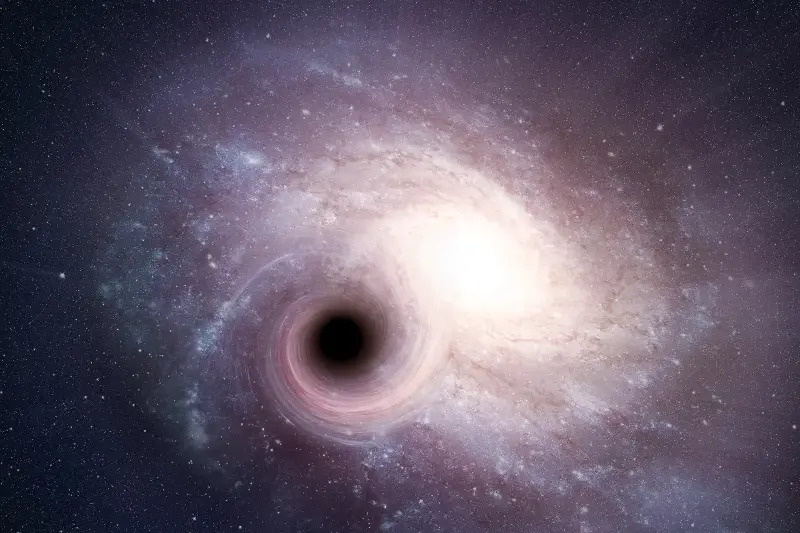
Black holes form from the dramatic deaths of massive stars. When a star many times heavier than our Sun exhausts its fuel, it collapses under its own gravity. This stellar implosion leaves behind a point of almost infinite density and zero volume, known as a singularity, enveloped by an “event horizon”—the ultimate point of no return.
Not all black holes are the same. Stellar-mass black holes, typically 3 to 10 times the mass of the Sun, dot our galaxy. Then there are the supermassive black holes, millions or even billions of times more massive than the Sun, sitting majestically at the hearts of galaxies. Mysteriously, recent research suggests the existence of “intermediate-mass” black holes, bridging the gap between the two and expanding the cosmic family tree.
Gravity Defied: Nothing Escapes a Black Hole
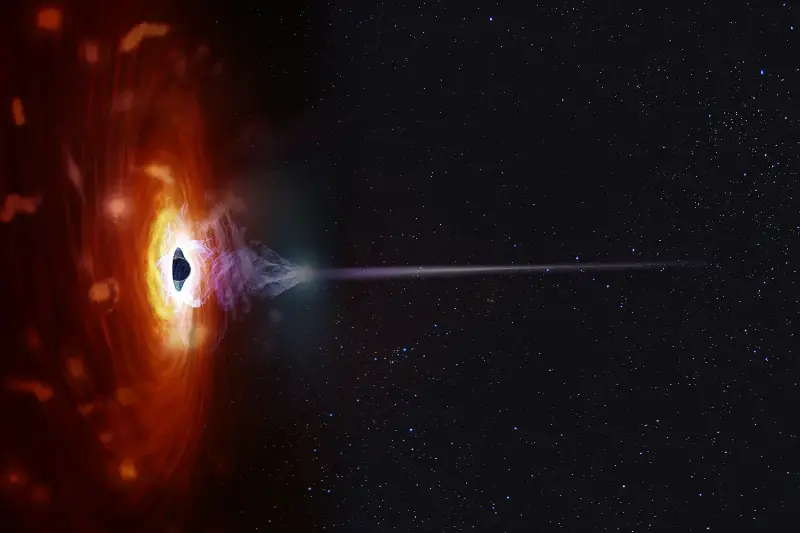
The gravity at a black hole’s event horizon is so fierce that not even light can escape its grip. That’s why black holes are, quite literally, invisible. They reveal themselves only through the mayhem they cause. As matter spirals inward, it heats up and emits powerful X-rays, while violent jets of plasma can erupt from their poles, visible halfway across the universe.
Astoundingly, if you replaced our Sun with a black hole of equal mass, Earth’s orbit would remain unchanged. We’d lose our warmth and light, but our planet would continue its cosmic waltz, unperturbed by the Sun’s transformation into a stellar ghost.
Time Slows Down Near Black Holes
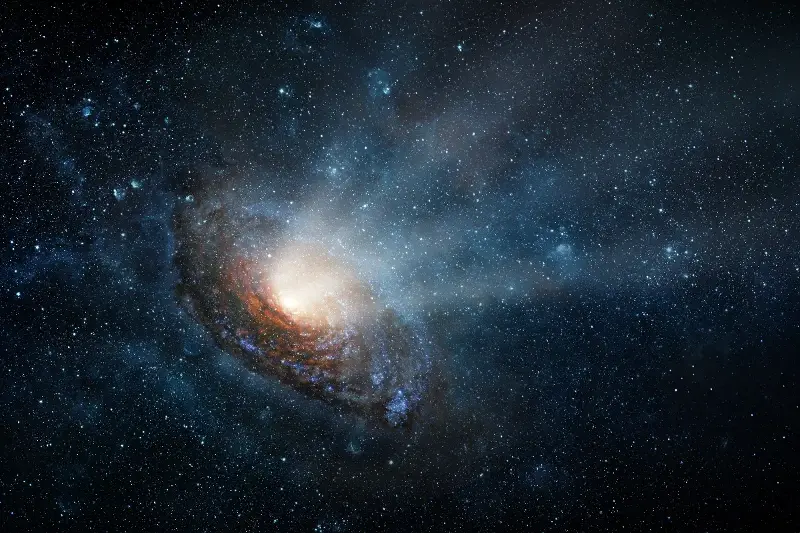
Black holes aren’t just cosmic vacuum cleaners—they’re time warpers. According to Einstein’s theory of general relativity, the immense gravity of a black hole slows down time relative to observers far away. If a brave astronaut hovered near the event horizon, time would crawl for them while centuries passed on Earth. This “time dilation” isn’t just science fiction; it’s been measured near massive objects, albeit less extreme than around black holes.
Black Holes Have No “Surface”—And Can Be Tiny
Unlike planets or stars, black holes lack a traditional surface. Once you cross the event horizon, all known physics breaks down, and escape is impossible. Surprisingly, black holes can be minuscule. Some theories suggest the universe may be dotted with tiny “primordial” black holes, formed moments after the Big Bang, possibly no larger than an atom but with the mass of a mountain.
Black Hole Collisions Rocked the Cosmos
The first direct evidence of black holes came in 2015 with the detection of gravitational waves—ripples in space-time caused by merging black holes. Detected by laser interferometers, these oscillations opened an entirely new way of observing the universe, confirming predictions Einstein made a century earlier.
Black hole mergers are profoundly energetic events. In fractions of a second, they release more power than all the stars in the observable universe combined. When two black holes become one, the resulting cosmic “ringdown” vibrates the fabric of creation itself.
Black Holes Aren’t Forever
While black holes might seem eternal, Stephen Hawking famously theorised that they slowly evaporate through a process now called “Hawking radiation.” Over unimaginable timescales, black holes can lose mass and eventually disappear in a burst of particles and energy, leaving behind no trace—an idea still awaiting experimental confirmation.
More Than Science Fiction
Black holes have transcended science to become cultural icons. From the terrifying maw in the film “Interstellar” (scientifically visualised by physicist Kip Thorne) to inspirations for countless books, these cosmic mysteries have stoked humanity’s imagination. Even the phrase “black hole” dates only to the late 1960s, proving just how new—and enthralling—our fascination is.
The study of black holes unlocks profound questions about space, time, and the ultimate fate of everything. As astronomers peer deeper into the universe, who knows what secrets will be drawn into black holes’ swirling embrace next? One thrilling certainty: these objects will continue to captivate anyone who looks up and wonders about the true nature of reality.