


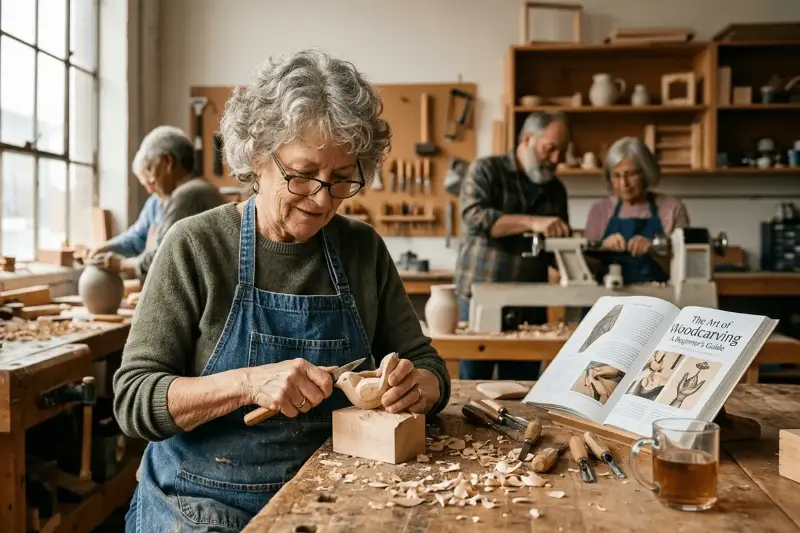
You have likely heard the phrase “never stop learning,” but did you know that picking up a new skill every year is one of the most powerful ways to keep your brain sharp? From photography and dancing to coding and gardening, learning is not just a hobby—it is a science-backed superpower for your mind. Making a habit of mastering something new each year acts as the ultimate brain anti-aging hack, ensuring your cognitive abilities remain vibrant regardless of your age.
YOUR BRAIN IS DESIGNED FOR LIFELONG GROWTH
Neuroscience has long debunked the myth that our mental capacity declines inevitably with age. Research on neuroplasticity proves that our brains are remarkably adaptable and possess an innate hunger to forge fresh connections when faced with new challenges.
When you engage with a new pursuit—whether learning to play a musical instrument, speaking a second language, or perfecting a complex recipe—your brain creates new neural pathways. These connections keep your mind flexible and resilient. Every new skill you attempt acts as a high-intensity workout for your brain’s “muscle,” keeping it strong and spry.
SLOWING THE CLOCK ON COGNITIVE DECLINE
One of the most exciting findings in health research is the correlation between lifelong learning and a reduced risk of cognitive decline. Studies published in journals such as Neurology indicate that individuals who regularly engage in stimulating mental activities show significantly slower rates of memory loss.
The benefits are not limited to academic tasks. Anything that forces you to concentrate, adapt, and practice—such as playing chess, learning a new dance routine, or exploring a creative craft—contributes to your brain’s health. Challenging your mind is a proactive strategy to maintain mental acuity throughout your later years.

DIVERSE SKILLS, DIVERSE BENEFITS
Not all activities exercise your brain in the same way. By rotating the types of skills you learn, you can stimulate different cognitive regions:
- Physical Activities: Learning tennis or yoga sparks areas involved in movement, balance, and coordination.
- Artistic Hobbies: Painting or photography enhances regions linked to creativity and visual processing.
- Technical Pursuits: Coding, woodworking, or mechanics develop logical thinking, focus, and precision.
The act of “stretching” to engage with the unfamiliar pushes your brain out of autopilot, disrupting stagnant routines and prompting new synapses to fire. This habit boosts your problem-solving abilities and mental flexibility, ensuring your mind remains agile.
THE POWER OF BEING A BEGINNER AGAIN
Many adults shy away from learning because they fear the awkwardness of being a novice. However, embracing a beginner’s mindset is a vital anti-aging trick. Tackling new challenges triggers the brain’s reward system, flooding you with dopamine as you make progress.
Feeling out of your depth is not a sign of failure; it is concrete proof that your brain is hard at work. Each mistake or hiccup is an opportunity to build resilience, boost your confidence, and foster emotional well-being.

SOCIAL AND EMOTIONAL PERKS
Learning is rarely a solitary affair. Whether you join a local club, a language exchange, or an online workshop, you often meet people and share experiences. Strong social connections are a known brain-boosting secret, correlated with better overall health. Working toward a goal—especially with others—nurtures a sense of purpose and accomplishment, which helps lower stress levels. Simply put, each new skill is a victory for both your mind and your heart.
CHOOSING YOUR NEXT SKILL: THE ONLY RULE IS CURIOSITY
If the idea of learning something new every year sounds daunting, remember that the key is curiosity, not pressure. Your goal does not have to be career-defining. It could be as simple as learning to juggle, playing a strategy board game, or using a new digital tool. What matters is that it is new to you. The cumulative effect of these small victories adds layers of perspective and cognitive depth to your life.
The science is clear: if you want to keep your brain young, commit to being a lifelong learner. Your brain thrives on novelty, challenge, and discovery. Now, ask yourself: what will you learn next?