


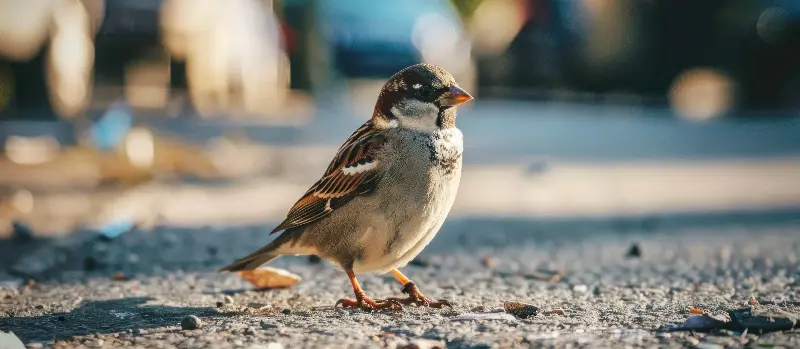
If you find yourself darting between crowded sidewalks and echoing traffic, pause and listen for a familiar cheerfulness: the chirping of urban sparrows. These feathered city dwellers have been with us for centuries, weaving their narratives into our urban fabric. Their dramatic daily lives unfold on window ledges, street lamps, and café terraces, only rarely noticed by their human neighbors.
Yet, their survival is a true wildlife success story, full of fascinating adaptation, tiny heroics, and unexpected twists. To understand the sparrow is to understand the heartbeat of the modern city itself.
MASTERS OF ADAPTATION: HOW SPARROWS MADE THE CITY THEIR HOME
Among the most famous of city sparrows is the house sparrow, scientifically known as Passer domesticus. Originally native to vast grasslands and farmlands, they have successfully colonized nearly every continent except Antarctica. What makes them such extraordinary survivors in our concrete jungles? It’s all about unmatched flexibility.
- Dietary Versatility: While their wild relatives munch on seeds and insects, city sparrows have no qualms scavenging breadcrumbs, French fries, or even a stray noodle from a park picnic.
- Specialized Anatomy: Their stout little beaks are biological multi-tools, capable of cracking tough seeds or delicately twirling bits of human food.
- Resource Exploitation: This willingness to eat almost anything is a primary reason they thrive while more "refined" species struggle.
Their nesting choices are just as resourceful. Instead of requiring pristine shrubs or trees, sparrows utilize:
- Crevices in historical masonry
- The interiors of traffic lights and street signs
- The tangled, warm mess of power line junctions
In fact, some ornithologists call them "cavity nesters without the fuss." Their nests, built of feathers, twigs, and littered bits of city detritus, are engineering marvels designed to keep rain, wind, and predators at bay.
DRAMATIC SOCIAL LIVES IN THE URBAN MAZE
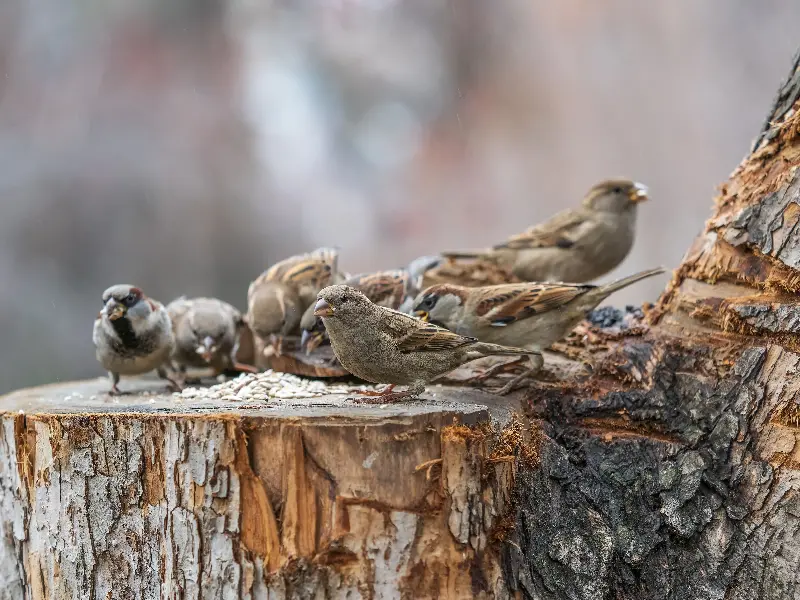
With their chatty flocks and perpetual motion, sparrows are intensely social creatures. Spend five minutes near a busy plaza, and you might witness a flurry of interactions—some cheerful, some surprisingly cutthroat.
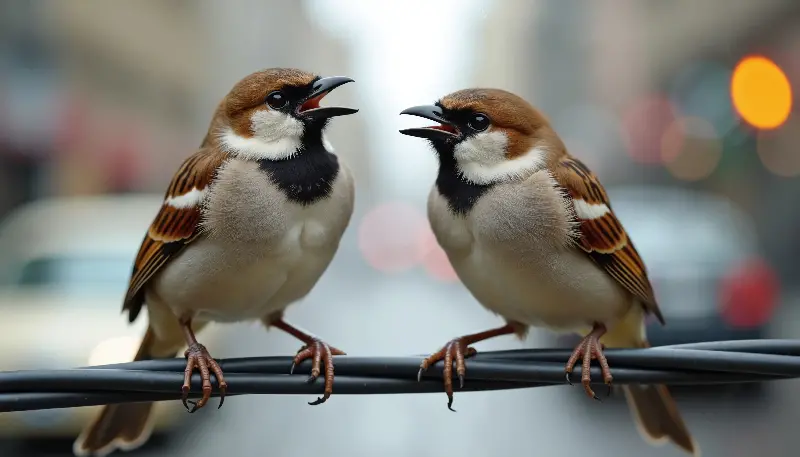
Sparrows often squabble over crumbs or jockey for the best bathing spot in a puddle. These feisty encounters aren’t just random chaos; they are essential for establishing a pecking order and defending territory. Within these loosely structured colonies, dominance is maintained through subtle gestures and quick, fluttering battles.
- The Black Bib: Males sport a distinctive black patch on their chests. The darker and larger the bib, the more dominant the male.
- Social Signaling: This bib acts as a badge of confidence, helping a male attract a mate or deter a potential rival without a physical fight.
- Courtship Rituals: Sparrow romance is equally high-stakes. Males perform acrobatic displays and call persistently to impress females, offering "real estate" in the form of prime nesting sites.
THREATS AND SURVIVAL IN THE CONCRETE JUNGLE
Despite their reputation as unflappable survivors, urban sparrows are not invincible. In fact, sparrow populations have mysteriously declined in some major hubs, confounding scientists. In London, the house sparrow population dropped by over 60% between 1994 and 2004.
Several factors contribute to this struggle:
- Loss of Nesting Sites: Modern glass-and-steel architecture lacks the nooks and crannies of older buildings.
- Pesticide Use: Chemicals in city parks kill off the insects that sparrow chicks desperately need for protein.
- Urban Predators: Domestic cats and hawks find easy hunting grounds in city centers.
Yet, sparrows persist. They have learned to time-feed during quieter hours and have even developed the "café strategy"—hopping onto tables to snatch unattended morsels the moment a human turns away. Green roofs and community gardens have become vital refuges, serving as biological islands in a sea of pavement.

WHAT URBAN SPARROWS TEACH US ABOUT WILDLIFE AND OURSELVES
The sparrow’s presence is a gentle, persistent reminder that urban areas are teeming with wildlife. Their cheeky resilience showcases the possibilities for coexistence. If you are inclined to support your local flock, consider these simple acts:
- Avoid pesticides in your garden or balcony pots.
- Scatter seeds during the harsh winter months.
- Install a birdhouse or "sparrow hotel" to provide a safe haven.
- Embrace "messy" nature by leaving some twigs or leaves for nesting material.
Beyond their survival, sparrows enrich our own daily dramas. Their song is a familiar background to city life, a cheerful note amid the roar of engines. Watching a flock skitter through a puddle is a small reminder of nature’s enduring wonder—even in the heart of the concrete jungle. As you wander through city streets, spare a glance for these tiny survivors. Their story is one of grit, adaptation, and the wild life that continues to find a way—right outside your window.