


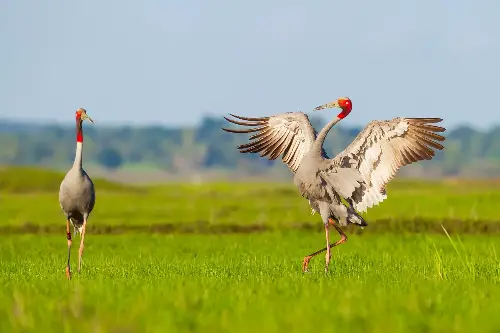
In the tranquil wetlands and grasslands of Asia and Australia, the Sarus Crane unveils a spectacle like no other — a complex and elegant dance that is not just a feast for the eyes but also a profound manifestation of their enduring pair bonds. The tallest flying bird in the world, standing at an impressive height of up to six feet, these cranes engage in a mesmerising courtship display that is as much about affirming existing relationships as it is about attracting new partners.
Dressed for the Occasion
The Sarus Crane, with its striking red head, grey body, and a statuesque silhouette, commands a presence that is hard to ignore. Their physical appearance, while stunning, plays a supporting role to the courtship dance that is central to their mating ritual. During the peak breeding season, which often coincides with the monsoon, their feathers take on a brighter sheen, and they begin their performance.
The Dance of Devotion
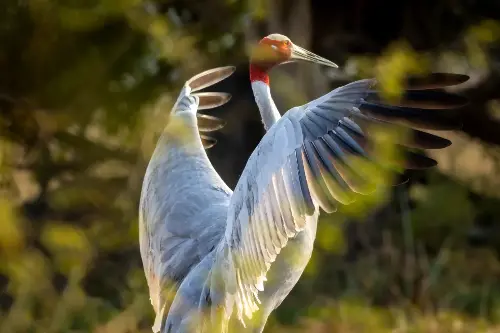
Sarus Cranes are monogamous birds, and their bond is a testament to their loyalty, often staying together until death do them part. The courtship dance is a duet that both the male and female partake in, with synchronised moves that showcase their coordination and compatibility. With wings flapping, hops, jumps and bows, they create an elaborate and rhythmic routine that can last for several thrilling minutes.
These displays serve multiple purposes — they strengthen the pair's bond, make their partnership more visible to other cranes and potential competitors, and they're also used to mark territory. The dance is complemented by a range of vocalisations that echo across their habitat, a sonorous testament to their partnership.
Environmental and Ecological Significance
While the dance of Sarus Cranes is undoubtedly a marvel, it is also an indicator of the health of their environment. These cranes are highly dependent on wetlands, and as such, their thriving populations are a positive signal for these ecosystems. However, with the frightening pace of habitat destruction, the dance of cranes is becoming less common in the wild, making every witnessed display even more precious.
Life Beyond the Dance
Outside their courtship, Sarus Cranes are quintessential examples of successful co-parenting. Both sexes invest a significant amount of time in nest building, incubating, and rearing the young. Nesting is done in open wetlands, and despite being large birds, their nests are often hard to spot, blending seamlessly with the surrounding vegetation.
Chicks are precocial, meaning they are relatively mature and mobile at birth. This is necessary for survival, as threats come from all corners — from feral dogs to eagles. The vigilant parents guide their offspring, teaching them the skills they need to navigate the complexities of their habitat, including the majestic dance they will one day perform themselves.
Conservation: A Dance for Survival
The Sarus Crane is classified as vulnerable on the IUCN Red List, and their survival hinges on human action. Conservation efforts are focused on habitat protection, anti-poaching activities, and engaging local communities in their protection. In some cultures, these cranes are revered and hold significant cultural value, which offers an additional layer of protection in shared landscapes.
Ecotourism centred around Sarus Crane habitats also provides a sustainable means to raise awareness and funds for their conservation. When visitors experience the innate beauty of the cranes’ dance and their importance to the ecosystem, they are more likely to become advocates for their protection.
Every Dance Tells a Story
The courtship dance of the Sarus Crane is more than a mere attraction; it's a critical part of their life story and serves as a barometer for the state of our natural world. It reminds us that life, in all its diverse forms, is interconnected and that the preservation of natural habitats is crucial for the spectacular rituals of these majestic birds to endure.
For enthusiasts and casual observers alike, witnessing the Sarus Crane's courtship is a transformative experience — a moment where nature’s poetry is in full flight. So, the next time you're in the wetlands of Asia or Australia, keep a lookout for these magnificent creatures. With luck and timing, you might just be privy to one of nature's most awe-inspiring performances.