menu
menu
Technology

The Secret Pathways Of The Internet: Unveiling The Epic Journey From Cables To Satellites

KaiK.ai
16/12/2025 06:15:00

Whether you’re bingeing a series from your living room or catching a work call from your home office, the internet weaves itself seamlessly into our daily lives. But have you ever stopped to wonder how your digital life flows so effortlessly? Beyond the flickering lights of your home router lies a labyrinth of invisible connections, stretching from hidden subterranean tunnels to the vastness of space. Let’s take a fascinating trip down the digital rabbit hole, charting the secret pathways that make up the backbone of our global network.

Cables Beneath Your Feet: The Subterranean Web

Hidden from plain sight, a sprawling network of fibre-optic cables snakes beneath our homes, cities, and seas. These slender strands, thinner than a human hair, channel pulses of light at astonishing speeds, enabling everything from video chats with relatives across continents to late-night gaming marathons in the next room.

The sheer scale of underground cabling is staggering. In the UK alone, thousands of kilometres of fibre are buried beneath pavements and fields, linking homes to street cabinets and exchange hubs. Beneath the oceans, colossal undersea cables connect entire continents, silently transmitting over 99% of international data traffic and surviving tumultuous oceanic conditions.

Key highlights of the underground network include:

It’s a wonder to imagine that your latest video call may have crossed mountains, under rivers, or even beneath the Atlantic Ocean in mere seconds.

From Rooftops to Space: The Wireless Odyssey

While cables anchor us to the earth, much of our internet journey takes to the skies. Home Wi-Fi routers and mobile networks rely on radio waves—tiny, invisible ripples in the air—to beam data through walls and around obstacles. Step outside, and wireless signals bounce from local towers, relaying data to distant base stations.

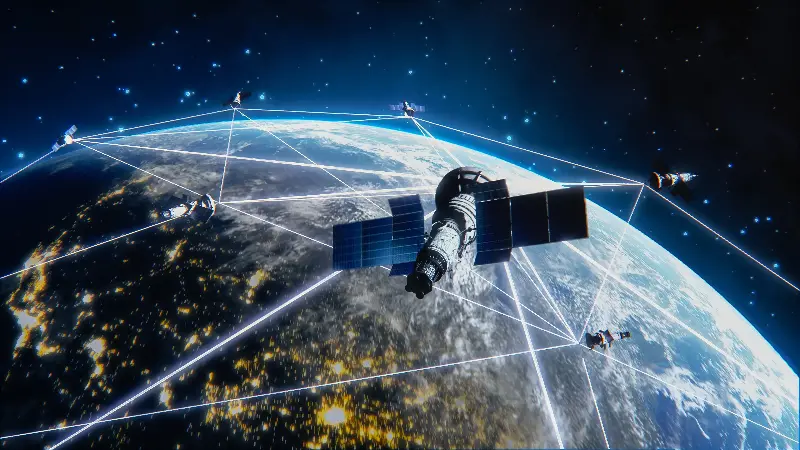
But the adventure doesn’t stop at the clouds. The internet’s reach has launched into outer space. Orbital satellites now provide connectivity to even the remotest corners of the globe, from isolated cabins to ships far out at sea. Modern systems, like the much-talked-about Starlink, use swarms of low-Earth orbit satellites, reducing signal delay and boosting speeds.

Here’s a quick comparison of what’s above and below:

  1. Fibre Networks – Ultra-fast, high-capacity, but expensive and time-consuming to install.
  2. Cellular Towers – Flexible and scalable, covering large areas with minimal physical infrastructure.
  3. SatellitesThe ultimate coverage, connecting users where cables simply can’t reach.

Each technology plays a unique part in making sure you’re never more than a click or tap away from the world.

Guardians of the Digital Pathways

Millions rely daily on these hidden webs, but keeping them alive is a feat in itself. Teams of engineers and operators stand vigil 24/7, monitoring for disruptions—caused by everything from hungry squirrels to deep-sea earthquakes and even passing ships dropping anchors. Meanwhile, cybersecurity experts work tirelessly, ensuring data flows safely, encrypted and protected from prying eyes.

Fun facts that may surprise you:

It’s a silent, tireless effort, camouflaged by the effortless connectivity we enjoy at home every day.

As you curl up on your sofa or cook dinner with smart devices humming in the background, consider this: the journey your data takes is nothing short of extraordinary, racing through glass, air, and space—all in the blink of an eye. Perhaps the next time you scroll, stream, or send a message, you’ll pause to marvel at the hidden marvels beneath your feet and above your head. Can the future digital pathways bring us even closer, or perhaps, reveal adventures in realms we’ve yet to imagine? Only time will tell.

by KaiK.ai