


Delving into the heart of Italian cuisine, we find ourselves enchanted by a dish that embodies simplicity, flavour, and tradition: the Carbonara. Originating from Lazio, and more precisely Rome, this classic pasta has become a staple in Italian restaurants worldwide. But how to recreate this mouth-watering dish in the comfort of your own home? This culinary journey will guide you through crafting an irresistibly tasty Italian-style Carbonara with ease.
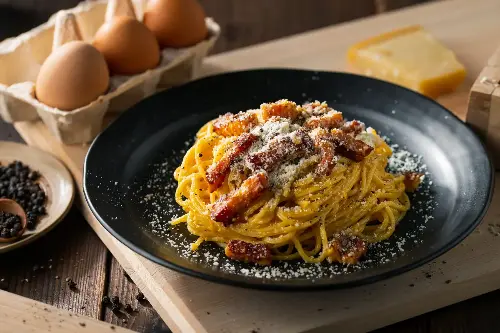
The Simplicity of Authentic Ingredients
The magic of a true Carbonara lies in its modest ingredient list. To commence, sourcing the finest quality ingredients is paramount. You'll require:
- Spaghetti or any long pasta – 400g serves about four people.
- Fresh eggs – 4 large, with the yolks and whites separated.
- Pecorino Romano cheese – 100g, finely grated, providing that salty sharpness.
- Guanciale – 150g, the traditional Roman bacon cut from pork jowl or cheeks. If unavailable, pancetta is a suitable substitute.
- Freshly ground black pepper – to taste.
- A pinch of salt – for the pasta water.
Before you begin, note this cardinal rule: true Italian Carbonara does not include cream. The creamy consistency is achieved solely from eggs and cheese.
Crafting the Pasta Foundation
Boil a large pot of water with a generous pinch of salt. While you wait for it to bubble, cut the guanciale into small strips or cubes. In a large pan, cook the guanciale over medium heat until it's crispy and the fat has rendered out. This not only cooks the meat but also releases a deeply savoury aroma that infuses into the sauce.
When the water reaches a rolling boil, add the pasta and cook it al dente according to the package instructions – usually around 9 to 11 minutes. The pasta should retain some bite, providing a delightful texture against the creamy sauce.
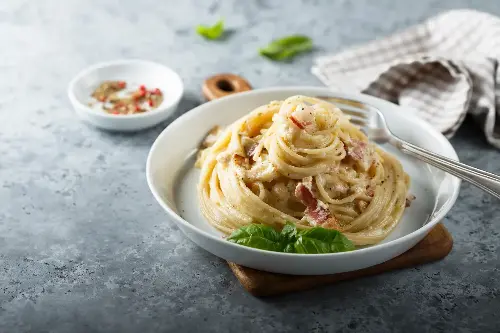
Creating the Carbonara Sauce
While the pasta cooks, take the egg yolks and whole eggs (the traditional ratio tends to be three yolks to one whole egg per 400g of pasta) and whisk them in a mixing bowl. Gradually incorporate the Pecorino Romano cheese until it forms a smooth mixture. Grind in a good amount of black pepper – the spice is key to the dish, not just for seasoning but for authentic flavour.
Mix with Mastery
Drain the pasta, saving a cup of the starchy pasta water. This golden liquid is the secret to binding the sauce to the pasta. Once drained, add the pasta to the pan with the crispy guanciale, off the heat to avoid scrambling the eggs. Pour the egg and cheese mixture over the pasta, stirring swiftly with the heat off or on a very low flame.
The Mastery of Mixing and Serving
Now comes the crucial part – adding the pasta water. Slowly drizzle it in, stirring continuously to create a smooth, velvety sauce that coats each strand of pasta. It’s essential not to rush this step; adding too much water or heat can result in a scrambled mess rather than silky perfection.
Once the Carbonara is beautifully combined, it’s ready to be served. Plate up with a sprinkle of extra Pecorino and a generous amount of freshly ground black pepper. A final touch of guanciale on top, and you have a dish that's simple yet utterly divine.
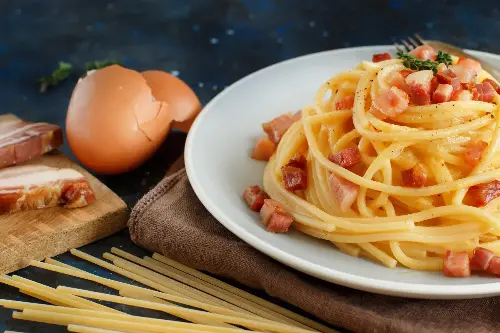
Savouring the Authentic Taste
The joy of this dish is in its elemental flavours, the unity of pasta with the creamy, cheesy sauce punctuated by the rich bites of guanciale and awakening heat from the pepper. It's a dish that celebrates the philosophy of Italian cooking: quality ingredients handled with care to create a meal that's more than the sum of its parts.
Mastering the Carbonara is about embracing the pillars of Italian cuisine: simplicity, quality, and technique. With each attempt, refine your craft, and soon you'll produce a Carbonara that not only satisfies the appetite but also transports you straight to the cobblestoned streets of Rome. Buon appetito!
Whether you're a cooking novice or a seasoned chef, this simple and delicious Carbonara is a testament to the timeless appeal of Italian cooking. Embrace the process, enjoy the results, and share the love of a meal that captures the essence of Italy on a plate.