


Imagine leisurely strolling along the lush banks of a meandering South American river and happening upon the most peaceful creatures you've seen—the capybara. These endearing animals, the largest rodents on our planet, possess a serenity that perhaps speaks to why they are so often seen in harmonious accord with a myriad of wildlife, including birds, monkeys, and even predators.
The Life Aquatic
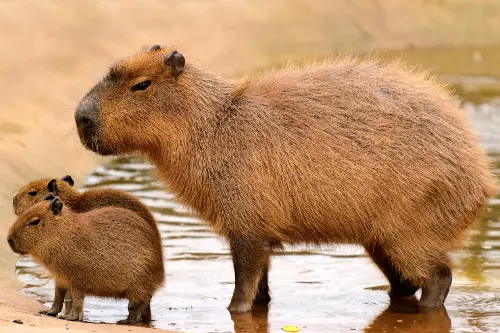
Capybaras are semiaquatic mammals, a fact that shapes much of their lifestyle and behaviour. With webbed feet and an affinity for water, capybaras are excellent swimmers. They are found near bodies of water such as rivers, lakes, swamps, and marshes in habitats ranging from Panama to Southern Argentina. Their aquatic prowess isn't just for leisure; water provides them with a means of escape from predators such as jaguars and anacondas. When danger lurks, these skilled swimmers can remain submerged for up to five minutes, a remarkable feat that often ensures their survival.
Family Life and Social Structure
These creatures are not loners. Capybaras are social beings with family units that can comprise up to 100 individuals during the dry season when they gather around the limited water sources. Their social order is fascinating, often consisting of a dominant male, several females, their offspring, and subordinate males. The dominant male earns his status not just through size and strength but also through a sort of charismatic authority that keeps group tension to a minimum.
Notably, capybaras communicate with each other through a range of sounds from soft purrs when in a contented group, to the more serious warning barks when they spot a threat. Such social cohesion is vital in their complex environment where awareness and alliance mean everything.
Diet and Adaptation
Capybaras are herbivores, dining predominantly on grasses. In agricultural areas, they may supplement their diet with melons, squashes, and grains. Their digestive systems have adapted to handle a high cellulose diet. This includes the practice of coprophagy, where they re-eat their faeces to extract the maximum amount of nutrients from their food - a not so glamorous but essential part of their remarkable adaptability.
The Healing Power of the Capybara
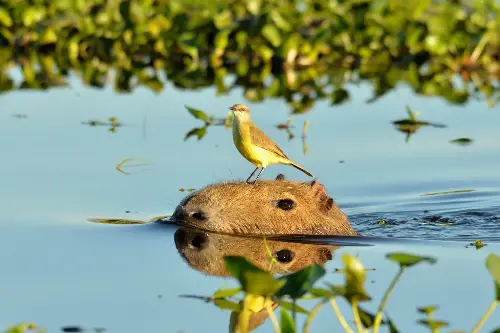
The capybara's charm encompasses not just their disposition but extends to their surprising role within their ecosystems. There is evidence to suggest that these animals may partake in a symbiotic relationship with various bird species, where birds, in search of a meal, clean the capybaras of parasites. This arrangement showcases the capybara as a sort of ambassador of the animal kingdom, demonstrating the importance of inter-species cooperation.
Maternal Instincts and Nurturing Nature
Female capybaras show strong maternal instincts. After a gestation period of around 150 days, females give birth to a litter generally ranging from two to eight pups. These young capybaras are well-developed at birth, able to stand and even swim within hours. The whole group plays a part in looking after the young, a testament to their communal spirit. The mothers are particularly attentive, ensuring their offspring are well-groomed, nourished, and integrated into the group's dynamics.
Threats and Conservation
While the capybara may seem to live an ideal existence, they are not without their challenges. Their habitats are increasingly under threat from human activities such as deforestation and wetland draining for agriculture. Hunting also poses a significant threat, as capybaras are targeted for their meat and hides. However, various conservation efforts and legal protections are in place to ensure these captivating creatures continue to thrive.
In the Limelight: The Capybara's Pop Culture Presence
Perhaps as a nod to their amiable nature, capybaras have found their way into the heart of pop culture. They regularly feature on social media as the 'chill' animal friend to a vast range of other species, and their calm demeanour makes them a hit in animal-assisted therapy programs.
In conclusion, the capybara's existence is not just a whimsical marvel but rather a revelation of the intricacies and interdependencies of the natural world. As the globe becomes more aware of the importance of conservation and the value of biodiversity, the capybara's story is a narrative of coexistence and adaptability. Both in the wild and in our imaginations, these gentle animals serve as a symbol of peace and a reminder of the importance of maintaining balance within our ecosystems. The capybara isn't just a giant rodent; it's a testament to life's serene grace and playful spirit triumphing amidst the ever-changing environment of our world.