


As constant as the moon's nocturnal vigil and as reliable as the sun's fiery ascent, tides are one of our planet's most fascinating and essential natural phenomena. Bridging the realms of astronomy, oceanography, and even the lives of marine organisms, the rhythmic ebb and flow of the world's oceans weave a complex planetary tale of gravitational forces and rotational dynamics. These twice-daily movements of vast water bodies are not mere curiosities; they are integral to Earth's biological and ecological balance.

The Cosmic Dance: Gravitational Push and Pull
At the heart of the tidal phenomenon is the celestial dance between the Earth and the Moon, with the Sun joining to add complexity to the rhythm. The gravitational pull exerted by the moon causes the water on the side of Earth closest to it to swell, creating what is called the 'high tide'. Simultaneously, on the opposite side of the Earth, inertia—the tendency of the water to keep moving—leads to another high tide bulge. Between these bulges, the water dips to form 'low tides'. When the Sun lines up with the Moon during new and full moons, their combined gravitational force creates especially high and low tides known as spring tides. During quarter moons, when the gravitational forces are at right angles, we experience the gentler neap tides.
Tides have been essential to human life for millennia, influencing navigation, fishing, and even warfare. Maritime cultures developed tide calendars, noting the patterns of the moon and its tidal consequences. Today, scientists can predict tides with remarkable accuracy, using a combination of historical data and advanced astronomical calculations.Knowledge of tides remains crucial for those who wish to traverse the oceans or exploit their resources, from fishermen calculating the best times to cast their nets to engineers constructing sea defences and tidal energy harnesses.
The Ecological Pulse of the Ocean
Beyond its influence on human activities, the tidal flow is a driving force in coastal and estuarine ecosystems. The rise and fall of the water level submerge and expose different zones of the shoreline, creating unique habitats that support diverse life forms.
Tidal pools, which are isolated from the ocean during low tide, become microcosms brimming with marine life. Nutrients brought in and out with the tides feed plankton, which form the base of the oceanic food chain; a testament to how these rhythmic waters can dictate the abundance of life.
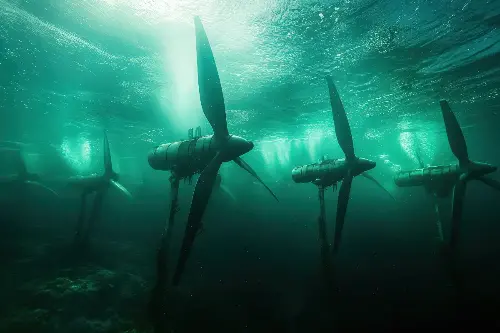
Tides and Technology: Harnessing the Power of the Sea
In our pursuit of renewable energy, the relentless motion of the tides presents an attractive source of power. Tidal energy is predictable and consistent, unlike other renewable resources such as wind or solar power, which can be variable. Tidal generators and barrages are becoming more sophisticated, raising hopes that one day a significant fraction of our energy could come from the ocean's rise and fall.
The study of tides also offers a profound reminder of the interconnectedness of celestial bodies and the Earth's systems. Beyond their physical implications, tides are woven into the cultural and spiritual fabric of many societies. Some see the tides as metaphors for life's constant changes, while others incorporate tidal rhythms into traditional knowledge and practices.
Education Nature Sceneries: Admiring the Beauty of the Tides
From a sheer aesthetic perspective, the tides sculpt and resculpt shorelines, creating breathtaking natural sceneries that draw visitors worldwide. Whether it's the tranquillity of a high tide's gentle lapping against the coast or the revealing marvel of a receded low tide, these captivating scenes serve as both an artist's muse and a nature lover's delight.
The tides, with all their scientific intricacy and natural splendour, encourage us to pause and reflect on their role in the delicate balance of life on Earth. They beckon us to consider how solar and lunar influences extend beyond the night sky and daylight to touch the ocean's deepest depths. As we continue to unlock the secrets of the tides, we gain not only knowledge and opportunity but a deeper appreciation for one of Earth's most phenomenal and essential rhythms.