


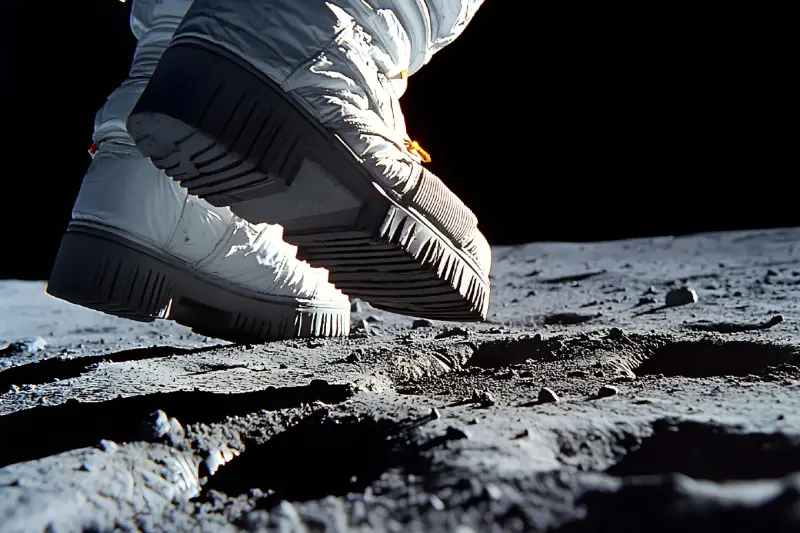
For much of human history, the moon has been an object of awe and curiosity. We see the familiar face of our closest celestial neighbor from Earth—the same craters, the same maria, the same ancient scars left by space rocks billions of years ago. But if you could hitch a ride on a spacecraft and circle round to the far side, you’d discover a very different story. The far side of the moon—the hemisphere that always faces away from the Earth—holds some of the most intriguing secrets in our solar system. So why does it matter so much? Let’s explore the fascinating mysteries and scientific importance of our moon’s hidden half.
The Other Face: What’s So Special About the Far Side?
The moon’s far side is in perpetual secrecy, not because it never receives sunlight, but because of a cosmic choreography known as “tidal locking.” As the moon orbits Earth, it spins at just the right speed so that the same side is always turned toward us. This means that, until the dawn of the space age in 1959, no one had ever glimpsed the lunar far side.
When the Soviet Luna 3 sent back the first blurry photos, astronomers were in for a shock. Unlike the side we see, dominated by large, flat plains called maria, the far side is rugged, heavily cratered, and suspiciously lacking in these frozen “seas” of ancient lava. The differences tell a dramatic story about the moon’s birth and early violence, and scientists are still piecing together why these two faces are so unlike.
A Laboratory Of The Early Solar System
One of the most fascinating facts about the far side is that it acts as a time capsule from over four billion years ago. The near side, peppered with dark maria, was shaped by massive volcanic activity. But the far side never experienced this same level of volcanic resurfacing and remains relatively unchanged. As a result, its surface is thought to preserve some of the oldest crust in the solar system.
This makes the far side a scientific goldmine. Studying its untouched rocks and craters helps scientists unravel the early days of Earth, the moon, and even the other planets. Every impact crater and ancient basin tells a tale of cosmic collisions and the raw material that built our world. If we want to understand how planets—including our own—were formed, the far side of the moon is essential.
The Largest Known Impact Crater
If you love cosmic records, here’s a fact to remember: the far side is home to the South Pole–Aitken basin, the largest and deepest impact crater on the moon, and one of the biggest in our entire solar system. Stretching more than 2,500 kilometers in diameter and plunging as deep as eight kilometers, it’s so vast that its formation likely affected the moon’s entire structure.
This giant scar exposes what lies beneath the lunar surface, possibly offering a peek at the moon’s mantle. Scientists are eager to explore this region, imagining what secrets about the moon’s interior and the history of planetary impacts might be hidden there.
Radio Silence: A Perfect Retreat From Earth’s Noise
Believe it or not, the far side is the most radio-quiet place in the solar system within easy reach. Because it’s always facing away from Earth, our noisy planet’s radio transmissions—TV, radio, cell phones—are all blocked by a solid wall of rock. For astronomers, this makes the far side the perfect location for listening to the subtle murmurs of the universe, signals that would be drowned out here on Earth.
Imagine a giant radio telescope resting in a far-side crater, tuning in to the faint whispers from the early universe or distant exoplanets. If we’re ever going to reveal the secrets of the cosmos that are hidden in these frequencies, the far side of the moon is the place to look.
A New Era Of Exploration
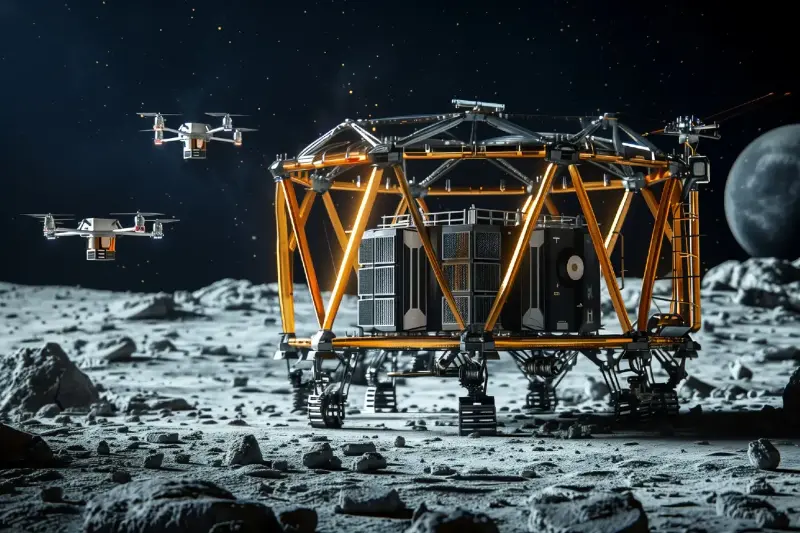
The far side is not just a target for science fiction anymore. In 2019, China’s Chang’e 4 mission made history by landing the first spacecraft on the lunar far side, sending back dazzling photographs and deploying a small rover called Yutu-2. The mission discovered materials deep in the moon’s crust and demonstrated that, with the right technology, humans could one day explore and perhaps even build habitats on this distant frontier.
Excitement is building for future missions from NASA, Europe, and other space agencies, all hoping to unlock the far side’s secrets. With resources like water ice possibly hiding in its shadowy craters, the far side could one day become a crucial waypoint for astronauts en route to Mars or beyond.
What The Far Side Means For Us
It’s not just about rocks and craters. By studying the far side of the moon, scientists gain new perspective on Earth’s own history, and maybe even clues to life elsewhere in the universe. Every step on this hidden world brings us closer to understanding our place among the stars.
The far side of the moon is a frontier for explorers, dreamers, and anyone who’s ever looked up at the night sky and wondered what secrets are still out there. In its silence and strangeness, it reminds us that, even in our closest neighbor, the universe has stories still waiting to be told.