


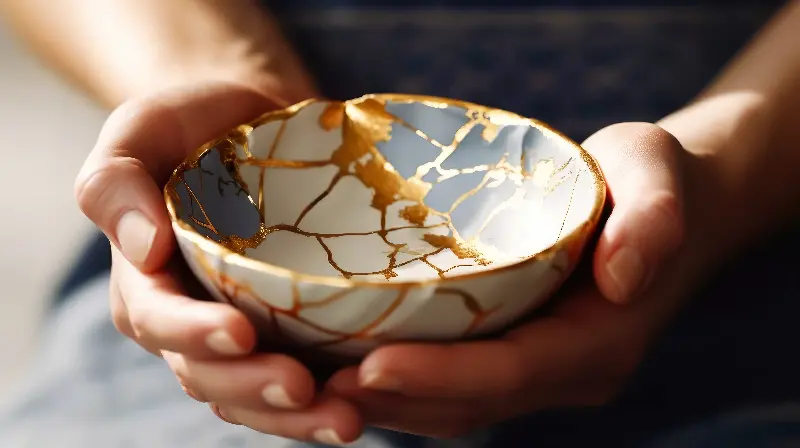
If you’ve wandered through an art gallery or scrolled past ceramics on social media, you might have noticed fractured pottery pieced back together with gleaming veins of gold zigzagging across their surfaces. This beautiful and evocative technique is called Kintsugi, a Japanese art form that transforms broken ceramics into new works of art—highlighting scars rather than hiding them.
What’s more fascinating is that Kintsugi uses real gold to fill those cracks, turning flaws into a statement of resilience and beauty. This centuries-old craft is inspiring contemporary artists and collectors alike, proving that "golden scars" hold a special place in a world often obsessed with disposable perfection.
ORIGINS OF KINTSUGI AND ITS PHILOSOPHICAL ROOTS
The story of Kintsugi begins in 15th-century Japan. According to legend, a Japanese shogun named Ashikaga Yoshimasa broke his beloved tea bowl. Dissatisfied with the crude metal staples used for repair at the time, he asked craftsmen for a more aesthetic solution. Their answer was to mend the bowl with urushi lacquer mixed with powdered gold, creating a stunning pattern of luminous lines.
But Kintsugi runs deeper than simple repair. Its philosophy is rooted in Wabi-sabi, an appreciation for:
- The Imperfect: Finding value in things that are flawed.
- The Transient: Acknowledging that nothing lasts forever.
- The Incomplete: Accepting that beauty is found in the process of becoming.
Kintsugi literally means “golden joinery”. Its dazzling networks of gold-filled cracks serve as a physical reminder that our scars hold stories and that there’s elegance in survival.
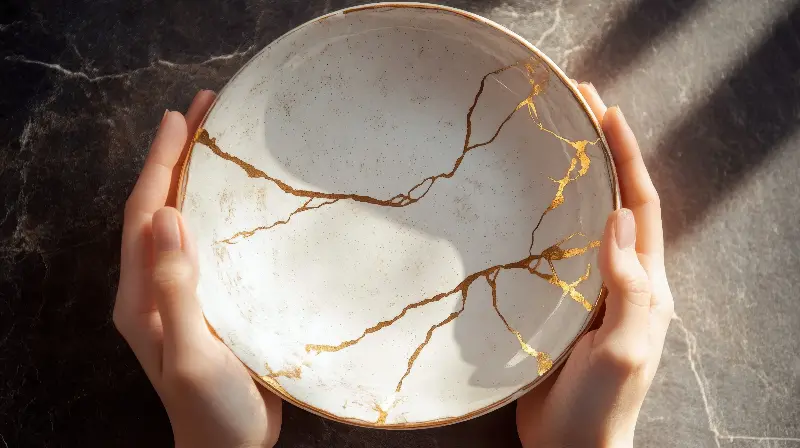
THE PROCESS: FROM SHATTERED PIECE TO GOLDEN ART
Kintsugi isn’t just about slapping some gold on a cracked pot. The restoration process is both meticulous and meditative, requiring skill, patience, and a delicate touch. Traditionally, the journey involves several specific stages:
- Cleaning and Assembly: Artists collect every shard, ensuring the broken edges are free of debris.
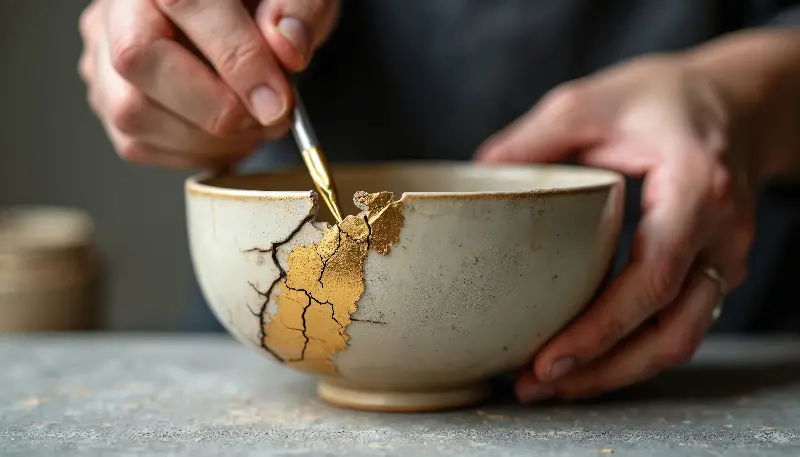
- The Bond: Pieces are joined using urushi—a natural, highly durable resin harvested from the Japanese lacquer tree.
- The Cure: The adhesive must dry in a humid environment, which can take days or even weeks.
- The Gilded Finish: Once the structure is sound, the artist dusts powdered gold, silver, or platinum over the seams.
Modern Kintsugi sometimes incorporates contemporary materials like epoxy for accessibility. While purists prefer the traditional resin, these adaptations have made Kintsugi workshops popular for global audiences who want to experience the magic of transforming the broken into the beautiful.
KINTSUGI BEYOND REPAIR: SYMBOLISM FOR MODERN LIVES
While its origins lie in tea culture, Kintsugi’s message strikes a universal chord in our fast-paced era. The visible golden cracks have become a powerful metaphor for overcoming adversity and embracing what makes us unique.
Many see parallels between ceramic Kintsugi and personal growth:
- Strength through Struggle: Just as the mended vessel is reinforced by the lacquer, people often find new strength after challenges.
- Enhanced Value: A Kintsugi piece is often considered more valuable than a brand-new one because of its history.
- Visualizing Healing: Mental health advocates use Kintsugi to help clients visualize resilience and self-acceptance.

A GLOBAL REVIVAL: KINTSUGI IN CONTEMPORARY DESIGN
Thanks to a renewed interest in slow craftsmanship, Kintsugi has experienced a worldwide renaissance. Modern artists are experimenting with the technique on various mediums, including:
- European Porcelain and Glass: Blending Eastern philosophy with Western aesthetics.
- Wooden Objects: Using gold to highlight natural splits in timber.
- Fine Jewelry: Creating "fractured" necklaces that celebrate the beauty of the break.
Some creators even practice conscious destruction, deliberately breaking their work to be reborn with gold. This challenges long-held notions of value and perfection, sparking conversations around sustainability and mindful consumption.
FASCINATING FACTS: THE ALLURE OF REAL GOLD
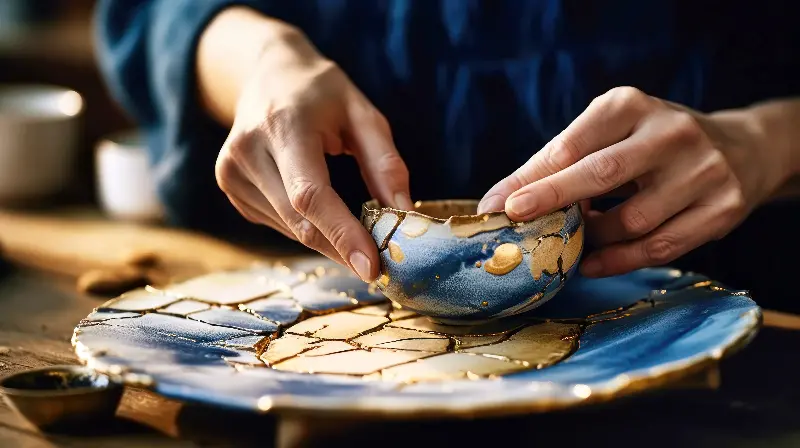
One of the most mesmerizing aspects of Kintsugi is its use of real gold. Many professional artists use 24-karat gold powder. While this makes the technique costly, it adds genuine monetary and emotional value to the item.
- No Duplicates: Because of the random nature of how things break, no two Kintsugi items will ever have the same pattern.
- Durability: Gold’s resistance to tarnish and corrosion ensures the repair will shine for generations.
- Historical Preservation: Some collectors prize a Kintsugi-repaired item higher than a flawless original, knowing its transformation is preserved in gold forever.
Whether you’re an art lover or a craft enthusiast, the gilded cracks of Kintsugi are an inspiring reminder: it’s our "golden scars" that make us unforgettable. The next time you spot those luminous lines, you’ll know you’re looking at a testament to endurance and the art of healing.