


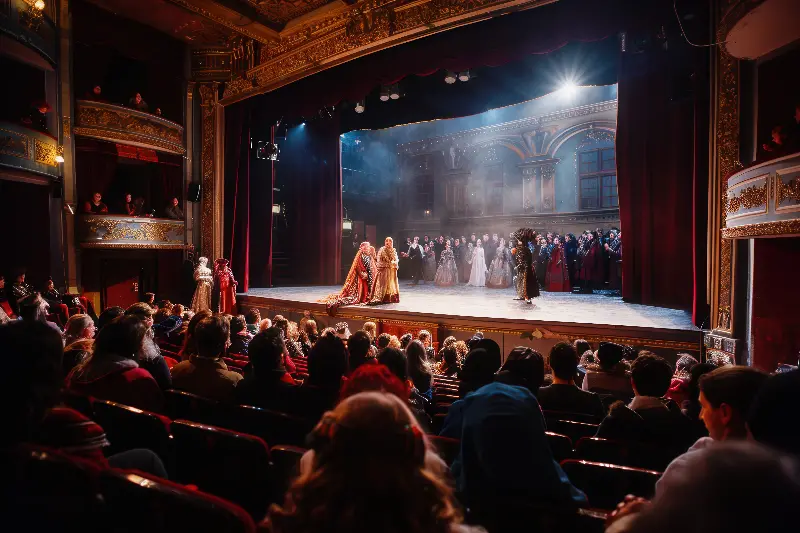
For centuries, humans have built grand monuments to house the magic of performance. While ancient amphitheaters provided the blueprint, the modern era has refined these spaces into architectural icons that define the skylines of our greatest cities. From the gilded halls of Europe to the futuristic sails of the Southern Hemisphere, these iconic theaters are more than just venues—they are the beating hearts of global culture.
SYDNEY OPERA HOUSE: A MODERN MASTERPIECE
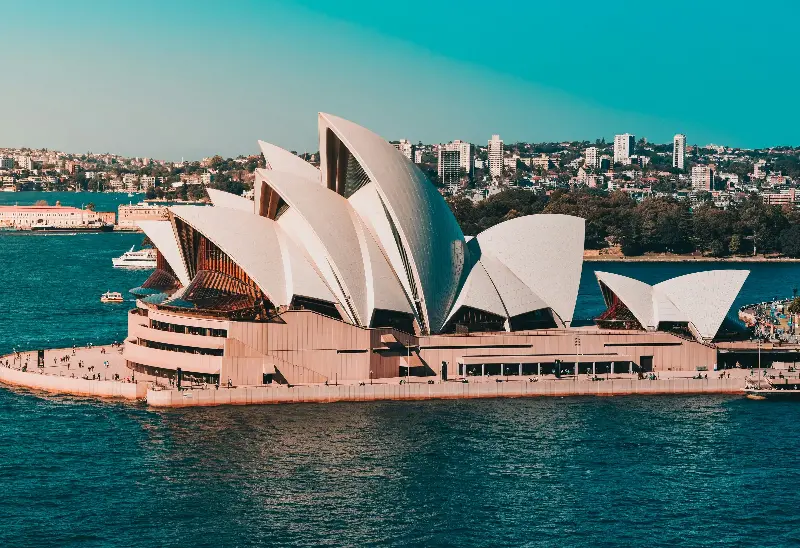
Inaugurated in 1973, the Sydney Opera House is perhaps the most recognizable building in the world. Designed by Danish architect Jørn Utzon, its silhouette—resembling billowing white sails or interlocking seashells—revolutionized 20th-century architecture.
- The Design: Utzon’s "spherical solution" allowed the complex shells to be cast from a single mathematical form.
- The Location: Perched on Bennelong Point, it turns the Sydney Harbour into a dramatic natural backdrop.
- UNESCO Status: It is one of the youngest sites to ever be awarded World Heritage status, recognized as a "masterpiece of human creative genius".
PALAIS GARNIER: THE OPULENCE OF PARIS
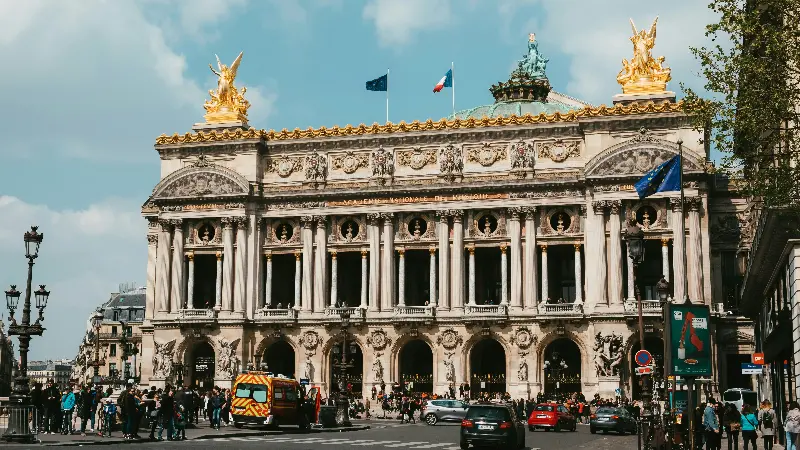
If Sydney represents the future, the Palais Garnier in Paris represents the peak of 19th-century luxury. Commissioned by Napoleon III and opened in 1875, this Neo-Baroque marvel is so grand that it inspired the legend of The Phantom of the Opera.
Visitors are often more enchanted by the building itself than the performances. The Grand Staircase, built from white marble with balustrades of red and green, serves as a stage where the audience becomes the show. Inside the auditorium, the ceiling features a massive, colorful fresco painted by Marc Chagall in 1964, providing a stunning contrast to the traditional gold-leaf ornamentation.
TEATRO ALLA SCALA: THE TEMPLE OF OPERA
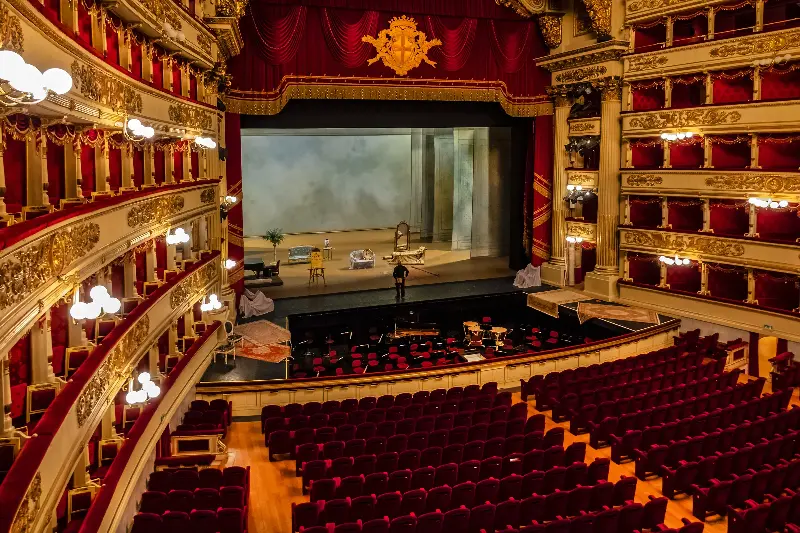
In the heart of Milan stands La Scala, a theater whose name is synonymous with operatic excellence. Since its opening in 1778, it has hosted the world premieres of masterpieces by Verdi, Puccini, and Rossini.
- The Audience: The loggionisti—the passionate fans in the upper galleries—are famous for being the most critical and vocal in the world.
- The Museum: Its halls are filled with original costumes worn by legends like Maria Callas and handwritten scores from history’s greatest composers.
- The Interior: Despite its understated Neoclassical exterior, the inside is a sea of crimson velvet and gold, centered around a legendary chandelier.
TEATRO COLÓN: ACOUSTIC PERFECTION
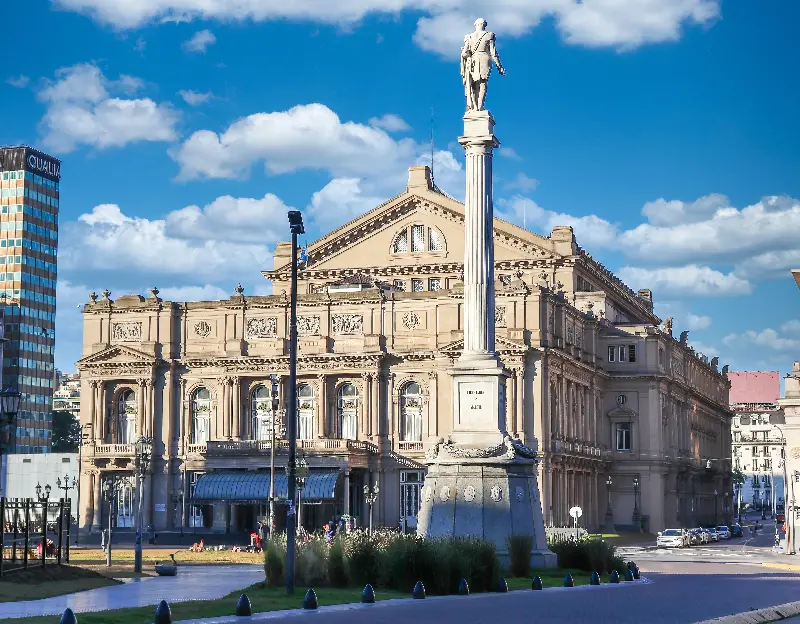
Located in Buenos Aires, the Teatro Colón is widely considered to have the best acoustics in the world. Completed in 1908, it is a monument to Argentina’s "Golden Age," blending Italian Renaissance and French Baroque styles.
The theater is so technically perfect that it has been studied by NASA engineers to understand how sound travels so purely through its horseshoe-shaped hall. It isn't just a place for music; it is a city within a city, housing its own massive workshops where world-class costumes, wigs, and stage sets are crafted by hand.
THE GLOBE THEATRE: SHAKESPEARE’S LEGACY
While most iconic theaters are defined by gold and marble, London’s Globe Theatre is defined by wood, thatch, and history. The modern structure is a faithful reconstruction of the 1599 original where William Shakespeare staged his greatest plays.
- The Experience: It remains an open-air theater, where "groundlings" stand in the yard just as they did in the 16th century.
- Authenticity: Built using English oak and traditional timber-framing techniques, it is the only building in London allowed to have a thatched roof since the Great Fire of 1666.
Whether it is the high-tech precision of Sydney or the storied stones of Milan, these theaters remind us that the environment in which we experience art is just as important as the art itself. They are the cathedrals of the secular world, inviting us to step out of the everyday and into the extraordinary.