


In the vast expanse of the sky, certain birds have mastered the art of high-altitude flight, soaring to heights that seem almost unimaginable. These avian acrobats push the limits of what we understand about flight and survival. Among them, certain species stand out for their incredible abilities to thrive where oxygen is scarce and temperatures are extreme.
Exploring the Masters of the Skies
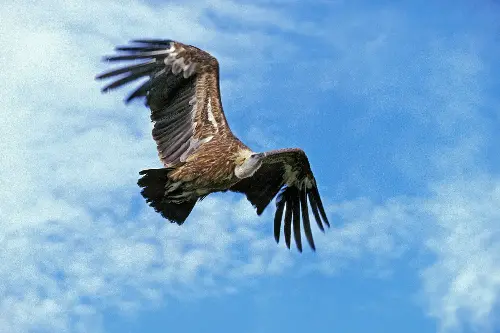
Take, for instance, the Rüppell’s griffon vulture, which holds the record for the highest flying bird. Found in the mountainous regions of Africa, this remarkable vulture has been recorded at altitudes as high as 11,300 metres above sea level, which is in the range of cruising altitudes for commercial aircraft. The Rüppell’s vulture achieves this incredible feat with a specialised haemoglobin, allowing it to absorb oxygen efficiently even when the air is thin.
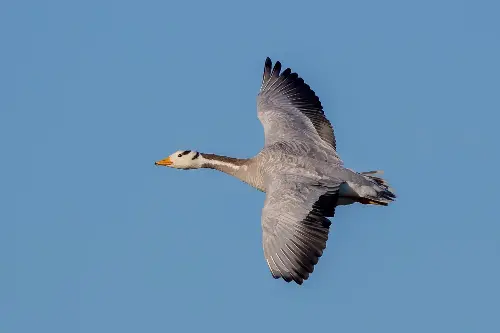
Another impressive high-flyer is the bar-headed goose, famed for its migratory flights across the Himalayas. This species has been observed flying through the mountain passes at altitudes exceeding 7,000 metres. The secret to their success lies in their muscle structure and changes in their haemoglobin structure, which allows them to make better use of the low oxygen levels found at high altitudes.
Adaptations for High-Altitude Flight
The question arises: how do these birds manage the physical demands of extreme altitudes? The answer lies in a variety of evolutionary adaptations that include physiological, anatomical, and behavioural traits.
Physiologically, many high-flying birds have developed a greater lung capacity and more efficient ways to utilise oxygen. Their blood has a higher affinity for oxygen, owing to alterations in the structure of their haemoglobin. This means they can stay aloft at high altitudes where oxygen levels would be debilitating to other species.
Anatomically, birds like the bar-headed goose have larger wings compared to their body size, which allows for more efficient flight in thin air. Their powerful chest muscles aid in sustained, vigorous flapping, essential for generating lift in low-density atmospheres.
Behaviourally, these birds often utilise specific environmental conditions to their advantage. For instance, they may fly at night when the air is cooler and denser, making breathing somewhat easier. They also exploit mountain updrafts to gain altitude without expending vast amounts of energy.
Significance of High-Altitude Flight
Flight at high altitude is not just a biological marvel but also offers practical survival advantages. For birds like the Rüppell's vulture, soaring high is a way to scout vast areas for food with minimal effort. High vantage points aid in spotting carrion over wide expanses, which is crucial for their survival.
For migratory species such as the bar-headed goose, their high-altitude routes allow them to fly over rather than around geographical barriers like the Himalayas. This direct route conserves energy and time, crucial factors during long migratory journeys.
Conservation Issues
Despite their astonishing adaptations and survival strategies, high-altitude birds face several threats. Habitat loss, due to expanding human populations and changing land use, is a significant threat. Additionally, climate change poses a severe risk by altering the weather patterns and temperatures of their high-altitude habitats, potentially making these areas inhospitable.
There is also the danger of collisions with aircraft, as these birds often share their lofty environment with human-made machines. Conservation efforts are thus crucial in ensuring that these masterful flyers do not vanish from the skies.
Understanding and Protecting Our Aerial Companions
The flight of these birds is not just a spectacle but also a critical indicator of the health of our ecosystems. Research into their physiological adaptations gives us insights into how life can thrive under extreme conditions and helps us gauge the impact of environmental changes on airborne species.
Protecting these birds requires international cooperation and effective conservation strategies, including habitat protection, research programmes, and public education to reduce human-wildlife conflicts. As we continue to marvel at their aerial feats, we must also commit to ensuring that future generations can witness the majestic flight of these high-altitude masters.
In closing, the story of these high-flyers is a testament to the resilience and complexity of life on our planet. Their survival amidst the clouds stands as a reminder of nature's endless capacity to adapt and conquer even the most formidable environments. As we strive to protect these remarkable species, let their flights inspire us to greater heights in our efforts to preserve our world's natural wonders.