


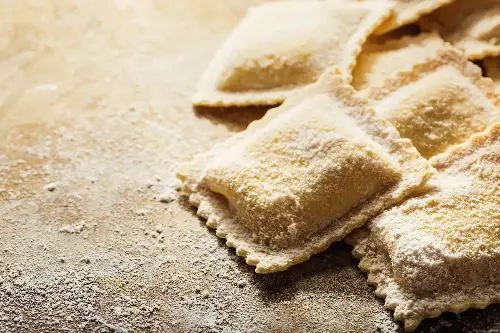
Ravioli: those delicious little parcels of joy that dance on your taste buds and leave you craving for more. This quintessential Italian staple has stood the test of time, evolving from humble beginnings to a dish celebrated in fine dining establishments across the globe. Yet, despite its grand reputation, crafting perfect homemade ravioli need not be an arduous task reserved for the experienced chef. With a few simple steps and a touch of dedication, you too can impress your family and friends with a meal they'll remember. Let's unravel the process step by step, ensuring your foray into the world of pasta-making is as delightful as the ravioli you aim to create.
Choosing Your Ingredients
The journey to perfect ravioli begins with the selection of high-quality ingredients. For the pasta dough, 00 flour is preferred due to its finely milled texture that creates a silky-smooth finish. Accompany it with fresh eggs, a pinch of salt, and a dash of olive oil for elasticity and richness. As for the filling, the possibilities are endless—ricotta and spinach for a classic touch, a savoury butternut squash puree, or even a succulent blend of minced meat seasoned to perfection.
Creating the Perfect Pasta Dough
The foundation of any ravioli is its pasta dough. Begin by blending your flour and salt on a clean work surface. Create a well in the centre and crack in your eggs, adding olive oil for moisture. With a fork, whisk the eggs and oil, gradually incorporating flour from the sides of the well. As the mixture begins to thicken, delve in with your hands and bring it together to form a dough.
Kneading is crucial—it develops the gluten, giving your pasta the desired chewiness. For about 10 minutes, press the dough with the heel of your hand, fold it over, turn it slightly, and repeat. Once the dough feels smooth and pliable, wrap it in cling film and let it rest. This period allows the gluten to relax, making it easier to roll out later.
Rolling Out the Ravioli Sheets
After resting the dough for at least 30 minutes, divide it into manageable portions. Using a rolling pin or a pasta machine, work each piece into a thin sheet, almost to the point of transparency. Consistency is key; an even thickness guarantees uniform cooking. Lay your pasta sheets onto a lightly floured surface to prevent sticking while you prepare the filling.
Mastering the Filling
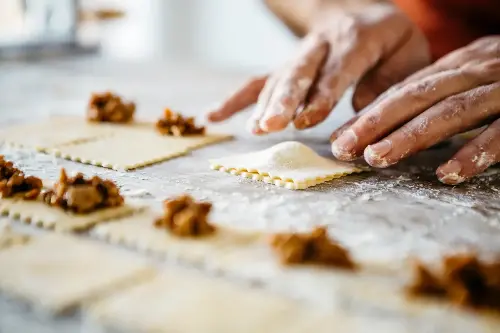
Now, turn your attention to the star of the show—the filling. Remember, a little goes a long way, as overfilling can lead to bursting during the cooking process. Whether you've opted for a simple cheese mixture or a more elaborate concoction, ensure your ingredients are finely chopped and well combined. The consistency should be firm enough to hold its shape when spooned, yet moist enough to meld with the pasta during cooking.
Assembling the Ravioli
Begin by placing teaspoonfuls of filling a few centimetres apart along one sheet of your pasta. Cover this with another sheet, using your fingertips to gently press out any air pockets, sealing the pasta around the filling. Whatever shape you choose—be it square, circular, or even novelty—you can cut your ravioli using a sharp knife, a ravioli cutter, or a glass. Ensure the edges are well-sealed by pressing down with a fork, giving them that classic ravioli appearance.
The Art of Cooking Ravioli
Boiling ravioli requires a large pot of salted water brought to a gentle simmer. Avoid a rolling boil, as this can agitate the ravioli and risk them opening up. Cook the pasta in batches to prevent overcrowding and cook for a few minutes until they float to the surface, an indication they're ready to be served. Remember, freshly made pasta takes less time to cook than dried store-bought pasta, so keep an eye on the clock.
Serving Your Culinary Creation
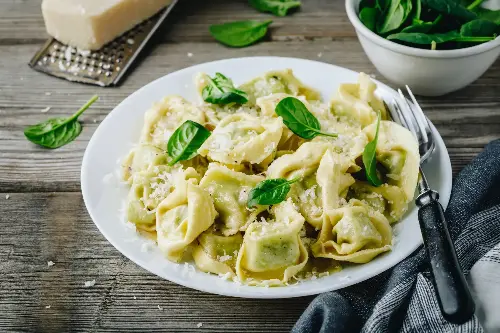
Once cooked, carefully remove your ravioli using a slotted spoon, allowing any excess water to drain. Serve them hot, adorned with a sauce that complements your filling—a sage butter for cheese ravioli or a rich tomato sauce for meat fillings. Finish with a sprinkle of Parmesan cheese, a drizzle of high-quality olive oil, or fresh herbs.
Impress and Savour
Creating homemade ravioli is an exercise in both patience and craftsmanship. It's about taking the time to enjoy the process and the interactions that come with it. As you share your homemade creations, you're not just serving up a dish; you're offering an experience—a testament to the love and care that goes into preparing food from scratch. So gather your family and friends, pop open a bottle of your favourite wine, and watch as the room fills with joy, one ravioli at a time.