


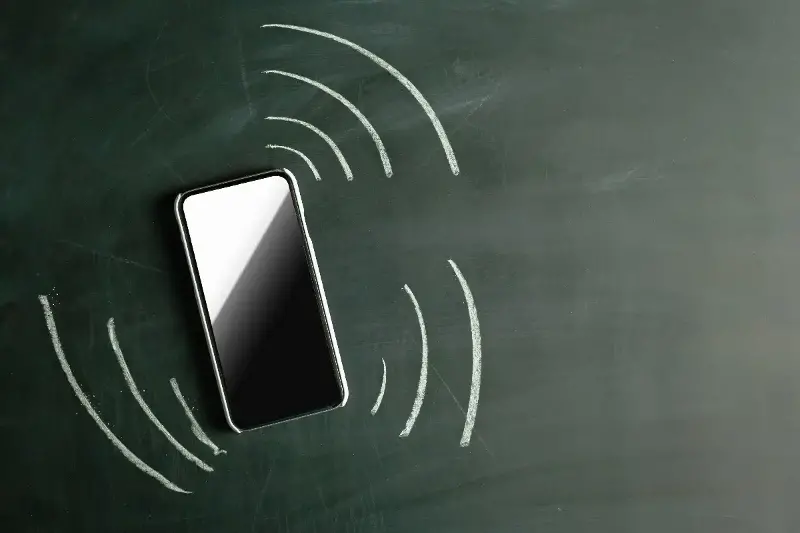
Have you ever reached for your pocket after feeling your phone vibrate, only to discover there were no calls or messages? If so, you’re in good company. This curious sensation, known as phantom phone vibration, has become a widespread modern psychological phenomenon.
It is something millions of people experience—sometimes several times a week—leaving us to wonder why our brains play this digital trick on us. It turns out that you aren't imagining things; your brain is simply reacting to the deep integration of technology in your daily life.
WHAT IS PHANTOM PHONE VIBRATION?
Phantom phone vibration, or “Phantom Vibration Syndrome,” is the false perception that your mobile device is buzzing when it actually isn't. Whether your phone is in your pocket, bag, or lying nearby, the sensation can be so convincing that it prompts an immediate, almost instinctive check.
Surprisingly, researchers estimate that up to 90% of mobile phone users have experienced this at least once. While it isn’t a sign of a psychiatric disorder, it provides a unique window into how technology and our sensory systems interact.
WHY DOES IT HAPPEN?
To understand this phenomenon, we have to look at how our brains process sensory information. Our bodies are constantly awash with signals—touch, pressure, and movement. Normally, the brain filters out irrelevant background noise, but when we become hyper-attuned to specific cues, our awareness heightens.
The act of regularly checking our phones creates a “feedback loop”. According to psychologists:
- Hyper-Attachment: People who are more emotionally attached to their devices are more likely to feel phantom buzzes.
- Sensory Misinterpretation: The brain gets tricked into misinterpreting ordinary sensations—like a muscle twitch, a shift in clothing, or even a breeze—as a notification.
- Anticipation: Your nervous system is essentially "on guard," waiting for the next social interaction.

THE ROLE OF EXPECTATION AND ATTENTION
Psychologists refer to this as “expectation bias.” When the brain is primed to expect a particular stimulus, it is more likely to perceive it even when it isn't there. If you are waiting for a high-stakes message, your anticipation can mean every subtle movement near your hip feels like a buzz.
Moreover, notifications are tied to our reward system. Each buzz can trigger a small burst of dopamine—the brain’s “feel-good” chemical. This chemical reward strengthens the habit of checking and keeps the brain sensitized to any potential signal, leading to more frequent false alarms.
WHO EXPERIENCES IT MOST?
While anyone with a smartphone can encounter phantom vibrations, certain groups are more susceptible:
- Heavy Users: Students and young adults who rely on constant digital communication report the highest frequency.
- High-Stress Professionals: Individuals waiting for critical work emails or urgent updates often have a heightened sensitivity.
- Anxious Personalities: Those who feel a strong need to stay connected or fear missing out (FOMO) are more likely to experience these "digital ghosts".
Stress acts as an amplifier; when we are anxious, our brain goes into overdrive, increasing the likelihood of misinterpreting physical sensations.

IS IT A CAUSE FOR CONCERN?
For the vast majority of people, phantom vibrations are simply a harmless quirk of modern life. There is no evidence suggesting they lead to neurological disease. However, if the sensation is accompanied by constant anxiety or starts interfering with your sleep and focus, it may be time to reassess your relationship with your device. It serves as a gentle reminder of just how embedded technology has become in our physical routines.
HOW TO REDUCE THE BUZZ
If you find phantom vibrations distracting, you can help "reset" your brain's expectations:
- Change the Location: Try carrying your phone in a bag or a different pocket to break the physical habit pattern.
- Audit Your Notifications: Reduce the number of apps allowed to vibrate.
- Go Silent: Switch to silent mode during deep work hours to lower your brain's state of "alertness".
- Mindful Breaks: Take conscious technology fasts to decrease your sensory dependency on the device.
As long as devices remain a central part of our lives, these quirky phenomena will persist. The next time you feel a buzz with no message, you can smile—your brain is simply doing its remarkable, if slightly misled, job of keeping you connected.