


Gazing up at the night sky, it’s easy to feel a sense of wonder and awe. But even the most passionate stargazers may not realize just how truly bizarre, beautiful, and mysterious our universe actually is. From the mind-bending behavior of black holes to cosmic structures so vast they defy our imaginations, the cosmos is brimming with secrets. Here are ten astounding facts about our universe that might just leave you seeing the stars in a whole new light.
Black Holes Can “Evaporate” Over Time
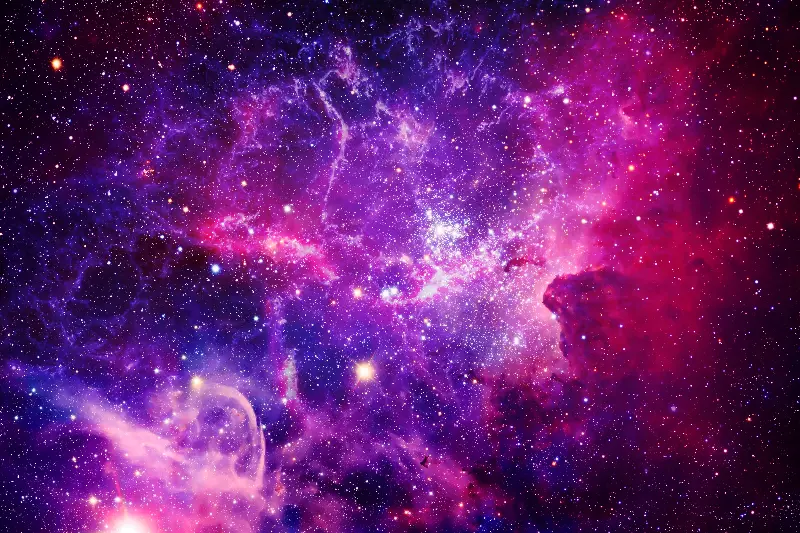
Although black holes are often described as cosmic vacuum cleaners that nothing can escape—not even light—there’s more to their story. Thanks to a quantum phenomenon known as Hawking radiation, black holes can slowly lose mass and energy over unfathomably long timespans. Stephen Hawking proposed that black holes emit particles due to quantum effects near the event horizon, causing them to gradually “evaporate.” For a supermassive black hole, this process takes trillions upon trillions of years, much longer than the current age of the universe—but it means black holes won’t last forever.
Neutron Stars Are Incredibly Dense and Strange
When the core of a massive star collapses after a supernova, it can form a neutron star. These stellar remnants are only about 20 kilometers in diameter but pack a mass greater than our Sun. A sugar-cube-sized amount of neutron star material would weigh about a billion tons on Earth. Even stranger: their gravitational and magnetic fields are so extreme that atoms themselves are crushed, forming a sea of neutrons—one of the densest forms of matter in the universe.
The Largest Structure in the Universe Spans Billions of LightYears
You might have heard of galaxies, galaxy clusters, or even cosmic filaments. But did you know there’s a structure called the Hercules–Corona Borealis Great Wall, discovered in 2013, that stretches over 10 billion light-years across? That’s about a tenth of the observable universe’s diameter. Such structures challenge current models of how the cosmos formed and make us rethink the word “large.”
There’s a Planet Where It Rains Glass—Sideways
Space is home to some truly extreme weather. Take HD 189733b, a blue-hot gas giant located 64 lightyears away. Winds on this planet race at speeds of up to 5,400 miles per hour while it rains glass—yes, actual silicate particles—sideways. This creates a dazzling, deadly environment that would make even the wildest science fiction seem tame.
The Sound Of The Universe Is A Deep “B Flat”
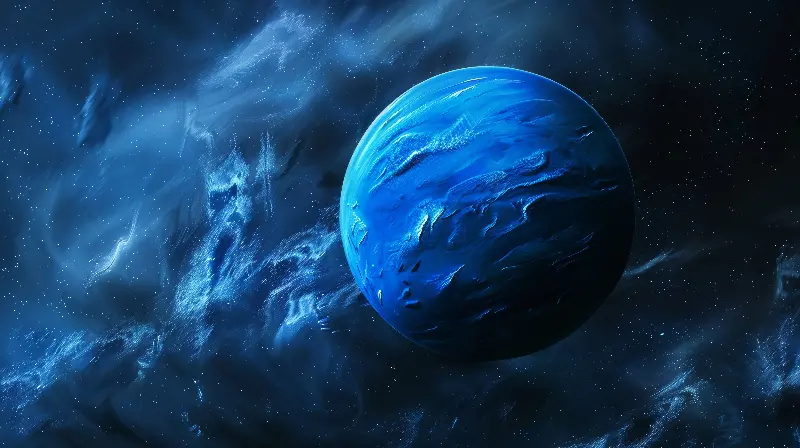
We usually think of space as silent, but in 2003 astronomers working with NASA’s Chandra X-ray Observatory identified “sound waves” emanating from a cluster of galaxies in the Perseus Cluster. The black hole at the center generated pressure waves in the hot gas, which translate to the musical note of B-flat, but 57 octaves below middle C—a pitch millions of times deeper than what humans can hear.
Dark Matter Holds The Universe Together
Despite comprising roughly 27 percent of the universe, we cannot see or touch dark matter. Instead, its presence is inferred through its gravitational effects on visible matter, such as stars and galaxies. Without dark matter, galaxies would simply fly apart. Its true nature remains one of science’s greatest mysteries, sparking countless experiments and debates among physicists.
Galaxies Can Collide Without Stars Crashing Together
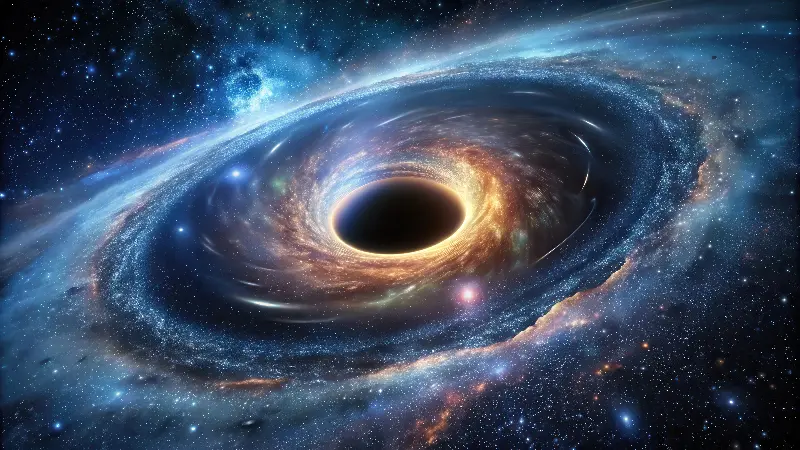
It sounds like cosmic chaos, but when galaxies collide—which happens more often than you’d think—the immense distances between stars mean direct star-on-star collisions are incredibly rare. Instead, gravitational forces reshape the galaxies’ structures, triggering waves of new star formation and sometimes merging the galaxies into a larger one.
There Is A “Diamond Planet” Out There
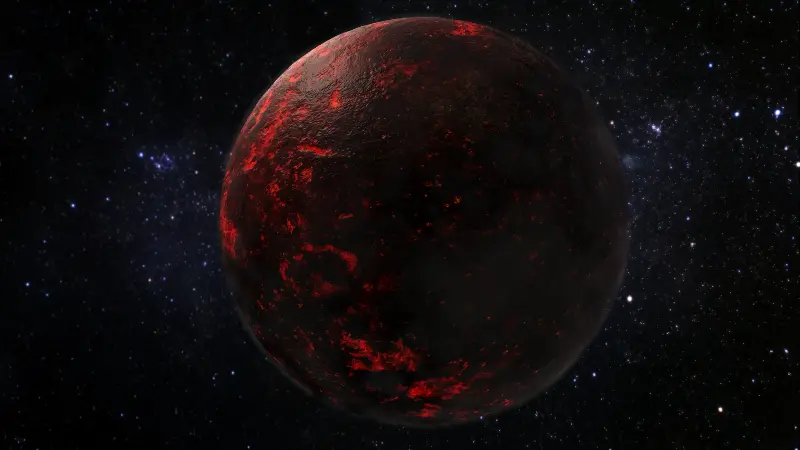
One of the universe’s most dazzling oddities is 55 Cancri e, a planet twice the size of Earth, which is believed to be made largely of diamond. Due to its high carbon content and intense pressure, scientists suspect a large portion of the planet’s interior has crystallized into diamond, making it a cosmic “treasure” like no other.
Cosmic Time Travel Is Technically Possible
If you wish you could travel through time, you might be interested to know that the universe already lets us do it—sort of. Because light takes time to travel, when we look at distant objects in space, we’re actually seeing them as they appeared millions or even billions of years ago. The Hubble Telescope, for example, lets us peer back in time to view the earliest galaxies, providing a glimpse into the universe’s evolution.
A Teaspoon Of A Neutron Star Would Weigh As Much As Mount Everest
It’s worth highlighting just how extreme the properties of neutron stars are. If you could somehow scoop up just a single teaspoon of neutron star material, it would weigh about 10 million tons on Earth—roughly the mass of Mount Everest. The reason is the crushing gravitational collapse that packs protons and electrons together into tightly-packed neutrons.
Stargazing may ignite our curiosity, but the universe has secrets most of us are just beginning to understand. Each new discovery brings more questions, reminding us that science isn’t about having all the answers—it’s a thrilling, endless journey to unveil the mysteries beyond our atmosphere. As telescopes and technology improve, who knows what astounding cosmic facts await us in the future? For now, looking up at the stars just got a little more intriguing.