


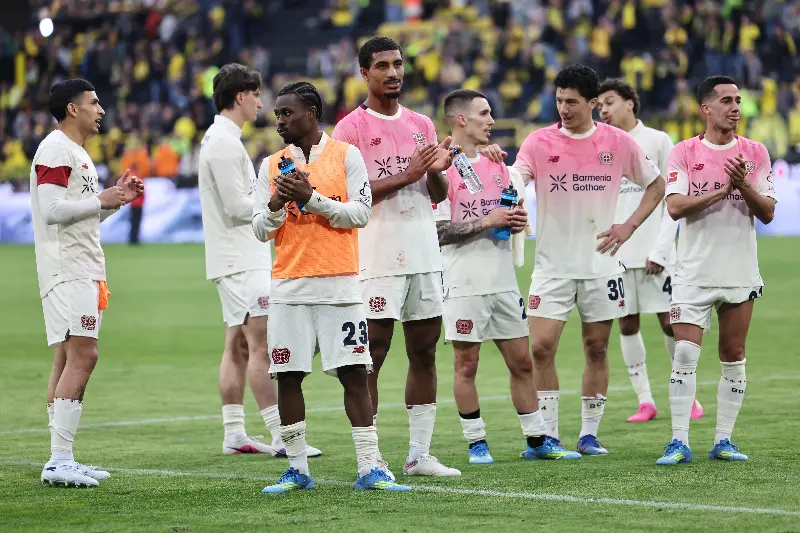
In a match that pitted tactical discipline against home-field passion, Bayer Leverkusen emerged from the daunting atmosphere of Signal Iduna Park with a vital 1-0 victory over Borussia Dortmund. The clash, a highlight of the Bundesliga’s 29th round, was decided by a singular moment of individual quality, but the narrative was written by the visitors' defensive resilience. For Dortmund, it was a night of missed opportunities and mounting frustration as they failed to breach a multi-layered defensive wall, leaving their ambitions of chasing the league leaders in a precarious position.
A Chess Match In Westphalia
From the opening whistle, it was evident that both managers respected the offensive firepower of their opponents. Niko Kovac, leading the charge for Dortmund, and Kasper Hjulmand, at the helm for Leverkusen, both mirrored each other’s tactical setups by deploying a 3-4-2-1 formation. This strategic choice turned the pitch into a congested battlefield, particularly in the central areas, where the league’s most creative stars found themselves suffocated by a lack of space.
The intensity was not limited to tactical maneuvering. The physical nature of the rivalry surfaced as early as the 5th minute when Dortmund defender Ramy Bensebaini was cautioned for a reckless challenge. Referee Deniz Aytekin was forced to intervene frequently throughout the opening period, using his whistle as a tool to dampen the rising tempers on the pitch as both sides fought for every inch of grass.

The Midfield Engine And The Breakthrough
As the first half progressed, Leverkusen began to exert a subtle but firm control over the proceedings. The catalyst for this shift was Exequiel Palacios. The Argentinian playmaker delivered a performance of the highest order, acting as the heartbeat of the Leverkusen transition. With a match-high rating of 7.9, Palacios was omnipresent, intercepting Dortmund’s attempted build-ups and immediately turning them into offensive threats with incisive through-balls that kept the home side’s backline in a state of constant anxiety.
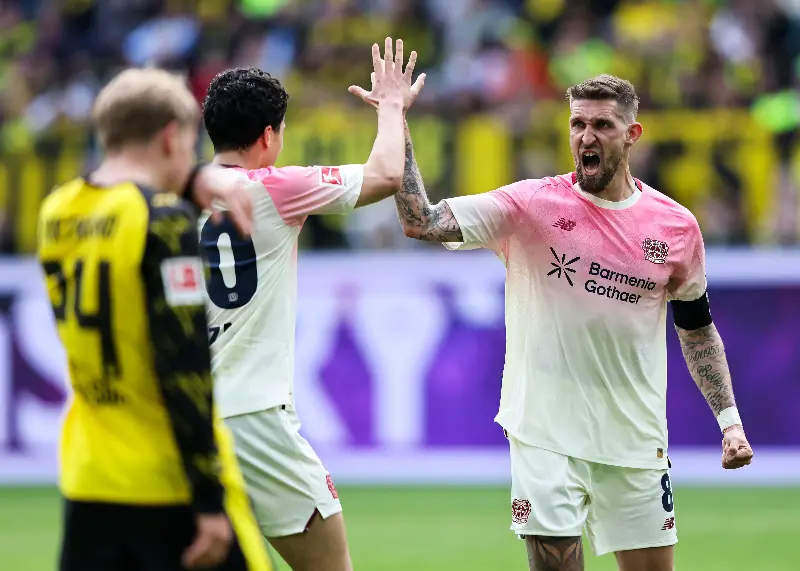
The pressure eventually manifested in the 42nd minute. During a phase of play where Dortmund struggled to clear their lines effectively, the ball fell to Robert Andrich arriving from the second line. Without hesitation, the central defender unleashed a thunderous right-footed strike from well outside the penalty area. The ball traveled with blistering speed and unerring accuracy, nestling into the far corner of the net. Even a goalkeeper of Gregor Kobel’s caliber, despite a desperate leap, found himself beaten by the sheer power and placement of the shot.
Defensive Solidity Amidst The Dortmund Storm
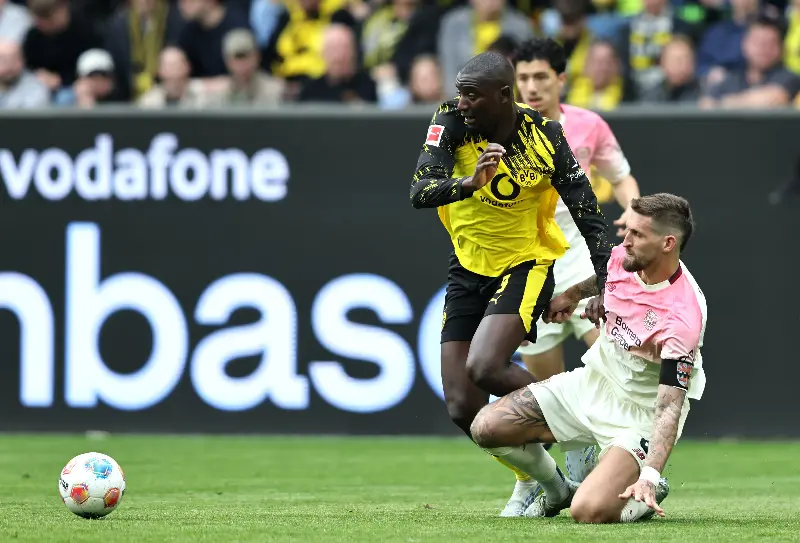
The goal acted as a catalyst for a high-octane second half. Urged on by the "Yellow Wall," Dortmund pushed forward with desperation. Nico Schlotterbeck, fresh from his contract extension, attempted to drive his team forward from the back, initiating wave after wave of attacks. However, they met a Leverkusen defense that appeared virtually impenetrable. The duo of Loic Badé and Edmond Tapsoba provided a masterclass in positional awareness, snuffing out crosses and neutralizing the threat of Serhou Guirassy.
Guirassy, currently one of Europe’s most sought-after strikers, was a portrait of frustration. Despite his energetic movement and physical presence, the ball simply would not fall for him. The zenith of Dortmund’s misfortune arrived in the 83rd minute when a well-struck effort from Guirassy bypassed the goalkeeper but rattled the crossbar, leaving the home crowd in a state of disbelief.
Hjulmand’s Pragmatism Secures The Points
Recognizing the mounting pressure, Kasper Hjulmand showcased his tactical acumen through a series of pragmatic substitutions. He withdrew attacking threats Christian Kofane and Ibrahim Maza, replacing them with more defensive-minded personnel to bolster the midfield engine room. This shift effectively closed the shutters on the match, making the late entries of Jobe Bellingham and Julian Brandt feel like futile efforts against a settled defensive unit.

Even as Dortmund monopolized possession in the final minutes, they lacked the creative spark to dismantle Leverkusen’s structure. Goalkeeper Flekken remained a calm and focused presence, commanding his area with authority and claiming every high ball that entered his domain. On the break, Leverkusen looked arguably more likely to score a second than to concede an equalizer.
When the final whistle blew, the contrast in emotions was stark. The Leverkusen squad erupted in a celebration of grit and tactical perfection, having successfully silenced one of football’s most intimidating venues. For Dortmund, the defeat is a damaging blow that leaves them stagnant in the standings, further widening the gap between themselves and the summit occupied by Bayern Munich. For the victors, it was a statement of intent—a 1-0 win built on the brilliance of a single strike and the strength of an unbreakable collective.