


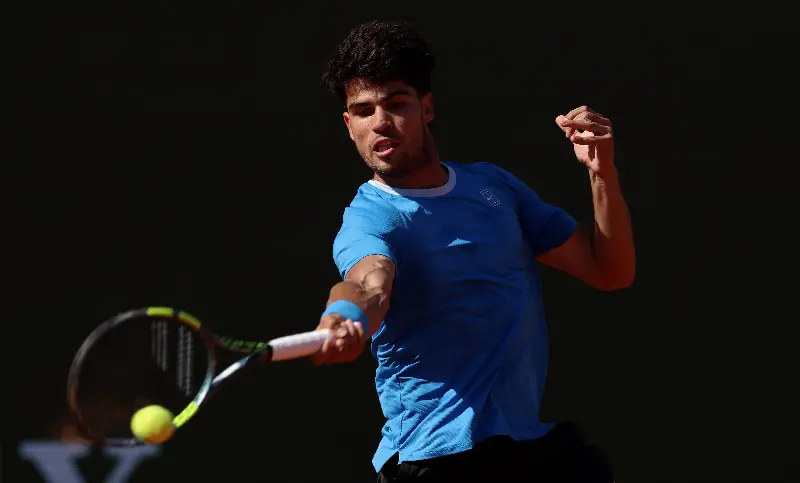
The world number one, Carlos Alcaraz, continues his pursuit of clay-court supremacy, though his latest victory at the Monte Carlo Masters was far from a straightforward affair. In a match that began as a masterclass and transformed into a grueling psychological battle, the Spaniard eventually overcame a spirited challenge from Tomas Martin Etcheverry. The 6-1, 4-6, 6-3 victory not only secured Alcaraz a place in the quarterfinals but also served as a stark reminder of the volatile nature of elite tennis on the red dirt.
The encounter was a tale of three distinct chapters: a flawless opening, a chaotic mid-match slump, and a final act defined by the champion's trademark resilience. For the fans gathered in the principality, it was a display of why Alcaraz is currently the man to beat in the world of tennis, even when his game momentarily deserts him.
A Flawless Opening And The Shifting Tide
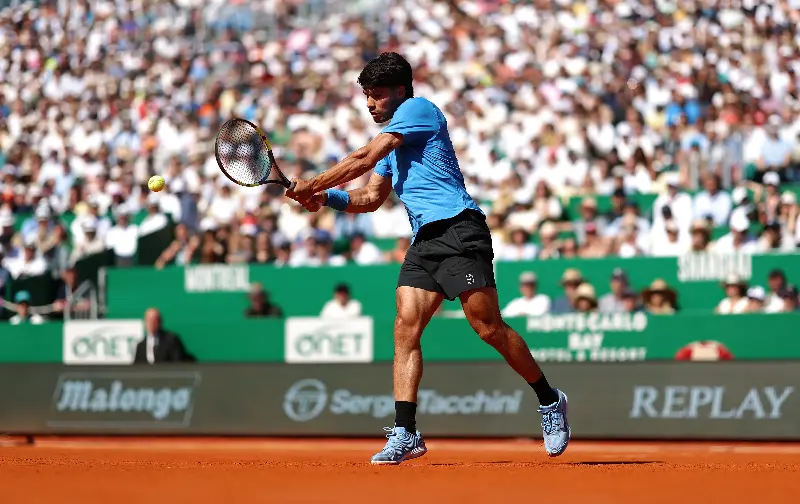
From the very first serve, Alcaraz appeared to be in a league of his own. He ignited the match by winning the first eight consecutive points, leaving Etcheverry stunned and searching for answers. The Spaniard’s movement was fluid, and his shot-making was nothing short of surgical. Dominating the baseline rallies and utilizing his patented drop shots to perfection, Alcaraz cruised through the opening set with a 6-1 scoreline that suggested the match might be over in record time.
However, the momentum shifted dramatically as the second set commenced. The precision that defined Alcaraz’s start vanished, replaced by uncharacteristic lapses in judgment. The young phenom struggled with his rhythm, racking up a staggering 23 unforced errors in the set. Despite having early opportunities to break Etcheverry’s serve and effectively end the contest, Alcaraz failed to capitalize, allowing the door to remain ajar for his Argentine opponent.
Etcheverry’s Surge And The Deciding Set
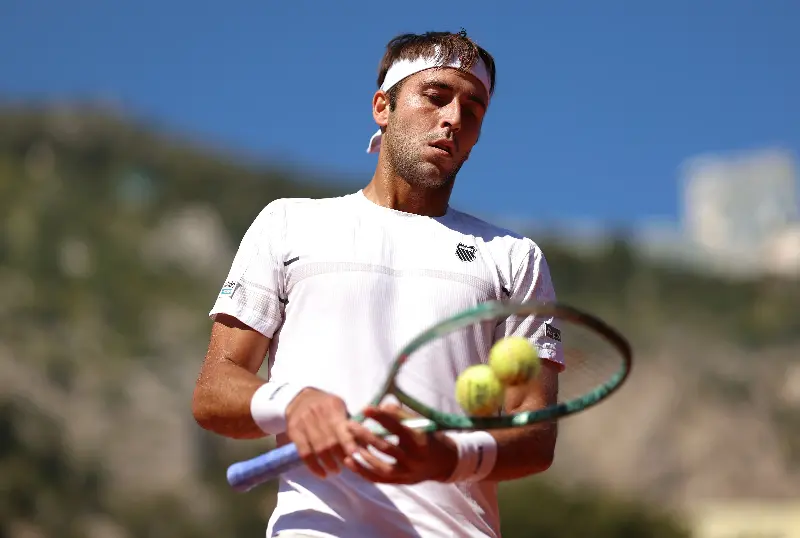
Tomas Martin Etcheverry, sensing the vulnerability across the net, seized his moment with remarkable composure. The Argentine embarked on an inspired run, winning four consecutive games to overturn the deficit and seize control of the second set. His heavy groundstrokes began to find their depth, forcing Alcaraz into defensive positions he had avoided earlier in the match. Etcheverry’s 6-4 success in the second set leveled the score and sent the match into a high-stakes decider.
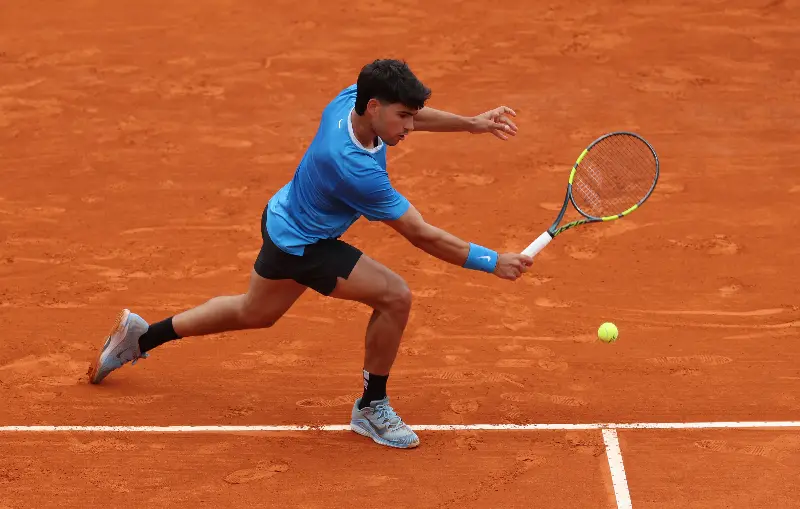
Faced with a mounting crisis, Alcaraz demonstrated the maturity that has seen him rise to the top of the world rankings. Rather than retreating into a defensive shell, he doubled down on his aggressive, attacking philosophy. While the errors didn’t disappear entirely, his winners returned in abundance. In the final set, Alcaraz struck 13 winners, many at crucial junctures, to regain the break and eventually seal the match 6-3. This victory extends his phenomenal winning streak on clay to 15 matches, keeping his hopes of a successful title defense firmly alive.
Bublik Sets Up A High-Stakes Quarterfinal Clash
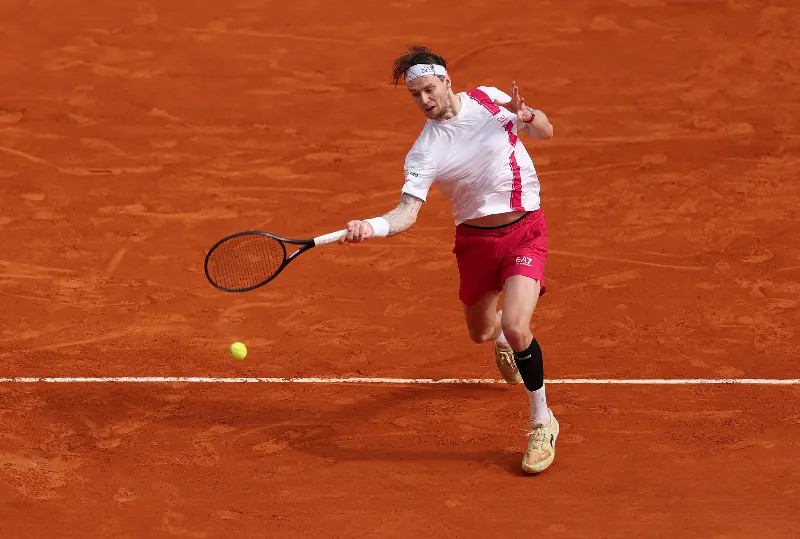
While Alcaraz was battling through his three-set marathon, his next opponent was putting on a clinical display of his own. Alexander Bublik, the eighth seed, secured his passage to the quarterfinals with a swift 6-2, 7-5 victory over Jiri Lehecka. The Kazakhstani star needed only 75 minutes to dispatch his opponent, showcasing a brand of tennis that combined raw power with artistic finesse.
Bublik’s performance was highlighted by a superb one-handed backhand that drew audible gasps from the crowd, with many commentators drawing comparisons to the effortless style of Roger Federer. His ability to blend unorthodox shot selection with consistent serving has made him a dangerous floater in this year's draw, and his recent form suggests he is playing the best tennis of his career.
The Rise Of The Kazakhstani Challenger
Bublik’s ascent on the red clay has been one of the more intriguing storylines of the past year. Since the start of the previous season, the 28-year-old has amassed a formidable record of 18 wins and only 5 losses on the surface. His confidence has been bolstered by significant title wins in Gstaad and Kitzbühel, successes that followed a deep run to the quarterfinals at Roland Garros.
This marks Bublik’s first ever appearance in the Monte Carlo quarterfinals, a milestone that reflects his evolution into a true multi-surface threat. As he prepares to face Alcaraz, the contrast in styles promises a fascinating encounter. Bublik will look to disrupt the Spaniard’s rhythm with his unpredictable play, while Alcaraz will aim to use his superior athleticism and clay-court craft to navigate through to the semifinals. With both players carrying immense momentum, the upcoming quarterfinal is set to be the highlight of the tournament so far.