


When the engines fire up and the crowd's roar fades against the screech of tyres gripping asphalt, it's easy to forget that Formula 1 was once a fledgeling sport with basic, unrefined machinery. The evolution of Formula 1 from rudimentary racers to the pinnacles of technical sophistication is a story of innovation, relentless pursuit of speed, and the unwavering human spirit.
The Evolution of Design
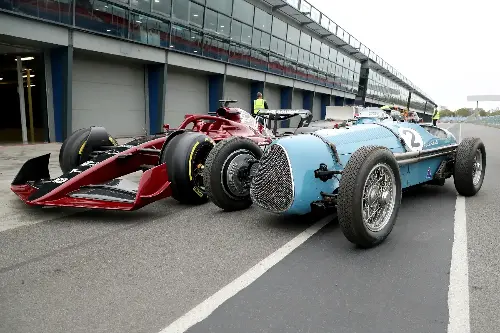
In the early days of Formula 1, which took off in earnest in 1950, cars resembled their road-going counterparts, albeit stripped down for racing. Streamlined but simple aluminium bodies were built over tubular steel chassis, and the engines, while powerful for their time, were nowhere near today's technical marvels. Aerodynamics played a much smaller role, and safety was given little consideration.
The 1960s and 1970s brought dramatic changes. Innovators like Colin Chapman of Lotus began exploiting the principles of aerodynamics, introducing the monocoque chassis, which was lighter and stronger, and technologies such as ground effect aerodynamics. By the 1980s, the use of carbon fibre composites became common, revolutionising the car's strength and weight even as turbocharged engines promised more power.
Advancements in Aerodynamics
This era saw the birth of wings; rear wings, front wings, and various other aerodynamic devices designed to 'glue' the car to the track, increasing speed through corners. With the turn of the millennium, F1 engineers began exploring the subtleties of airflow, using bargeboards, diffusers, and ever-more complex front and rear wings to manipulate air pressure and downforce to their advantage.
Today, computational fluid dynamics (CFD) and wind tunnel testing are substantial parts of F1 design. Engineers create cars that are not amenable to air but commandeering it, channelling it to cool components and increase downforce while minimising drag. This air ballet is as critical as the potency of the engine or the reflexes of the driver.
The Engine's Tale
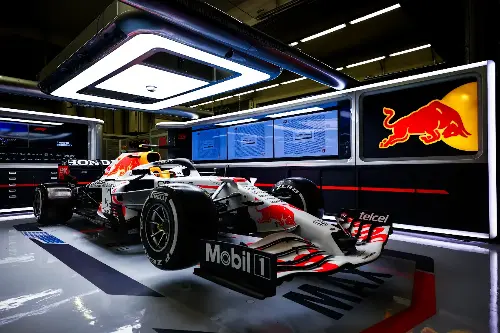
From the front-mounted engines of the sport's infancy to the rear-mounted powerhouses of today, racing engines have evolved into highly efficient, hybrid units that offer a glimpse into the future of automotive power plants. Gone are the days of the screaming V12s, now replaced with 1.6-litre turbocharged V6 engines supplemented by energy recovery systems that contribute to both speed and efficiency.
These engines are marvels of engineering, capable of reaching 15,000 rpm and using both kinetic energy from braking and heat energy from exhaust gases to generate additional power. Racing thus pushes the boundaries of what's possible with internal combustion engines, even as the automotive world looks increasingly towards electric propulsion.
The Safety Revolution
The death of Ayrton Senna in 1994 marked a sea change for Formula 1. The sport's governing body, the FIA, massively ramped up its emphasis on driver safety. Since then, the survival cell, HANS (Head and Neck Support) devices, and high-tech barriers capable of absorbing the energy of a high-speed crash have all become standard. The introduction of the halo, a protective barrier over the driver's head, has been one of the latest and most visible safety features.
Racing in the Digital Age

Beyond the visible changes to cars and regulations, the digital revolution has utterly transformed the sport. Telemetry, or the wireless transmission of data from car to pit wall, means teams can make strategic decisions in real-time and with a depth of understanding that was once inconceivable. Every element of the car's performance, from tyre wear to engine temperature, can be tracked, analysed, and optimised.
The onslaught of big data analytics has turned Formula 1 teams into veritable labs, where hundreds of engineers interpret the data streams flowing from the car during a race. Software simulations and predictive models now play crucial roles in race strategy, effectively making F1 as much a battle of data science as a test of speed and skill.
The Road Ahead
As we look to the future, Formula 1 continues to evolve. The sport is edging towards a greener future, with commitments to sustainable fuels and the aim to be carbon neutral by 2030. Rapid advancements in automotive technology, such as powertrains that are more efficient and less polluting, promise to keep Formula 1 at the forefront of motoring innovation for years to come.
The transformation from basic frames to sophisticated racing machines is the culmination of an ongoing quest for perfection—a quest that mirrors the human drive to push limits, seek faster speeds, and deliver performance that not only wins races but also advances our collective technological prowess. The story of F1's evolution is a testament to the confluence of competition, science, and an insatiable desire to break barriers. The checkered flag is not just a race's end; it's the beginning of the next lap in this relentless pursuit of progress.