


Around the world, billions log on to the internet daily, flickering between work emails, viral videos, and distant friendships. Yet few ever ask: How does all this magical connectivity actually work? Beneath your fingertips and across continents, there lies an epic infrastructure—often hidden from view—that weaves together our online world in real time.
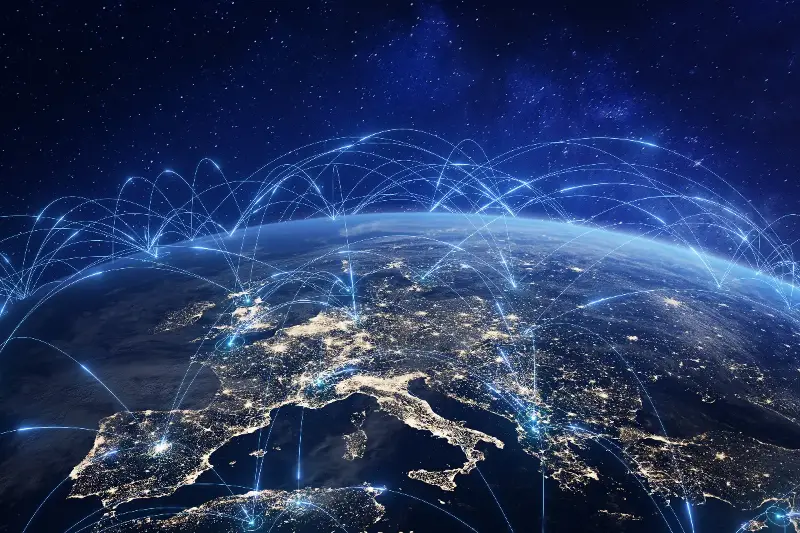
Under the Waves: The Secret Highway of Subsea Cables
It might surprise you to know that nearly 97% of all intercontinental internet traffic flows invisibly beneath our oceans. Since the first telegraph cable crossed the Atlantic in 1858, undersea cables have quietly evolved into the backbone of the digital age. Modern fibre-optic cables, thin as garden hoses, now snake along the ocean floor—stretching over 1.3 million kilometres.
Fibre-optic cables transmit data using bursts of laser light, pulsing at nearly the speed of light itself. Through these glass threads, your favourite video or photo travels as a stream of data, bouncing from London to New York, Singapore to Sydney. Remarkably, just a single cable can handle up to 400 terabits per second—enough to stream tens of millions of HD movies at once.
These cables endure testing conditions: volcanic activity, curious sharks, and even accidental ship anchor drags. Special cable layers, massive ships equipped with precise navigation, gingerly unwind kilometre upon kilometre of cable, bridging nations and cultures with every mile deployed.
The Lightning Within: Fibre Optics Across the Land
Once information makes landfall, it’s whisked through dense webs of terrestrial fibre-optic cables. Imagine a glowing bloodstream of data pulsing beneath your very feet—beneath city streets, railroad tracks, even rural pastures. In the heart of a fibre-optic strand, photons bounce reflectively down the core, zipping your social media post from Manchester to Mumbai almost instantly.
Why fibre optics? Unlike older copper wires, fibre-optic cables aren’t affected by electromagnetic interference and lose almost no signal over vast distances. That means:
- Faster connection speeds
- Lower latency for video calls and gaming
- Greater security against eavesdropping
Thanks to this invisible network, a virtual handshake across continents feels as close as sharing a coffee with a friend next door.

Above the Clouds: Internet From Outer Space
Not all corners of the world enjoy a cosy nest of cables beneath their streets. For the world’s most remote outposts, the internet drops from the sky—literally—via satellite.
Traditional geostationary satellites orbit 36,000 km above and provide broad coverage, but latency can cause frustrating video call lags. Enter low Earth orbit (LEO) satellites, like those launched by Starlink and OneWeb. These satellites orbit just a few hundred kilometres overhead and encircle the globe in sprawling constellations, offering:
- Dramatically reduced latency
- Accessibility to rural and hard-to-reach regions
- Resiliency during natural disasters when ground cables may be cut
With each leap in satellite tech, the digital divide narrows ever so slightly, promising a future where even the most isolated village can connect with the world.
The Internet’s Frontier: Interconnection Hubs and Data Centres
Transcontinental journeys end at bustling intersection points called internet exchange points (IXPs). Here, fibre cables converge—trading, routing, and redirecting traffic at blistering speeds. Data centres around the globe act as virtual warehouses, storing and backing up everything from government archives to your holiday snaps. These hi-tech buildings use advanced cooling, earthquake protection, and round-the-clock security to keep the web flowing smoothly.
Inside these humming strongholds, artificial intelligence keeps tabs on temperature, power, and even cyber security—guarding the very arteries of the internet’s lifeblood.

So, Where Will the Adventure Lead Next?
As technology accelerates and demands only grow, the spectacle of the internet’s journey will continue to astound. From glass threads hair-thin beneath the sea to satellites blinking overhead, the digital adventure connects humanity in ways our ancestors could barely dream. Next time you message a friend across the world or stream your favourite series—pause and marvel at the hidden voyage your data makes, riding waves, wires, and the very stars above.
The story of the internet’s travels is one of ingenuity and resilience—yet also of endless curiosity. Which emerging technology will bend the rules next, and what new adventures might await in the ever-expanding web of our digital universe?