


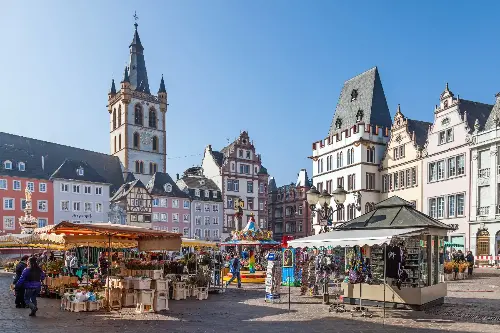
Nestled on the banks of the Moselle River in the scenic western German state of Rhineland-Palatinate, the city of Trier exudes an ancient charm that belies its often-overlooked status on the world travel map. But those in the know understand that this gem holds a secret: it boasts some of the most impressive and well-preserved Roman ruins outside of Italy itself, offering a unique window into an era long past.
Unveiling the Roman Heritage
While Rome is synonymous with the glories of the Roman Empire, Trier tells a parallel story that is equally engrossing. Founded around 16 BC under the august rule of Emperor Augustus, Trier, then known as Augusta Treverorum, quickly grew to become one of the empire's most significant cities. Now, here stand the indelible marks of mighty Rome: from colossal gates to imposing baths, Trier is a living museum of antiquity.
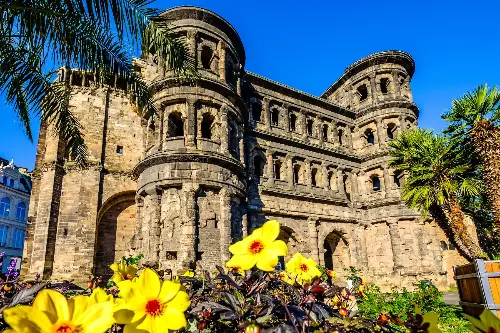
The Porta Nigra: A Colossal Gateway to the Past
A visit to Trier must commence at its most iconic landmark, the Porta Nigra — the Black Gate. This massive gatehouse, constructed entirely without mortar, stands as testament to Roman engineering brilliance and might. Once one of four city gates, the Porta Nigra is a UNESCO World Heritage Site and welcomes visitors to walk its ancient corridors, offering a perspective that truly connects the past with the present.
Bathing Like a Roman Emperor
Not to be overshadowed, the Imperial Baths of Trier, or Kaiserthermen, are among the largest Roman baths found north of the Alps. Although never fully completed, they are an astonishing reminder of Rome's ambitious urban planning and the luxuries afforded to the elite. The subterranean passages that supported the complex's operation are now a labyrinth where visitors can wander and marvel at the advanced technology of ancient times.
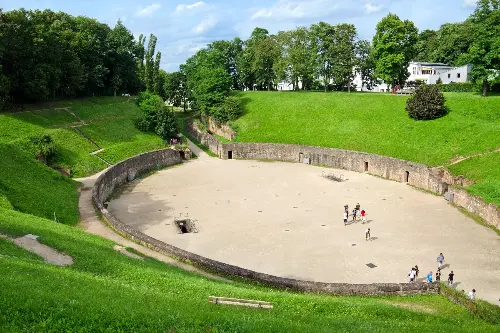
An Amphitheatre Alive with History
Trier's Roman Amphitheatre may no longer echo with the roars of 20,000 spectators, but the ghosts of gladiatorial combat and wild animal hunts remain palpable within its curves. This formidable structure, once a venue for entertainment and public spectacle, endures as one of the city's must-visit sites. Its cunningly designed underground rooms, where the combatants and beasts awaited their fate, are particularly evocative.
Basilica of Constantine: The Throne Room Turned Church
Another prominent remnant of Rome's sway in Trier is the Basilica of Constantine, also referred to as the Aula Palatina. Originally built to serve as the throne room of Emperor Constantine, this austere hall, with its impressively preserved apse, now functions as a Protestant church. Its sheer size and the grandeur of its surviving architecture convey the power of the man who once ruled the Western Roman Empire.
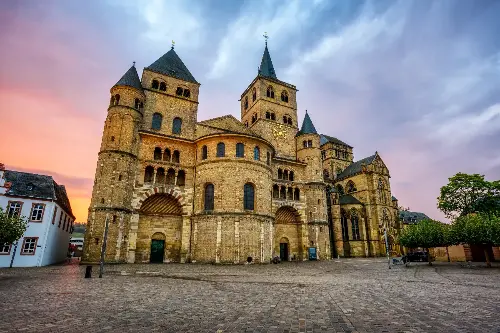
Saint Peter's Cathedral and Its Roman Roots
Amidst Trier's Roman wonders, one cannot overlook the Trier Cathedral. While principally medieval, the structure stands on the site of what was once a Roman palace complex. Sections of its architecture, including the substantial Romanesque core, were built with materials repurposed from Roman buildings, thus integrating the city's ancient DNA into its spiritual heart.
Captivating Collections and the Roman Influence on Daily Life
Beyond its structural marvels, Trier houses the Rheinisches Landesmuseum, an expansive museum that possesses one of the most comprehensive collections of Roman artefacts in Germany. Mosaics, funerary monuments, and everyday items unearthed in and around Trier offer insights into the day-to-day life of the Romans, lending texture to our understanding of this bygone civilisation.
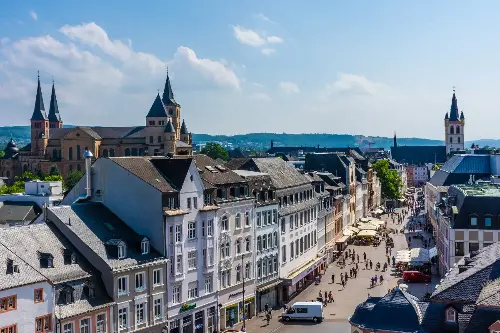
Trier Today: A Blend of Old and New
Walking through Trier is like traversing time, as its Roman heritage seamlessly weaves into the vibrant tapestry of modern life. Quaint cafés and local boutiques dot the cityscape, where ancient walls serve as casual backdrops to contemporary living. The juxtaposition of modern convenience with relics of an empire makes Trier a captivating destination.
A Different Side of Wine Culture
While Trier's past is steeped in historic grandeur, its present is awash with the bounty of the vine. Being at the heart of the Moselle wine region, no visit is complete without sampling the exquisite local Riesling, which offers a tangible taste of the region's current culture.
For the travel aficionado with a penchant for the roads less travelled, Trier provides a setting that rivals the historic narrative and physical remnants of Rome itself. In this tranquil city, where every cobblestone and corner tells a story, the majesty of the Roman Empire lives on, inviting you to experience its wonders firsthand. Whether you are a history buff or a casual explorer, Trier's unseen majesty is a treasure worth discovering.