



Looking for creative ways to keep little minds engaged while learning at home? STEAM activities—those that focus on science, technology, engineering, art, and mathematics—are a fantastic way to combine education with hands-on fun. Forget the pressure of complicated experiments or expensive kits; you can spark your child's curiosity using everyday household items. Here are ten accessible, exciting at-home STEAM activities that boys and girls alike will absolutely love.
Simple Science Experiments That Amaze
Kids naturally want to know how the world works. With a few basic supplies, you can transform your kitchen into a science lab, full of wonders and surprises.
Try the classic vinegar and baking soda volcano for a fizzy, explosive demonstration of chemical reactions. Fill a small bottle with baking soda, pour vinegar inside, and watch the eruption. For a magical color-changing experiment, add a few drops of food coloring before starting the reaction. It’s not just fun: along the way, kids will learn about acids, bases, and the gas carbon dioxide.
Another fascinating experiment is making a rainbow with just a glass of water, a white sheet of paper, and sunlight. Set the glass near the edge of a table where sunlight can pass through, and let kids move the paper until they see a rainbow reflected. You can talk about how light bends and splits into colors—a perfect introduction to basic physics.
Tech Time Without Screens
When we think of technology, tablets and computers often come to mind, but there’s plenty you can do without turning on a device. Introduce early coding concepts by creating a “robot dance” game. Write simple instructions on cards (like “jump,” “turn left,” “take three steps forward”) and let children become robots following the commands. They will quickly grasp the concept of sequencing and logic while giggling away.
Another screen-free tech idea is to build simple circuits using aluminum foil, a small battery, and a tiny bulb. Kids learn what conductivity means and get that rush of excitement when the light glows from something they made themselves.
Easy Engineering Challenges
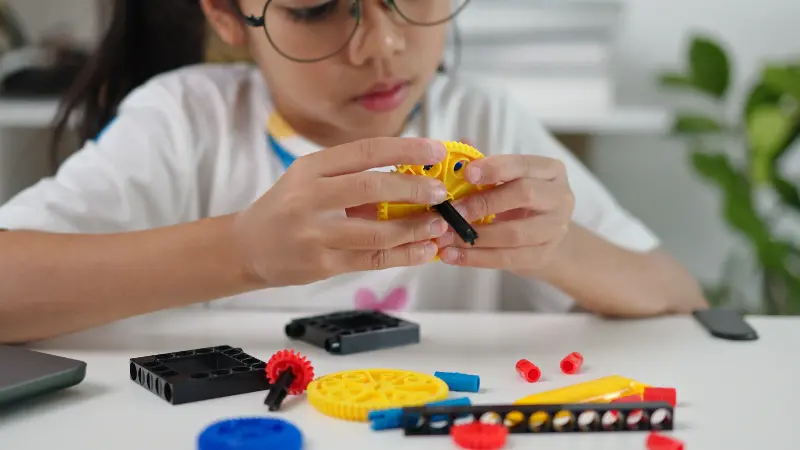
Engineering is all about building and problem-solving. One popular activity is a marshmallow and spaghetti tower challenge. Give your kids a handful of uncooked spaghetti and marshmallows and see who can build the tallest (or most stable) tower. It’s a test of creativity and patience, and as the towers wobble or fall, kids see firsthand why structural design matters.
Take engineering outside with a paper airplane contest. Encourage children to experiment with different shapes and weights, tracking which designs fly furthest or smoothest. The experiments naturally lead to discussions about aerodynamics and gravity. You'll be surprised how competitive and inventive the whole family can get.
Art Projects That Double as Science Lessons
Art is a vital part of STEAM and is often the bridge that brings scientific ideas to life. Try making “milk magic” paintings: pour milk into a shallow dish, add drops of food coloring, and touch the surface with a cotton swab dipped in dish soap. Watch as the colors swirl and dance, pushed by the breaking of fat molecules in the milk—an easy chemistry lesson hidden in art.
Create sun prints using construction paper and household objects. Arrange leaves, coins, or toys on dark paper and leave them in the sun for a few hours. When you return, remove the objects and reveal a silhouette print—a fun way to explore light and shadow.

Mathemagic: Fun With Numbers
Mathematics can be a delight rather than a struggle, especially when children see how numbers relate to everyday life. Start with a scavenger hunt for geometric shapes around the house or yard. How many circles, squares, or triangles can your kids spot in their surroundings?
Set up a pretend shop using toys, coins, and a notepad. Let children become shopkeepers and customers, practicing addition, subtraction, and making change. This role-play brings practical skills into play and makes math feel like a real-world tool.
Learning and Bonding Hand in Hand
The beauty of STEAM activities is how they nurture both curiosity and family connections. As you explore these projects together, encourage your kids to ask questions and make predictions. If things go wrong—if the volcano spills over or the tower tumbles—celebrate the learning rather than the mess.
Remember, there are no wrong answers in discovery. Let children take the lead as much as possible, and resist the urge to correct every step. Their mistakes are where the true magic happens. Joining in the fun yourself also shows them that learning never has to stop.
No need to worry about specialized supplies or perfect setups. With just a bit of imagination and a willingness to play, you can turn ordinary afternoons into extraordinary adventures. The best part? You’ll be planting seeds of curiosity and confidence that can last a lifetime.