


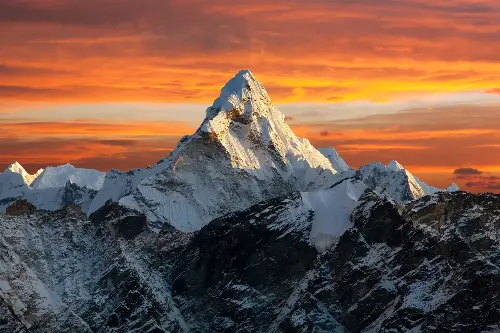
Mount Everest stands as the world’s most iconic peak—a shimmering, snow-capped titan rising 8,849 metres above sea level. Yet, its attraction isn’t just its height; Everest has become a symbol of human ambition, beckoning both the adventurous souls hungry for a challenge and the dreamers seeking inspiration in its daunting silhouette. From its legendary foothills to its wind-blasted summit, Everest has become the ultimate stage for those chasing the edge of possibility.
The History and Mystique of Everest
Ever since it was first declared the highest mountain on earth in 1852 by the Great Trigonometrical Survey of India, Everest has woven itself into the fabric of worldwide fascination. Named after the British surveyor Sir George Everest (despite being called 'Chomolungma' by Tibetans and 'Sagarmatha' by Nepalis), the peak has an aura that transcends altitude statistics. Legends of yetis, lost explorers, and sacred rituals swirl through base camp stories, adding an air of mystique.
The mountain’s modern allure skyrocketed in 1953, when Sir Edmund Hillary of New Zealand and Tenzing Norgay, a Sherpa from Nepal, made the first confirmed summit. Their achievement was a beacon of postwar optimism—and, crucially, showed the world that Everest, though fearsome, could be conquered. Since then, reaching the roof of the world has become a rite of passage for climbers and adventurers alike.
Extreme Challenge: Everest’s Perennial Dare
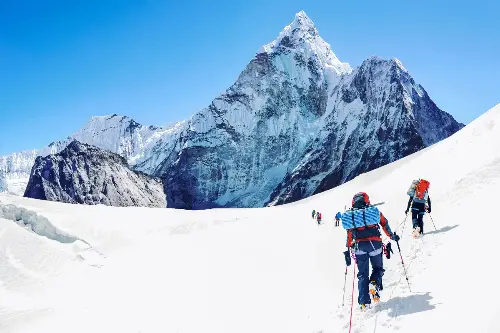
If climbing Everest was merely a scenic walk, its legend wouldn’t hold. The trek to its summit is consistently ranked among the world’s most perilous achievements. Temperatures on the mountain can drop to -60°C, winds can gust over 160 kilometres per hour, and the notorious “death zone” above 8,000 metres offers only a third of the oxygen available at sea level. Every year, stories emerge of frostbite, avalanches, and terrifying whiteouts.
Yet, it’s exactly this danger that draws in the world’s daredevils. The climb tests human limits—not just physically, but mentally. Decisions are literally life and death; ordinary judgement is clouded by altitude sickness. This razor’s edge is what climbers seek: ultimate proof of resilience, tenacity, and self-reliance. As British mountaineer George Mallory—who vanished on Everest in 1924—famously quipped when asked why he wanted to scale the mountain, “Because it’s there.”
Sherpas: The Unsung Heroes of the Himalayas
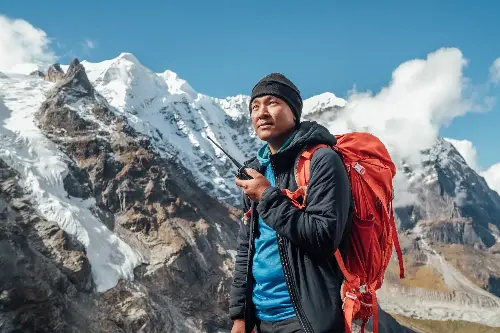
No discussion of Everest is complete without acknowledging the pivotal role of the Sherpa people. Residing in high-altitude villages near the mountain, Sherpas have evolved generations of physiological adaptations—strong lungs, efficient metabolism—that allow them to thrive where others struggle. Their knowledge of Everest’s ever-changing moods makes them indispensable guides.
Many Sherpas summit Everest dozens of times, yet their bravery often goes unsung in international headlines. In 2019, Kami Rita Sherpa reached the summit for a record 24th time, quietly contributing to Everest’s ongoing legend. Sherpa culture has also shaped the spiritual landscape of the mountain, with many climbers joining them in prayer rituals for safe passage.
Dreamers’ Destination: Everest Beyond Climbing
Not everyone drawn to Everest is plotting a summit attempt. For thousands, making the spectacular trek to Everest Base Camp (EBC) is adventure enough. This journey meanders through atmospheric Sherpa villages, sparkling Himalayan rivers, and ancient Buddhist monasteries. Along the trail, trekkers absorb panoramic views, breathing the crisp air at an elevation that would top any European summit.
The Everest region is a living natural history museum, home to the endangered snow leopard and rare Himalayan tahrs. The local culture is as enchanting as the wildlife; visitors are welcomed with yak-butter tea, colourful prayer flags flapping in the breeze, and the ever-present hum of “Om Mani Padme Hum”.
Changing Landscape: Modern Everest
Since the turn of the millennium, Everest has evolved dramatically. Improved gear, satellite phones, and commercial guiding services have opened doors to more climbers, with the peak seeing queues at bottlenecks in recent years. Alongside its newfound accessibility, Everest faces rising environmental pressures: melting glaciers, increased rubbish, and the challenge of responsible tourism.
On the brighter side, there’s a growing movement for eco-conscious climbing. Expedition companies are packing out waste, scientists study Everest’s rapidly changing climate, and local communities gain vital income from carefully managed tourism. Each visitor is now not just a dreamer or daredevil, but a steward of Everest’s fragile majesty.
Everest is more than just a mountain. It’s a mirror reflecting human ambition—where courage, hope, and respect for nature are tested as intensely as muscle or lung. Whether you’re trekking to its base, gazing at its image, or preparing to climb to its summit, Mount Everest is a place where dreams and daring meet the ultimate challenge.